


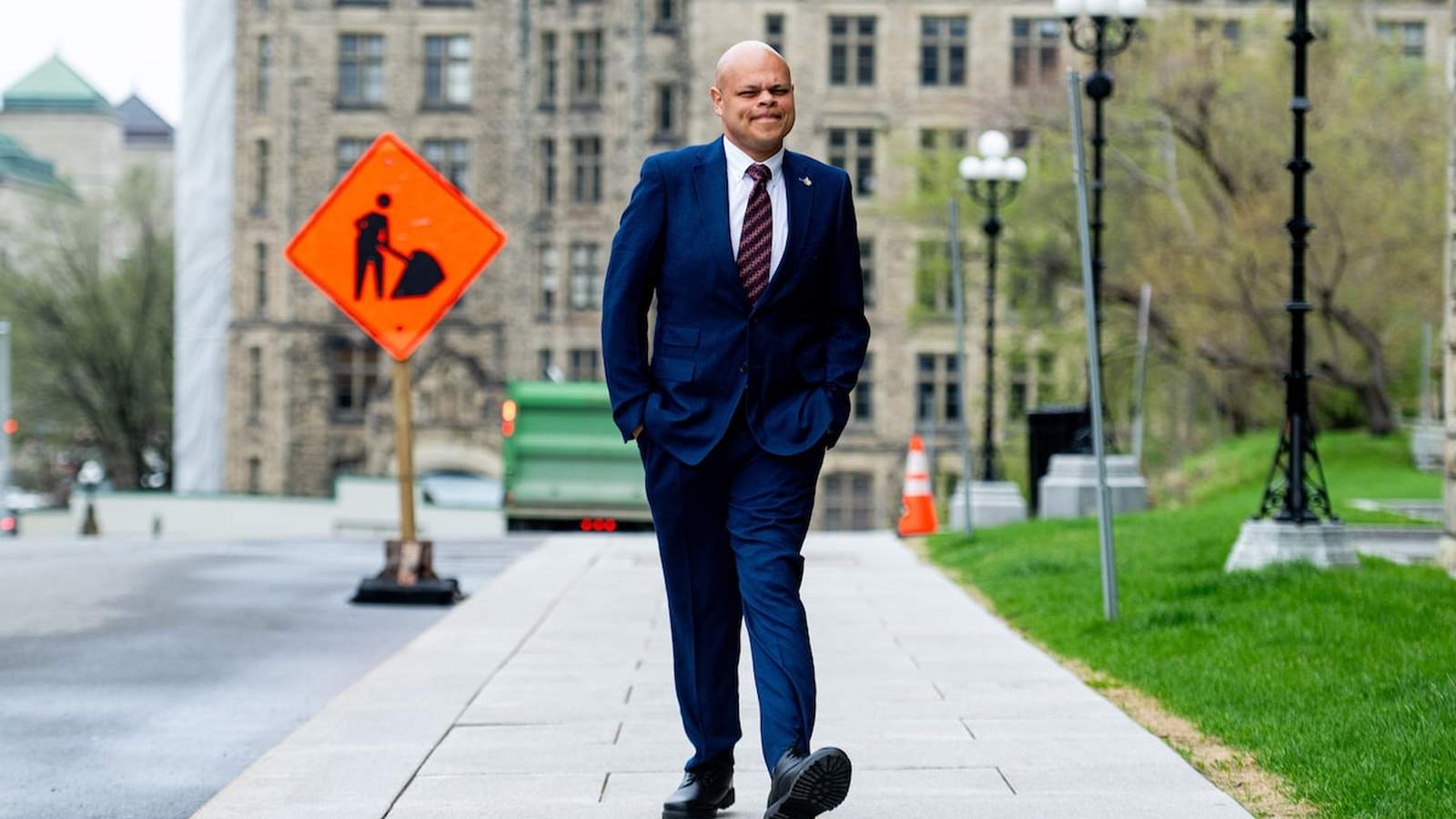
OTTAWA (Azat TV) – Conservative Member of Parliament Jamil Jivani’s recent unauthorized trip to Washington, D.C., and his subsequent controversial remarks regarding Canada-U.S. relations have ignited a significant internal debate within the Conservative Party, challenging its established approach to American foreign policy. The fallout from Jivani’s actions underscores a broader tension between Prime Minister Mark Carney’s Liberal government, which is accused of using the U.S. relationship as a political wedge, and opposition efforts to de-escalate trade tensions ahead of a critical review of the Canada-United States-Mexico Agreement (CUSMA).
Jivani’s Controversial Mission to Washington
Earlier this month, Jamil Jivani, the Conservative MP for Bowmanville—Oshawa North, embarked on a self-initiated diplomatic mission to Washington, D.C. His stated goal was to leverage his personal connection with U.S. Vice President JD Vance, a former college classmate, to help restore calm to the fraught Canada-U.S. relationship. Despite receiving an informal briefing from Dominic LeBlanc, the Canadian minister responsible for Canada-U.S. trade, Jivani proceeded with his meetings with various Trump administration officials, knowing the political risks involved.
Upon his return, Jivani sparked controversy by telling Breitbart News that Canada was harming itself with an “anti-America hissy fit” and that Canadians would be “shooting ourselves in the foot” by continuing this posture. He further criticized Canada’s new trade agreement with China, calling it “100 percent” a mistake driven by “anti-American resentment” among Liberals in Canada. These comments, along with a video posted on social media where Jivani anticipated criticism from “frothing, elbow-waving anti-American activists,” quickly drew attention and scrutiny.
Conservative Leadership Responds to Jivani’s Remarks
The immediate aftermath saw Conservative Leader Pierre Poilievre distance himself from Jivani’s more inflammatory language. Speaking to reporters, Poilievre explicitly stated that Jivani “speaks for himself, and I speak for the party,” and disagreed with the “hissy fit” characterization. Poilievre acknowledged that Canadians are “legitimately upset by the unjustifiable tariffs and the comments that the president has made.”
However, Poilievre also offered a degree of qualified support for Jivani’s initiative. He encouraged MPs to utilize their connections to fight U.S. tariffs, noting that Jivani represents a riding disproportionately affected by the trade dispute, with over 1,000 job losses in the Bowmanville—Oshawa North area attributed to the tariffs. This nuanced response highlights the Conservative Party’s internal struggle to balance party unity with pragmatic efforts to address economic concerns.
Ontario Premier Doug Ford also weighed in, dismissing Jivani’s “hissy fit” comment. Ford emphasized the importance of continuing to lobby Americans ahead of the CUSMA talks, arguing that “a tariff on Canada is a tax on the American people.”
Broader Context of Canada-U.S. Relations
The backdrop to Jivani’s trip is a Canada-U.S. relationship described by TheHub.ca as “teetering on a cliff,” marked by ongoing trade tensions, ill-timed advertising in the U.S. by Canada, and Prime Minister Carney’s perceived confrontational stance. Carney’s “Team Canada” approach to U.S. relations has been criticized for prioritizing political gain over national unity, notably excluding opposition parties from key diplomatic efforts—a stark contrast to the bipartisan approach taken during former President Trump’s first term.
The Liberal government, according to critics, appears to benefit from a confrontational U.S. relationship, using it as a political wedge to consolidate domestic support. This strategy, however, risks allowing the U.S. to influence the outcome of Canada’s next federal election. With the CUSMA continental trade pact due for review this year, Ottawa faces a bilateral relationship upended by President Trump’s sweeping tariff agenda and repeated annexation threats.
Jivani’s Political History and Ambition
Jamil Jivani’s actions are not entirely uncharacteristic of his political style. Despite his impressive background—raised by a single mother, Yale Law School graduate, and cancer survivor—he was notably absent from Conservative Leader Pierre Poilievre’s 74-person shadow cabinet last May. This exclusion is attributed, in part, to a history of controversial statements and actions, such as his resignation as an adviser to Ontario Premier Doug Ford in 2022 after calling the education minister “incompetent.”
Critics, including The Globe and Mail, suggest that while Jivani’s efforts might be framed as beneficial for Canada, they also serve to advance his personal political brand. His direct engagement with high-level U.S. officials, while potentially fruitful for his riding, has been perceived by some as “freelancing” that could undermine party cohesion and national diplomatic efforts.
The ongoing debate surrounding Jamil Jivani’s Washington trip and his contentious remarks highlights a fundamental tension within Canadian conservative thought: the balance between assertive national interest and pragmatic engagement with a powerful neighbor. While Jivani’s direct approach to Washington may resonate with a segment of the conservative base seeking decisive action on trade, the party leadership’s cautious distancing reveals an effort to maintain a unified front while navigating complex international relations, particularly as the CUSMA review nears.