


Nuclear Infrastructure Under Strain
Central Europe is facing a critical energy and logistical challenge as the Danube River, Europe’s second-longest waterway, has receded to historically low levels. The prolonged drought and repeated heatwaves have forced nuclear power plants in Hungary and Romania to reduce or suspend operations, as the river water is essential for reactor cooling systems.
In Hungary, the Paks nuclear power plant, which supplies a significant portion of the country’s electricity through its four Russian-built reactors, has faced severe disruption. Prime Minister Peter Magyar announced that the facility would be shut down entirely, marking the first such occurrence in 44 years. This decision follows a series of staggered output reductions throughout the week, starting with reactor 1 on Monday and reactor 3 on Wednesday, culminating in a 50% cut to reactor 2 on Thursday morning.
“An energy crisis situation may arise from Monday,” Magyar stated, urging citizens to practice self-restraint in energy consumption to mitigate the risk of wider blackouts. The Hungarian national water authority measured the Danube at just 23 centimeters (9 inches) in Budapest on Wednesday, shattering the previous 2018 record low of 33 centimeters.
Regional Impact and Shipping Paralysis
The crisis extends beyond the energy sector. In Romania, the Cernavoda nuclear plant faced operational pressure as water levels dropped significantly below the navigable minimum. While the plant managed to avert a total shutdown of its second reactor on Thursday, the facility remains in a precarious state due to unfavorable hydraulic conditions.
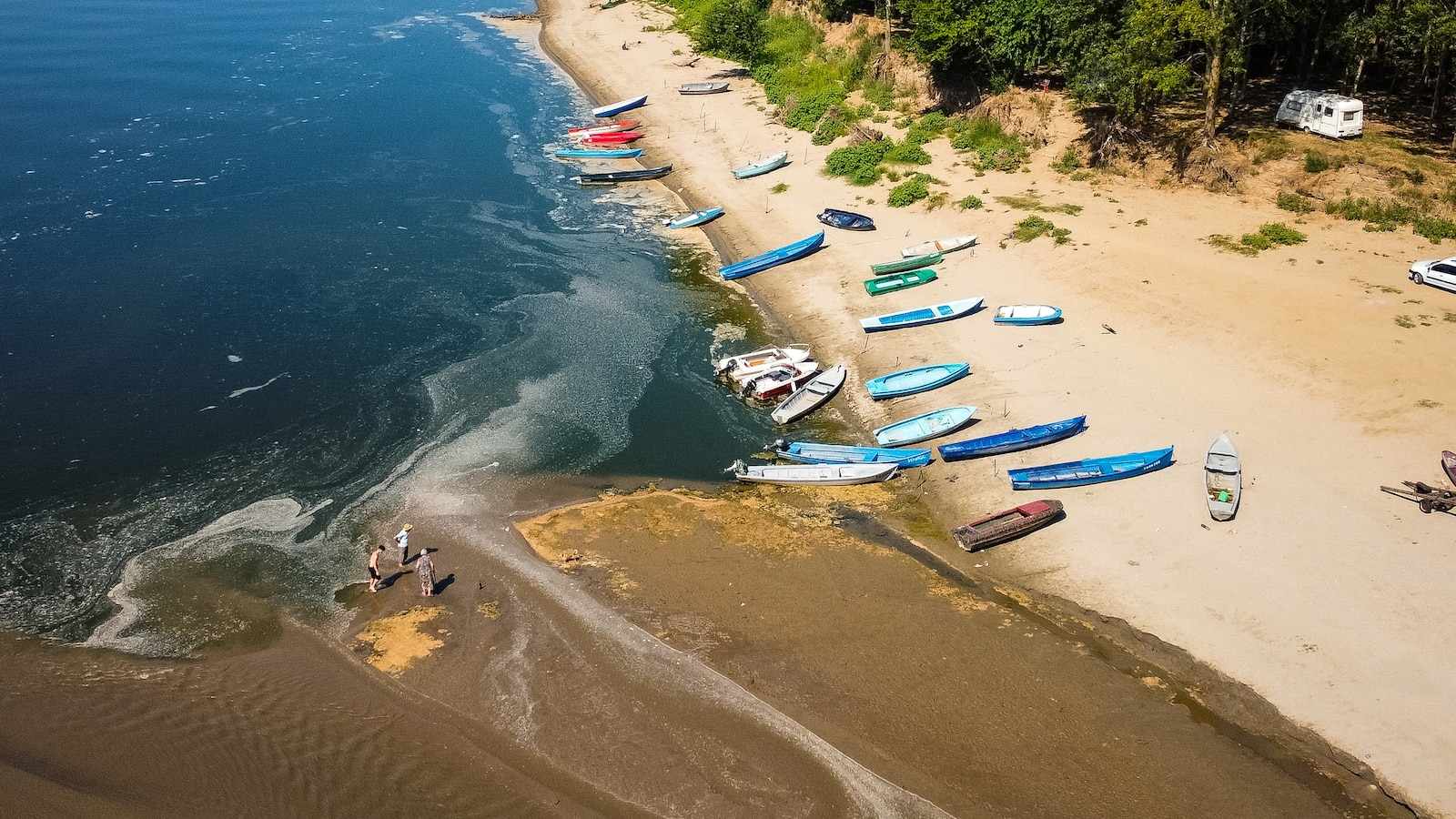
Shipping logistics are largely paralyzed. The Hungarian Ministry of Transport and Investment reports that cargo transport has nearly ceased, and tourist cruise ships are being forced to dock further upriver or remain stranded. The situation is mirrored in Bulgaria, where authorities evacuated 186 tourists from a cruise ship that ran aground near the port city of Vidin, and in Serbia, where hundreds of vessels are marooned on dried-up sections of the riverbank near Novi Sad.
Broader Environmental Context
The receding waters have also revealed long-hidden hazards, including Second World War-era munitions discovered near the base pillars of Budapest’s Margaret Bridge. Meteorologists attribute the low water levels to a combination of long-term precipitation deficits—with 90-day totals 80-130 millimeters below average—and accelerated evaporation driven by extreme heat.
As Germany and other Western European nations brace for further heatwaves, the human cost is mounting. The Robert Koch Institute in Berlin reported nearly 9,800 heat-related deaths this summer, the highest figure since 2016, underscoring the severity of the climate conditions currently gripping the continent.