


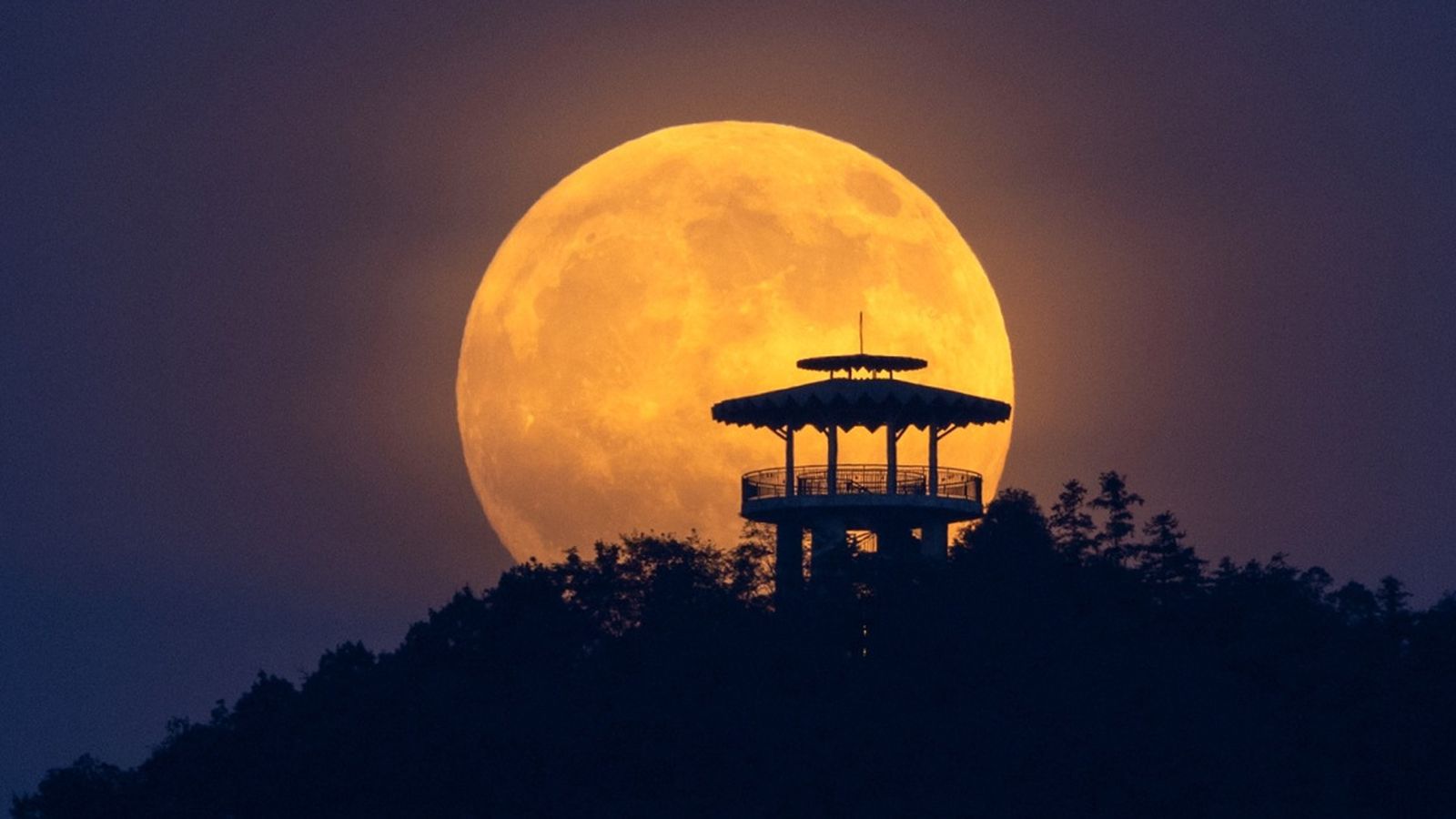
A Celestial Event Overnight
Skywatchers across large swaths of the globe are preparing for a rare astronomical event tonight, August 27-28, 2026, as a deep partial lunar eclipse takes center stage. Earth will slip between the sun and the moon, casting a dark umbral shadow that will obscure approximately 96% of the lunar surface at its peak.
The event is a significant occurrence for amateur astronomers and the general public, as it marks the deepest lunar eclipse worldwide until December 31, 2028. Unlike solar eclipses, which require specialized eye protection, this lunar phenomenon is entirely safe to view with the naked eye. For those seeking greater detail, binoculars or a telescope can reveal the moon’s surface texture as it transitions through the Earth’s shadow.
This report draws on information published by NBC News.
The Mechanics of the Eclipse
The event follows a predictable celestial rhythm, occurring within the Saros 138 series. As Earth’s atmosphere scatters sunlight, the shadow cast upon the moon often takes on a reddish-orange hue, reminiscent of a total “blood moon,” though the 4% of the moon remaining outside the umbra will retain its bright white appearance. This contrast between the deep, shadowed red and the unshaded limb provides a unique visual profile for observers.
The eclipse cycle is divided into distinct phases. The penumbral phase, where the moon enters the lighter part of Earth’s shadow, begins at 1:24 UTC. The partial eclipse—the phase most visible to the casual observer as a “dark bite” taken from the moon—begins at 2:34 UTC. The maximum obscuration occurs at 4:13 UTC, before the process reverses and concludes with the final penumbral exit at 7:02 UTC.
Visibility and Environmental Factors
While the eclipse is a global event visible from any location on Earth experiencing nighttime, local conditions remain the primary variable for successful viewing. Meteorologists warn that cloud cover, particularly in regions experiencing localized storm activity, could obstruct the view. In areas with high wildfire activity, atmospheric particles may cause the moon to appear darker, potentially intensifying the reddish color of the eclipsed portion.
Beyond standard cloud cover, there is additional intrigue for observers in northern latitudes. Recent space weather reports indicate a possibility of concurrent auroral activity, which could provide a rare backdrop of green light alongside the darkened lunar disk. Observers are encouraged to check local weather forecasts and time-conversion sites, such as timeanddate.com, to ensure they are prepared for their specific time zone.