


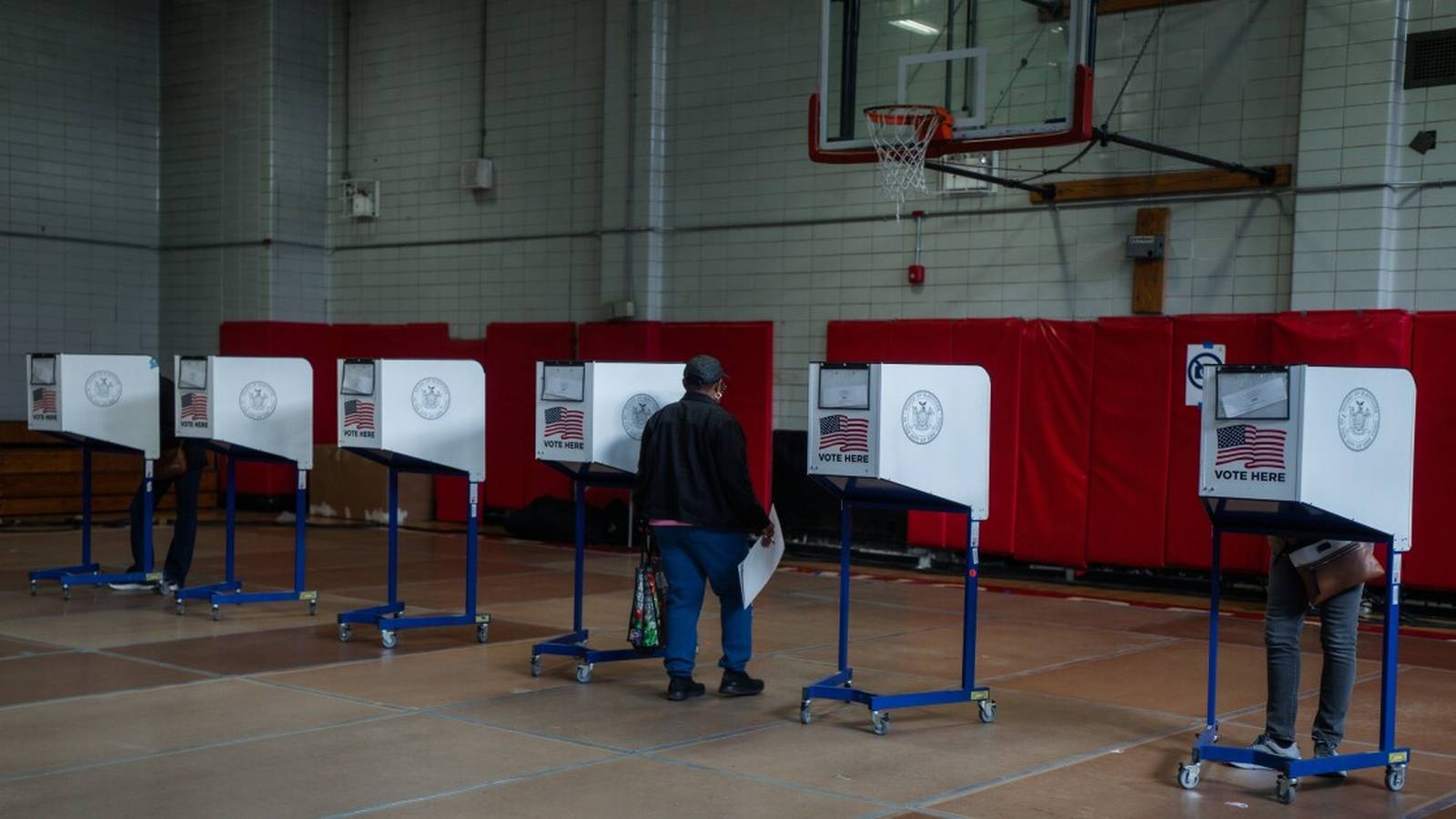
WASHINGTON (Azat TV) – A senior Department of Homeland Security (DHS) official affirmed this week that U.S. Immigration and Customs Enforcement (ICE) agents will not be deployed to polling places for the upcoming midterm elections, directly addressing concerns about federal interference. However, this assurance comes amidst a flurry of conflicting statements from other Trump administration figures and allies, creating a confusing and potentially intimidating atmosphere for voters and election administrators nationwide.
Heather Honey, a deputy assistant secretary for election integrity at DHS, unequivocally stated during a Wednesday call with state election officials that “Any suggestion that ICE is going to be present at polling places is simply disinformation. There will be no ICE presence at polling locations.” Her remarks, confirmed by three call participants, were made in response to a direct inquiry from California Secretary of State Shirley Weber, a Democrat, regarding potential immigration operations near voting sites. The call included representatives from the FBI, Election Assistance Commission, DHS, United States Postal Service, and Department of Justice, convened to discuss midterm election preparations.
DHS Assurances vs. Trump Allies’ Rhetoric
Despite the clear directive from Honey, skepticism and concern have emerged due to a different narrative emanating from other figures aligned with the Trump administration. Karoline Leavitt, a prominent voice within the administration’s orbit, notably declined to categorically rule out ICE’s presence near polling sites, stating she was unaware of any formal plans but offering no definitive reassurance. This ambiguity stands in stark contrast to the DHS official’s explicit denial.
Further amplifying the conflicting messages, Trump confidant Steve Bannon declared on his podcast, without presenting evidence, that ‘You’re damn right we’re gonna have ICE surround the polls come November.’ He later suggested deploying troops under the Insurrection Act, a move that would represent an unprecedented level of federal intervention in state-run elections. These pronouncements, coupled with President Donald Trump’s own calls to ‘nationalize’ elections and his repeated, unsubstantiated claims of widespread voter fraud, contribute to a climate of uncertainty regarding the federal government’s intentions.
Election Officials Voice Skepticism and Concern
The official DHS assurance did little to quell the apprehension among many state election administrators, particularly those who have been vocal critics of the administration’s approach to election integrity. Arizona Secretary of State Adrian Fontes, a Democrat, expressed deep mistrust of Honey’s statement, citing her past involvement in the 2020 election denial movement. ‘Heather Honey is an election denier with zero integrity,’ Fontes stated, adding, ‘I’m just not convinced.’
Similarly, Maine Secretary of State Shenna Bellows, also a Democrat, conveyed her lack of reassurance, noting that federal officials on the call offered little new information and dodged specific questions about state sovereignty over elections. The silence from federal officials when asked to reinforce the constitutional principle that states, not the federal government, are in charge of elections, was particularly telling for Bellows and Fontes, who viewed it as indicative of the administration’s stance on federalizing elections.
Legal Protections and Intimidation Concerns
Federal law explicitly prohibits the deployment of ‘troops or armed men’ to polling sites, a safeguard designed to prevent voter intimidation and ensure free and fair elections. Voting law experts consistently emphasize that both federal and state statutes bar the presence of federal agents at polling places and any activity intended to intimidate voters. Democrats and voting rights advocates argue that the refusal by administration allies to definitively rule out an ICE presence, combined with the aggressive rhetoric, could significantly ‘chill voter turnout,’ particularly among immigrant communities and communities of color.
Senator Alex Padilla (D-Calif.) highlighted these concerns in his Spanish-language rebuttal to the State of the Union address, accusing the Trump administration of seeking to interfere in the upcoming election and suggesting the use of ICE agents at polling places to intimidate voters. Padilla referenced aggressive immigration enforcement actions, including the fatal shootings of two U.S. citizens, Renee Nicole Good and Alex Pretti, by immigration agents in Minneapolis, as actions that contribute to a broader atmosphere of fear and undermine public confidence in the electoral process.
Broader Context of Immigration Enforcement
The discussion around ICE at polling places is not isolated but occurs within a broader context of intensified immigration enforcement and federal actions perceived as encroaching on state authority. While directly unrelated to polling places, actions such as the Department of Homeland Security’s recent halt of plans to build an ICE facility in New Hampshire, following pushback from Republican Governor Kelly Ayotte, and Maryland’s lawsuit against the administration over a proposed ICE facility, underscore the contentious nature of federal immigration operations. Maryland Attorney General Anthony Brown (D) cited concerns over environmental impact, public input, and the treatment of detainees, noting that multiple individuals have died in ICE custody since the beginning of the year.
These aggressive enforcement measures, combined with the administration’s rhetoric regarding election integrity and the ‘nationalization’ of voting, create a volatile backdrop against which the conflicting messages about ICE presence at polling places are being received. The demand from then-Attorney General Pam Bondi to Minnesota Governor Tim Walz for voter data in exchange for ending an ICE surge further illustrates the administration’s past attempts to link immigration enforcement with election-related demands.
The persistent conflicting messages from a DHS official and various administration allies regarding ICE presence at polling places risk undermining voter confidence and perceived election integrity, despite legal prohibitions against federal agents at voting sites. This creates an environment where the very act of voting could be seen as a point of contention rather than a fundamental civic right.