


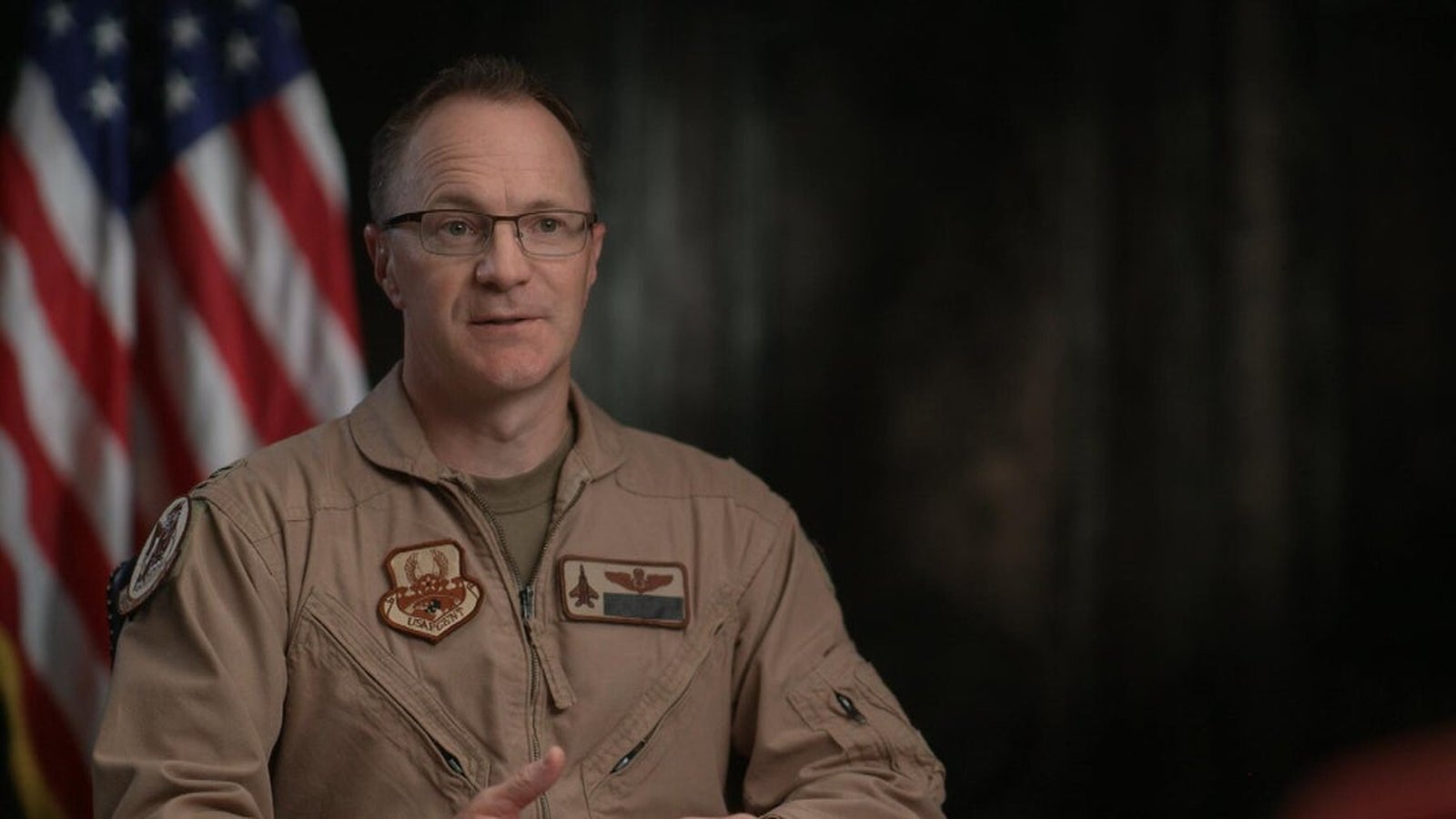
The Downfall of Dude 44
In a rare public account, a US Air Force weapons-systems officer, identified by the call sign ‘Bravo,’ has detailed his harrowing 50-hour ordeal behind enemy lines in Iran. The officer’s F-15E fighter jet, operating under the mission call sign ‘Dude 44,’ was struck by a shoulder-fired missile near Isfahan on April 2. According to CBS News, the mission was intended to strike industrial facilities linked to Iran’s drone and missile programs. The impact, which Bravo described as being hit by a “freight train,” forced both him and the pilot, ‘Alpha,’ to eject.
While Alpha was successfully recovered in a high-risk daytime raid, Bravo’s situation was significantly more dire. His parachute was damaged by the missile blast, resulting in a high-speed, uncontrolled descent. He landed roughly five miles from his pilot, sustaining a broken back, arm, and shoulder. Despite these injuries, Bravo managed to evade Iranian ground forces that were actively hunting the downed crew.
A Complex Rescue Operation
The rescue of Bravo involved what US Central Command described as one of the most complex operations in recent military history. Adm. Brad Cooper, commander of US Central Command, confirmed that the US deployed over 90 service members on the ground—marking the first US boots on the ground in Iran in 46 years—supported by thousands more in the air. To facilitate the extraction, the CIA launched a deception campaign while American bombers and drones conducted strikes against nearby Iranian Revolutionary Guard forces to clear a path for the rescue team.
The operation relied on clandestine ‘Little Bird’ helicopters to reach Bravo on a 7,000-foot ridgeline. The mission encountered further complications when the rescue aircraft’s landing gear became mired in desert sand at a makeshift airstrip. To prevent sensitive technology from falling into Iranian hands, the US military destroyed two $100 million search-and-rescue planes and the extraction helicopters before successfully evacuating Bravo on Easter Sunday.
The Stakes of the Mission
The incident highlights the high-intensity nature of the ongoing conflict in the region. According to Adm. Cooper, US forces have flown approximately 13,000 missions since the commencement of hostilities. The loss of the $30 million F-15E to a $100,000 shoulder-fired missile underscores the persistent threat posed to coalition air superiority. For Bravo, the survival was a testament to his training and faith, though the military’s willingness to commit significant resources to his extraction reflects a broader institutional commitment to the principle of leaving no service member behind.