


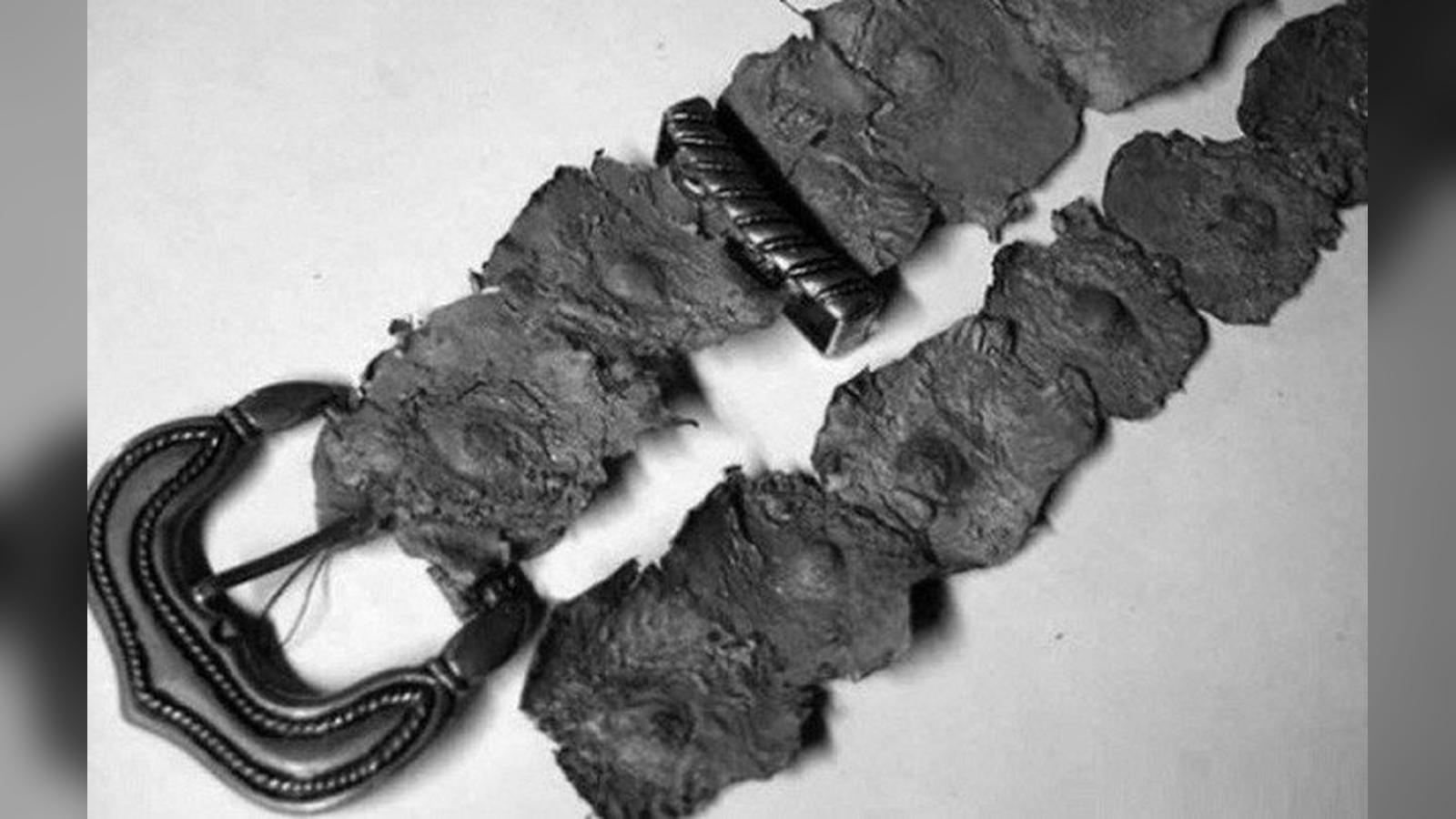
The stark, black-and-white photograph captures an object of quiet, domestic utility transformed into a monument of unimaginable depravity: a crude leather belt adorned with human nipples. Taken under the harsh, clinical flash of a forensic camera, this image is not merely a piece of criminal evidence; it is a visual threshold into one of the darkest chapters of American history. Captured in November 1957 inside the rural farmhouse of Edward Theodore Gein in Plainfield, Wisconsin, the photograph documents a reality so grotesque that it permanently altered the cultural and psychological landscape of the mid-20th century. This article explores the origins of this haunting image, the forensic reality of the crime scene, and how a simple piece of photographic evidence came to symbolize the birth of modern true-crime horror.
What the photograph shows
In the frame, the viewer is confronted with a direct, unembellished view of a handmade belt. The composition is strictly utilitarian, typical of police department documentation of the era. The belt itself is fashioned from a strip of dark, weathered leather, upon which several human nipples have been crudely stitched at regular intervals. The texture of the biological material is preserved with chilling clarity by the high-contrast black-and-white film, revealing the hand-sewn thread and the uneven, amateurish craftsmanship. There are no artistic flourishes, no dramatic lighting, and no attempt to soften the macabre nature of the object. The clinical backdrop—likely a plain table or a surface within the Waushara County sheriff’s facility—serves to isolate the artifact, forcing the viewer to confront the physical reality of Gein’s obsession without distraction.
The moment behind the image
The photograph was taken in the immediate aftermath of November 16, 1957, the day the quiet town of Plainfield was shattered by the disappearance of local hardware store owner Bernice Worden. Suspicion quickly fell on Ed Gein, a reclusive 51-year-old bachelor who lived on an isolated 155-acre farm. When Deputy Sheriff Arthur Schley and other investigators entered Gein’s dark, unheated farmhouse that evening, they expected to find a suspect; instead, they uncovered a literal “house of horrors.” In the cold, trash-strewn rooms, police discovered the decapitated, dressed body of Worden hanging from the rafters in a shed. As they searched further with flashlights, they found an array of domestic items crafted from human flesh and bone: skulls turned into soup bowls, chairs upholstered with human skin, masks made from real faces, and the nipple belt documented in this photograph. The images captured by the state crime lab and local police photographers during those frantic days were meant to build a watertight legal case, but they quickly became historical artifacts of pure psychological dread.
Photographer and provenance
This photograph was produced by forensic investigators associated with the Waushara County Sheriff’s Department and the Wisconsin State Crime Laboratory. Due to the nature of criminal investigations in the late 1950s, individual credit for specific evidence photos was rarely attributed to a single photographer, remaining instead under the collective authorship of the state’s forensic team. The image was captured using a standard press or technical camera of the period, designed to record maximum detail for court presentations. Originally filed away in confidential police archives, these photographs slowly entered the public domain through court exhibits, journalistic investigations, and historical publications. Today, they are preserved in state archives and true-crime historical collections, serving as a grim testament to the physical reality of Gein’s crimes, far removed from the Hollywood mythologies they eventually spawned.
Historical context and the “House of Horrors”
To understand the existence of the belt and the photograph, one must look at the isolated life of Ed Gein. Following the death of his deeply religious and domineering mother, Augusta, in 1945, Gein boarded up her parlor and bedroom, keeping them pristine like a sacred shrine while he retreated into a small, filthy room next to the kitchen. For over a decade, Gein lived in absolute isolation, descending into severe psychosis. He began robbing local graves, exhaling the bodies of recently deceased middle-aged women who reminded him of his mother. From these bodies, he harvested skin and organs, attempting to create a “woman suit” so he could literally step into his mother’s identity. The nipple belt was one of several accessories crafted during this period of intense psychological unraveling. Gein eventually confessed to two murders—Bernice Worden and Mary Hogan—though the sheer volume of human remains in his home suggested a much larger scale of grave desecration.
Why the image still matters
The physical farmhouse where these horrors took place no longer exists. In March 1958, shortly before Gein’s property and personal effects were scheduled to be sold at a public auction, the house mysteriously caught fire and burned to the ground. While arson was widely suspected, no one was ever charged, and the local community expressed relief that the site would not become a macabre tourist attraction. Upon hearing of the fire, Gein reportedly muttered, “Just as well.” Because the house and the physical evidence were destroyed or locked away, the surviving police photographs became the primary, chilling evidence of what had transpired in Plainfield. These images directly inspired the creation of some of cinema’s most famous monsters: Norman Bates in Alfred Hitchcock’s Psycho, Leatherface in The Texas Chain Saw Massacre, and Buffalo Bill in The Silence of the Lambs. This photograph of the nipple belt remains a stark reminder of the thin line between quiet rural domesticity and the unimaginable depths of human madness.