


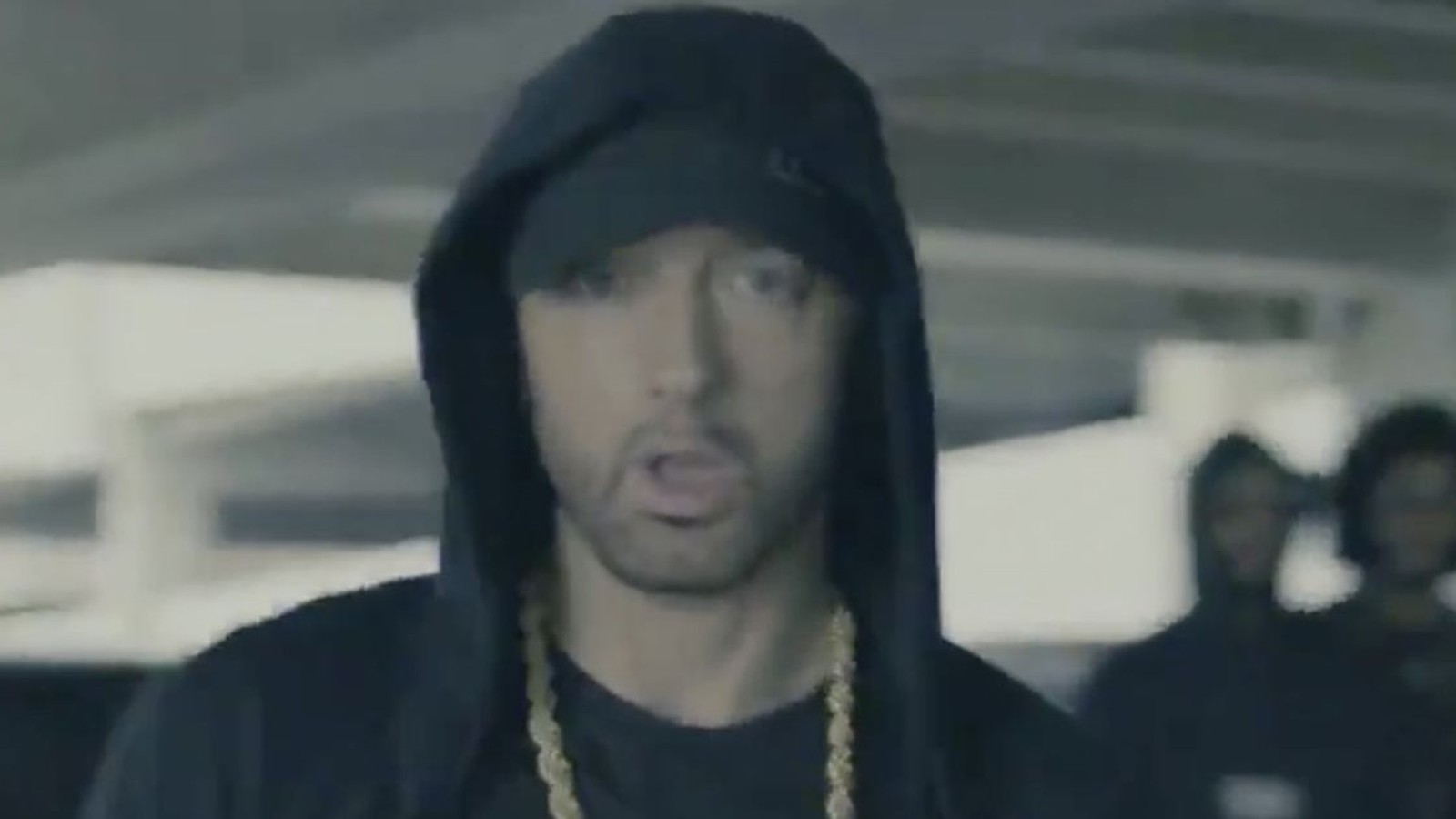
DETROIT (Azat TV) – Rapper Eminem has declared his readiness to alienate a portion of his fanbase rather than alter his critical stance on former President Donald Trump, asserting that his convictions outweigh the desire for continued popularity. The artist’s firm position on political matters continues to spark significant online discussion, drawing a spectrum of reactions from his audience.
Eminem’s Stance on Political Criticism
Eminem, whose real name is Marshall Mathers, has once again placed himself at the center of a political controversy with his outspoken remarks. He emphasized that the potential backlash and loss of fans would not deter him from expressing his views, highlighting that speaking truthfully is more important to him than maintaining his current level of public appeal. This stance underscores the complex relationship between public figures, their personal beliefs, and the potential consequences for their careers in an increasingly polarized society.
Public Reaction and Social Media Impact
The rapper’s comments quickly reverberated across social media platforms, eliciting a mixed response. While some fans lauded his courage and commitment to his principles, others expressed disappointment or disagreement with his political leanings. This situation serves as a microcosm of broader societal debates surrounding freedom of expression and the influence of prominent personalities on public discourse, as noted by BBC News. The ability of well-known figures to command attention and shape opinions, regardless of whether audiences agree, remains a potent force in global conversations.
Freedom of Expression and Influence
Moments like these highlight the difficult choices public figures often face between their personal beliefs and their public image. Eminem’s willingness to risk popularity for his principles reflects a broader conversation about the role of celebrities in political dialogue and the boundaries of free speech, a topic frequently explored by outlets like Reuters and CNN. His unwavering position suggests a commitment to using his platform to voice dissent, even at the cost of alienating segments of his vast following.
Eminem’s consistent willingness to engage in politically charged commentary, even at the potential expense of his fan base, demonstrates a deeply ingrained conviction that aligns him with artists who prioritize message over marketability, a trend that continues to influence contemporary music and public discourse.