


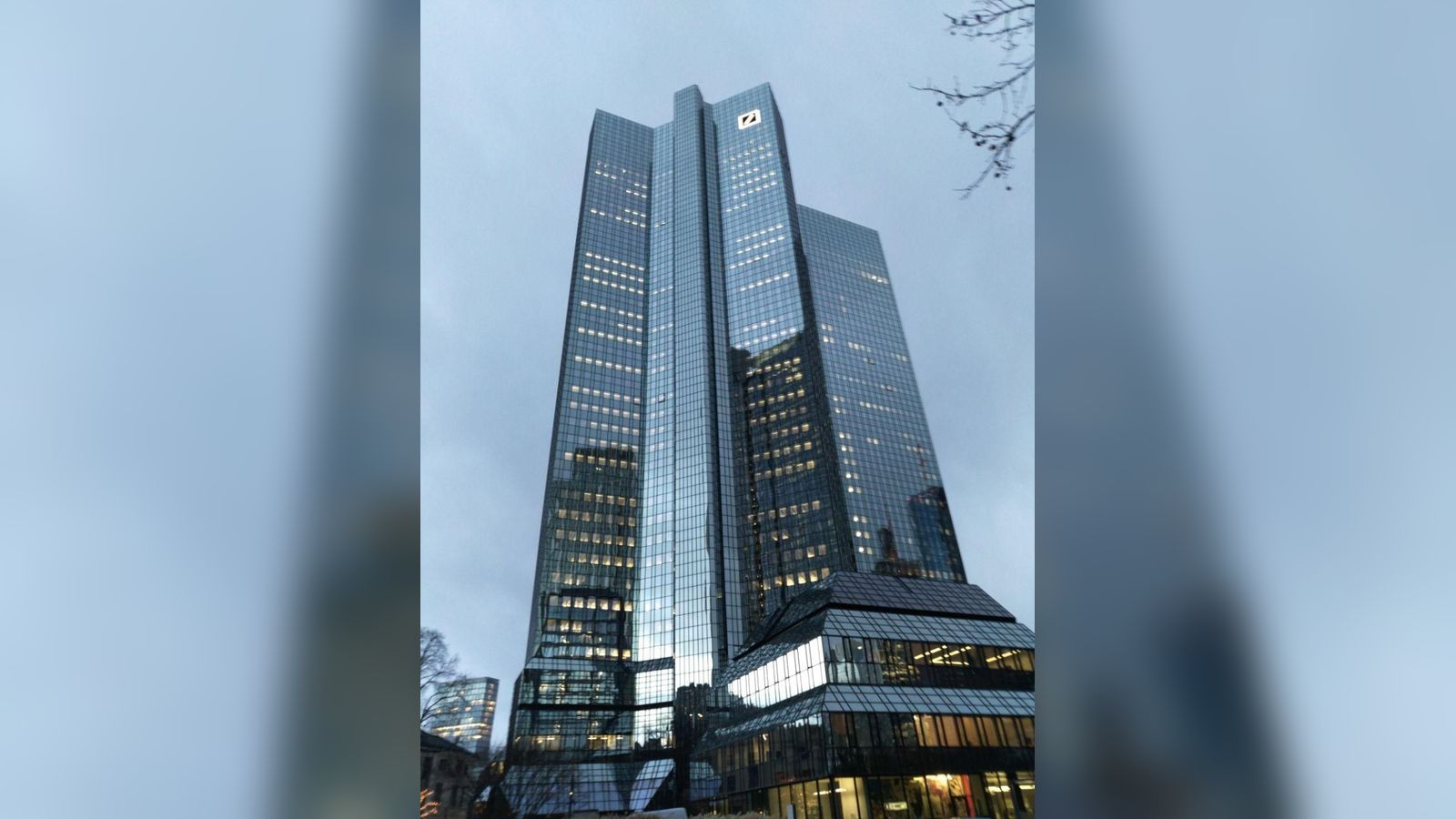
Newly surfaced internal documents from Deutsche Bank have revealed that companies linked to U.S. President Donald Trump received financial transfers from entities associated with the notorious Azerbaijani Laundromat. The findings, released as part of the international Inside Deutsche Bank investigation, detail transactions involving over $3 million directed toward two companies, DT Marks Baku LLC and THC Baku Services LLC, during the period surrounding the announcement of Trump's first presidential campaign. This investigation, based on over 15 million leaked banking documents examined by more than 200 journalists from over 50 news organizations, provides a detailed window into the opaque financial channels that have historically connected international business ventures to broader money-laundering networks. The disclosures add a significant financial dimension to longstanding concerns about the Azerbaijani government’s use of complex banking networks to move funds internationally and potentially cultivate political or commercial influence abroad.
On April 28, 2015, the shell company Faberlex LP transferred $141,261.82 to THC Baku Services LLC through the Estonian branch of Danske Bank. Faberlex, a UK-registered firm, has been identified by investigators as a central participant in the Azerbaijani Laundromat, a massive operation that moved approximately $2.9 billion through offshore networks between 2012 and 2014. According to reports from the investigative consortium, the funds for Faberlex were supplied by Baktelecom, Azerbaijan’s state-owned telecommunications company. While the exact purpose of this specific payment remains unclear, it occurred while Trump was actively pursuing a luxury hotel and tower project in Baku, which involved local business partners connected to the family of Ziya Mammadov, Azerbaijan’s former transport minister. The bank stated that it could not independently establish the commercial purpose of these specific payments or the nature of the relationship between the senders and the recipients.
Financial Scrutiny and Compliance Records
The leaked files indicate that Deutsche Bank flagged these transactions in suspicious activity reports (SARs) as early as August 2014. Internal memos from May 2020 noted that the bank had identified more than $3 million in transactions involving the two Baku companies, including dealings with entities connected to both Azerbaijani and Russian money-laundering networks. Despite these findings, the documentation explicitly states that Donald Trump himself was not named as a suspect in these filings. Bank officials noted in internal records that they could not independently establish the commercial purpose of these specific payments. The existence of suspicious activity reports does not, in itself, establish criminal wrongdoing or personal participation in money laundering by the individuals or companies involved. These filings are standard procedures used by financial institutions to document transactions that appear unusual or lack a clear commercial purpose.
The Azerbaijani Laundromat has previously been linked to payments intended for European politicians, including former Italian politician Luca Volontè, who was sentenced to four years in prison in 2021 for accepting bribes. Additionally, German MPs Eduard Lintner and Axel Fischer faced legal consequences for bribery related to their lobbying efforts for Azerbaijan, with Lintner receiving a suspended sentence in 2025 and Fischer receiving one in 2026. The new revelations underscore the persistent risks associated with international business ventures in jurisdictions with high levels of financial opacity, where legitimate commercial interests can become entangled with illicit networks. The investigation highlights how the Azerbaijani government has utilized these opaque banking channels to move funds internationally and potentially cultivate political or commercial influence abroad.
Internal Bank Oversight and Future Implications
Following Trump's 2016 election, Deutsche Bank reportedly implemented a highly restricted "covered client" internal classification for him and his associates. This measure effectively limited internal access to sensitive financial records while he maintained significant debt obligations to the institution, which at one point exceeded $300 million. The bank has consistently declined to comment on individual client relationships or the existence of specific SARs, citing legal restrictions. Representatives for the President did not respond to requests for comment regarding the transactions or the broader allegations raised by the investigative consortium. The bank noted that it is legally prohibited from commenting on discussions with U.S. regulators or on the existence or non-existence of any particular suspicious activity report.
The connection between Trump-linked entities and firms central to the Azerbaijani Laundromat raises ongoing questions about the transparency of international financial dealings involving high-profile political figures. As investigators continue to analyze the massive cache of leaked documents, the focus remains on the intersection of global banking compliance, political influence, and the movement of funds from state-backed entities in jurisdictions with limited financial transparency. The revelations also raise questions about Deutsche Bank’s compliance practices and its earlier representations to U.S. authorities concerning potential connections between Trump’s businesses and Russian financial networks. The investigation did not establish that the Mammadov family was involved in the suspicious transactions linked to Trump's companies, though the proximity of these dealings to such influential figures remains a point of intense scrutiny for international watchdogs and financial regulators.