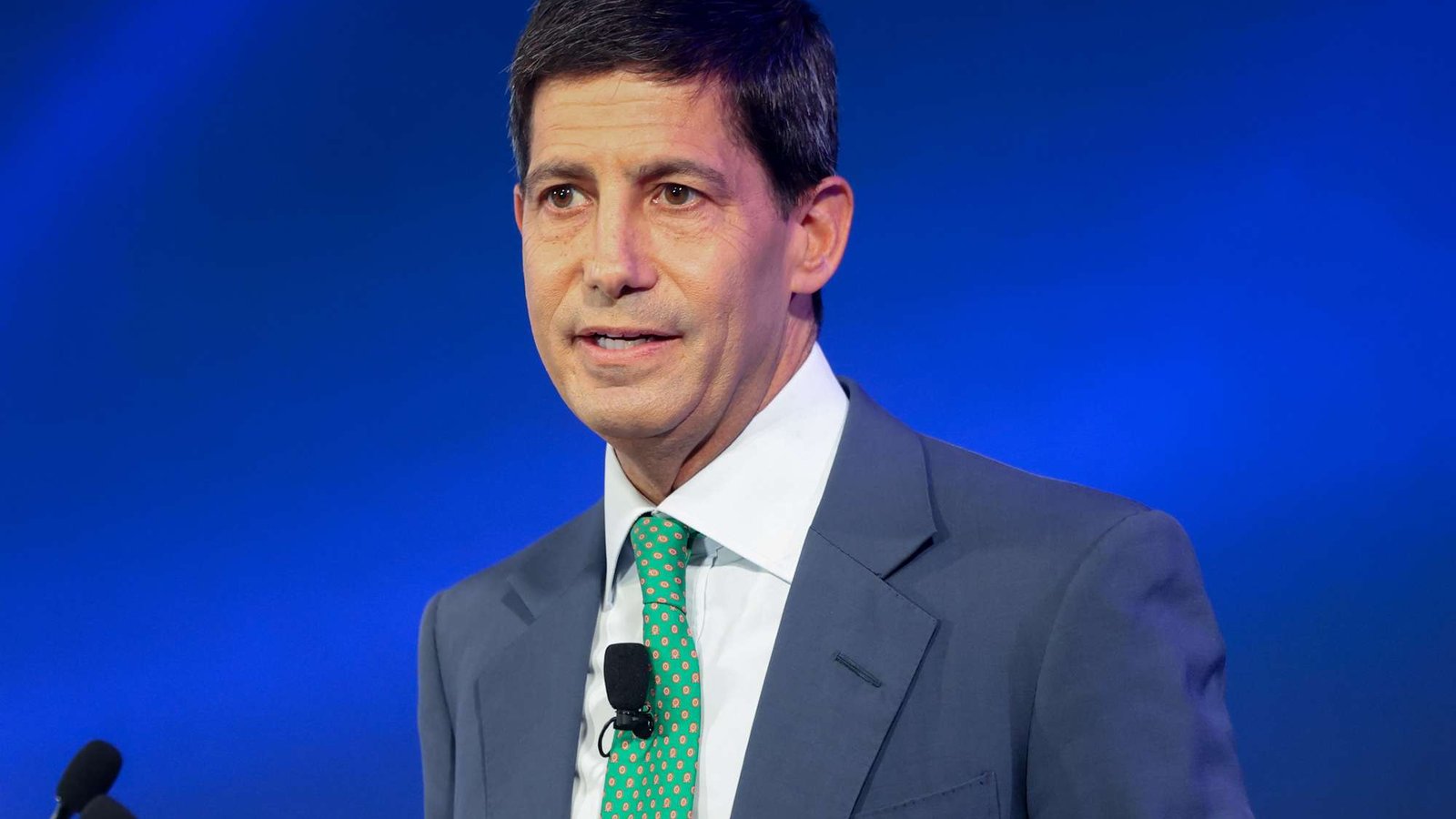
Federal Reserve Chairman Kevin Warsh addressed global financial leaders in Bangkok, describing artificial intelligence as a major positive supply shock for the global economy while reiterating his strict focus on price stability. Speaking at the annual meetings of the International Monetary Fund and the World Bank, reported by the New York Times, Warsh characterized the advent of AI as the most consequential change in the domestic and global economy during his lifetime.
Economic Shock and the Transition Path
While praising AI’s potential to boost long-term productivity and increase economic capacity without directly driving up consumer prices, Warsh cautioned that the transition phase would be challenging. He noted that the short-term impact on employment remains uncertain and warned that the adjustment period is likely to be bumpy. The remarks arrived as the central bank prepares to enter its communications blackout ahead of its policy meeting scheduled for October 27–28.
In conversation with IMF Managing Director Kristalina Georgieva, Warsh declined to offer specific guidance regarding potential interest rate adjustments at the upcoming October gathering. As noted by Seeking Alpha, the chairman maintained his stance against pre-judging policy meetings. The debate over borrowing costs intensified following September inflation data, which revealed that overall consumer prices rose by 0.6 percent, marking the largest monthly increase in five months and bringing the annual rate to 3.7 percent.
Institutional Changes and Policy Strategy
Since taking office in May, Warsh has pursued a broader strategy he labels a policy “regime change,” aimed at dismantling what he frequently describes as an unfair inflation tax on American households. To support this overhaul, the chairman has established five internal task forces focused on examining Fed operations, ranging from communication strategies and balance sheet management to economic data collection and inflation measurement methods.
During his appearance alongside IMF leadership, Warsh defended the institutional credibility of the central bank, which he credited to previous administrations. Georgieva welcomed the Federal Reserve’s firm language on inflation during the joint sessions, emphasizing that central banks globally must remain laser-focused on maintaining price stability amid lingering energy price pressures and high government debt levels across advanced economies.
What specific actions will the Fed take at the October policy meeting?
Chairman Kevin Warsh declined to provide specific guidance on upcoming rate decisions during his appearance in Bangkok, stating that the central bank does not prejudge meetings
What remains unclear: Whether the Fed will raise rates further at the October 27–28 meeting remains unconfirmed following recent acceleration in September inflation
How are the newly formed Fed task forces altering central bank operations?
Warsh has established five task forces to examine communications, technology, the balance sheet, economic data usage, and inflation measurement as part of a stated policy regime change
What remains unclear: The full operational outcomes and timeline for implementing reforms across the five task forces have not yet been finalized
Perspective
Federal Reserve View: Federal Reserve Chairman Kevin Warsh described artificial intelligence as a major positive supply shock for the global economy while emphasizing that taming inflation and securing price stability remain the central bank's primary mandates
DNA from chewed gum has linked Washington state Level 3 sex offender Mitchell Allen Gaff to the 1984 murder of Judy Weaver, overturning a decades-long police theory.
Gabby Williams scored 26 points as the Golden State Valkyries edged the Atlanta Dream 68-64 in a physical WNBA Finals Game 1 marred by disputed collisions.
Gabby Williams has become the face of the Golden State Valkyries, leading the team to the WNBA Finals through a deep personal connection to the Bay Area.
A community in Bend, Oregon, is mourning four victims killed in a school shooting, while a teacher and a young student remain hospitalized with injuries.