

Quick Read
- Félix Auger-Aliassime is currently tied 1-1 in sets against Flavio Cobolli in the 2026 French Open Quarter-finals.
- The roof on Philippe-Chatrier was closed during the second set due to wind, significantly altering play conditions.
- Auger-Aliassime is aiming for his first Grand Slam title, having already become the most decorated Canadian man in Open Era history.
- The tournament has faced criticism over extreme heat and the physical toll of 5-set matches on players.
The High-Stakes Environment of Philippe-Chatrier
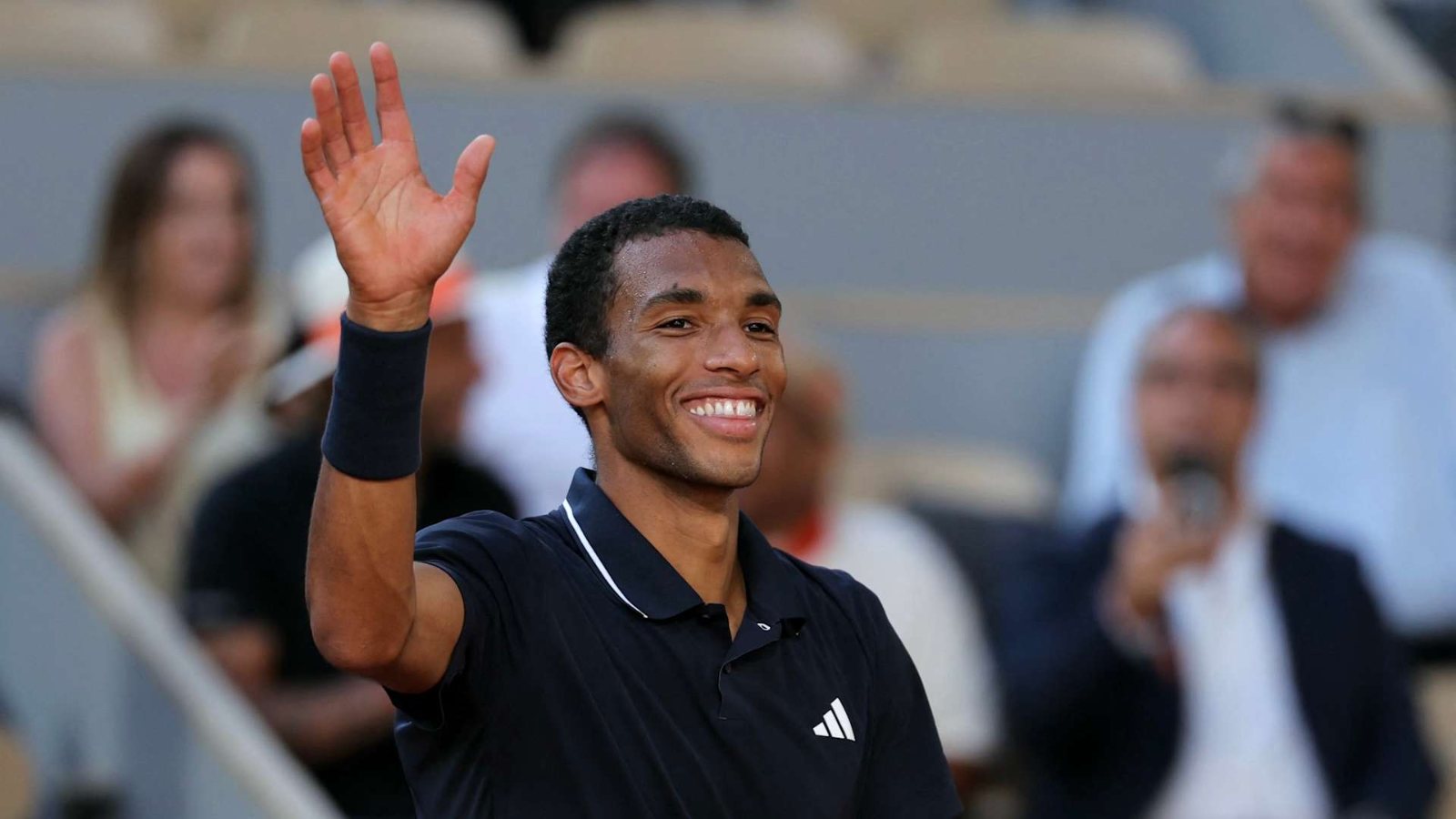
The 2026 French Open has reached its critical inflection point, with the quarter-final match between fourth seed Félix Auger-Aliassime and Italy’s Flavio Cobolli serving as a microcosm of the tournament’s shifting dynamics. For Auger-Aliassime, the stakes extend far beyond a single match; at 25 years old, the Canadian No. 1 is navigating a professional crossroads where technical maturity meets the immense pressure of national expectation. Having already surpassed Milos Raonic as the most decorated Canadian man of the Open Era with nine career titles, the absence of a Grand Slam trophy remains the only significant void in an otherwise stellar resume.
The match on Court Philippe-Chatrier has been characterized by fluctuating momentum and environmental variables that have tested the tactical adaptability of both players. After taking the first set 6-4, Auger-Aliassime faced a resurgent Cobolli, who utilized high-energy baseline aggression to claim the second set 6-4. The decision by tournament officials to close the roof due to turbulent wind conditions—rather than precipitation—introduced a controlled, indoor-like environment that historically favors the Canadian’s flatter, more precise ball-striking. However, the transition to a closed-court setting also accelerates the pace of play, demanding heightened reactive capacity from a player who has occasionally struggled with consistency during high-leverage transition periods.
Tactical Resilience and the Mental Game
Auger-Aliassime’s progression through the 2026 draw has been marked by a newfound ‘even keel’ approach, a mental fortitude that contrasts sharply with the volatile, flair-driven style of opponents like Cobolli. Analysts have noted that the Canadian’s ability to maintain composure during service games, even when faced with break points, has been the cornerstone of his 2026 campaign. In the opening sets against Cobolli, his service efficiency remained high, though a few double faults at deuce indicated the underlying tension of the quarter-final stage. The tactical battle has centered on Cobolli’s ability to extend rallies into the physical ‘red zone,’ testing Auger-Aliassime’s endurance in what has become a grueling tournament marked by extreme climatic conditions.
The institutional support surrounding Auger-Aliassime has also evolved. His team has focused on a ‘baseline-first’ strategy, leveraging his height and reach to dominate the T-line. Off the court, his personal stability—highlighted by his marriage in late 2025—appears to have translated into a more disciplined competitive routine. This stability is critical as he faces an Italian contingent that has dominated the latter stages of the tournament, with the winner of this match slated to face either Matteo Berrettini or Matteo Arnaldi in the semi-finals. For Canadian tennis, which saw a resurgence following the 2024 Olympic bronze in mixed doubles, an Auger-Aliassime victory would represent the pinnacle of the nation’s developmental investment in the sport.
Institutional Challenges: Climate and Scheduling
The 2026 tournament has not been without controversy, particularly regarding the physical toll on athletes. As temperatures soar and the attritional nature of five-set clay-court tennis becomes a point of contention, the debate over the sustainability of the current Grand Slam format has intensified. Players like Casper Ruud have described themselves as ‘zombies’ following extended matches, raising questions about the ATP and ITF’s responsibility toward player welfare. Auger-Aliassime’s ability to navigate these conditions while maintaining peak performance is a testament to his physical conditioning, yet it underscores the broader policy challenge facing the sport: balancing traditional formats with the realities of a changing global climate.
The use of the roof on Philippe-Chatrier has also sparked debate regarding competitive equity. While it provides a more stable environment for the marquee matches, players on outside courts remain exposed to the elements, creating a two-tiered competitive landscape. For Auger-Aliassime, the ‘indoor’ conditions under the roof may provide the technical edge needed to overcome Cobolli’s defensive scrambling, but the broader implications for tournament integrity remain a subject of discussion among tennis governing bodies.
The trajectory of Félix Auger-Aliassime at Roland Garros 2026 suggests a player who has finally synchronized his physical peak with a mature psychological framework. While the quarter-final against Cobolli remains on a knife-edge, the Canadian’s ability to manage environmental shifts and maintain tactical discipline indicates he is no longer merely a contender, but a legitimate threat to the established hierarchy. Should he advance, the pressure will only intensify, but his current form suggests that the historical glass ceiling for Canadian men’s tennis is closer than ever to being shattered.