


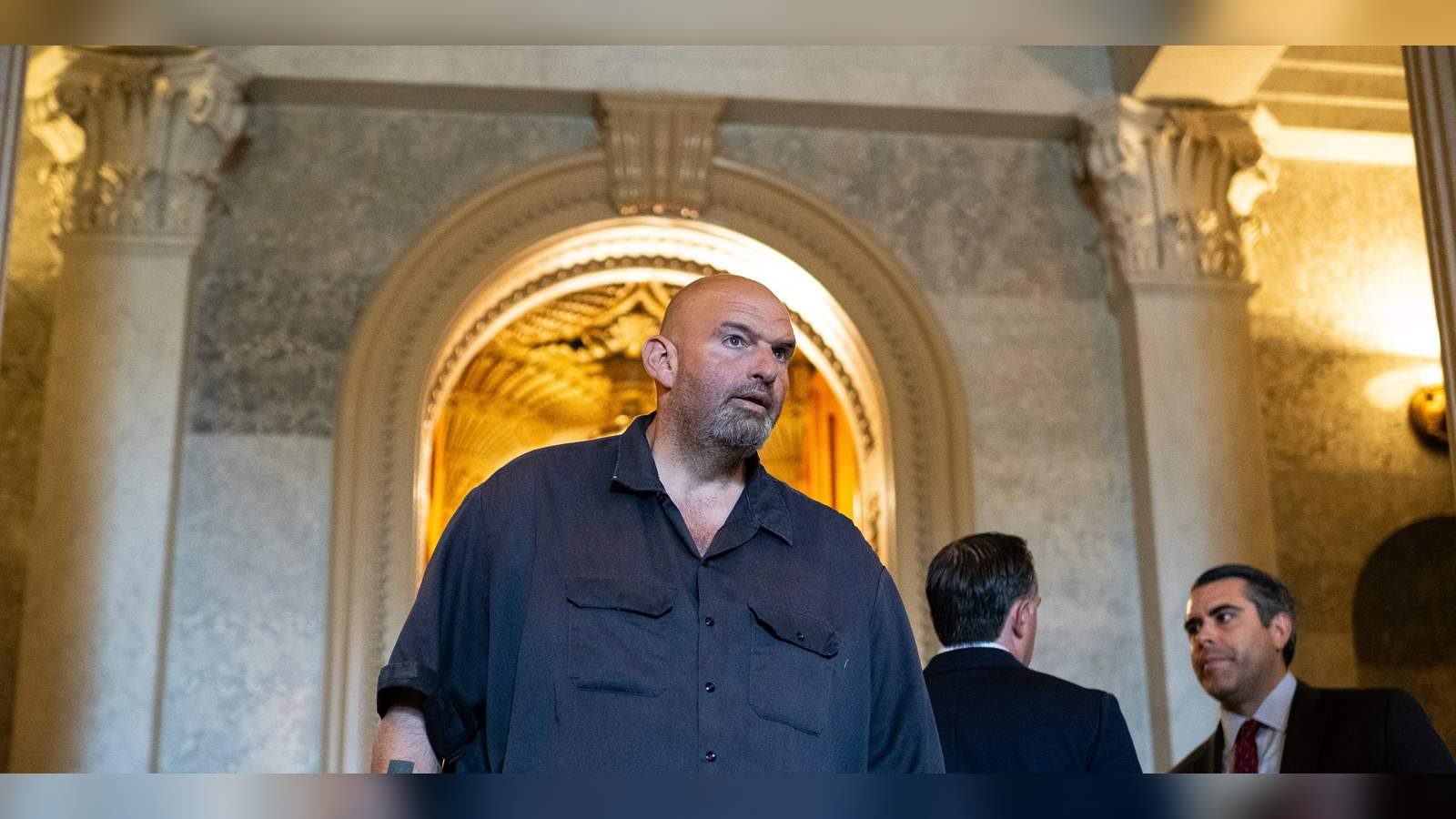
WASHINGTON (Azat TV) – U.S. Senator John Fetterman of Pennsylvania broke with his party on Thursday, November 19, 2026, casting a decisive vote against a measure that sought to force President Donald Trump to end the ongoing war in Iran. The 51-48 Senate vote largely followed party lines, effectively blocking legislation that would have required the president to either withdraw U.S. forces or secure explicit congressional authorization to continue military operations.
Senate deadlock over Iran conflict powers
The resolution, which had previously cleared the House of Representatives, served as a test of legislative authority regarding the conflict that began on February 28. While most Democrats supported the measure as a check on executive power, Fetterman was the sole member of his party to join Republicans in defeating it. Only three Republicans—Susan Collins, Lisa Murkowski, and Rand Paul—crossed the aisle to support the Democrats. The failure of the resolution underscores the persistent tension between the legislative and executive branches, particularly as the war reaches its ninth month with an estimated cost exceeding $47 billion, according to Pentagon data.
Political fallout and future legislative challenges
The vote occurred amidst broader public dissatisfaction with the conflict, with recent Reuters/Ipsos polling indicating that only 31 percent of Americans approve of the administration’s military strategy. Democratic leadership has positioned the war as a central issue for the upcoming legislative session, with plans to make the cessation of hostilities a top priority when they assume control of both chambers of Congress on January 3, 2027. Senator Tim Kaine, a vocal proponent of the resolution, argued that the results of the November 3 midterm elections served as a clear mandate from voters demanding an end to the conflict and relief from economic pressures linked to the war effort. Fetterman’s departure from the party line represents a significant outlier in a polarized chamber, signaling that despite the upcoming shift in legislative control, the path toward a mandated withdrawal remains fraught with political hurdles and executive resistance.