


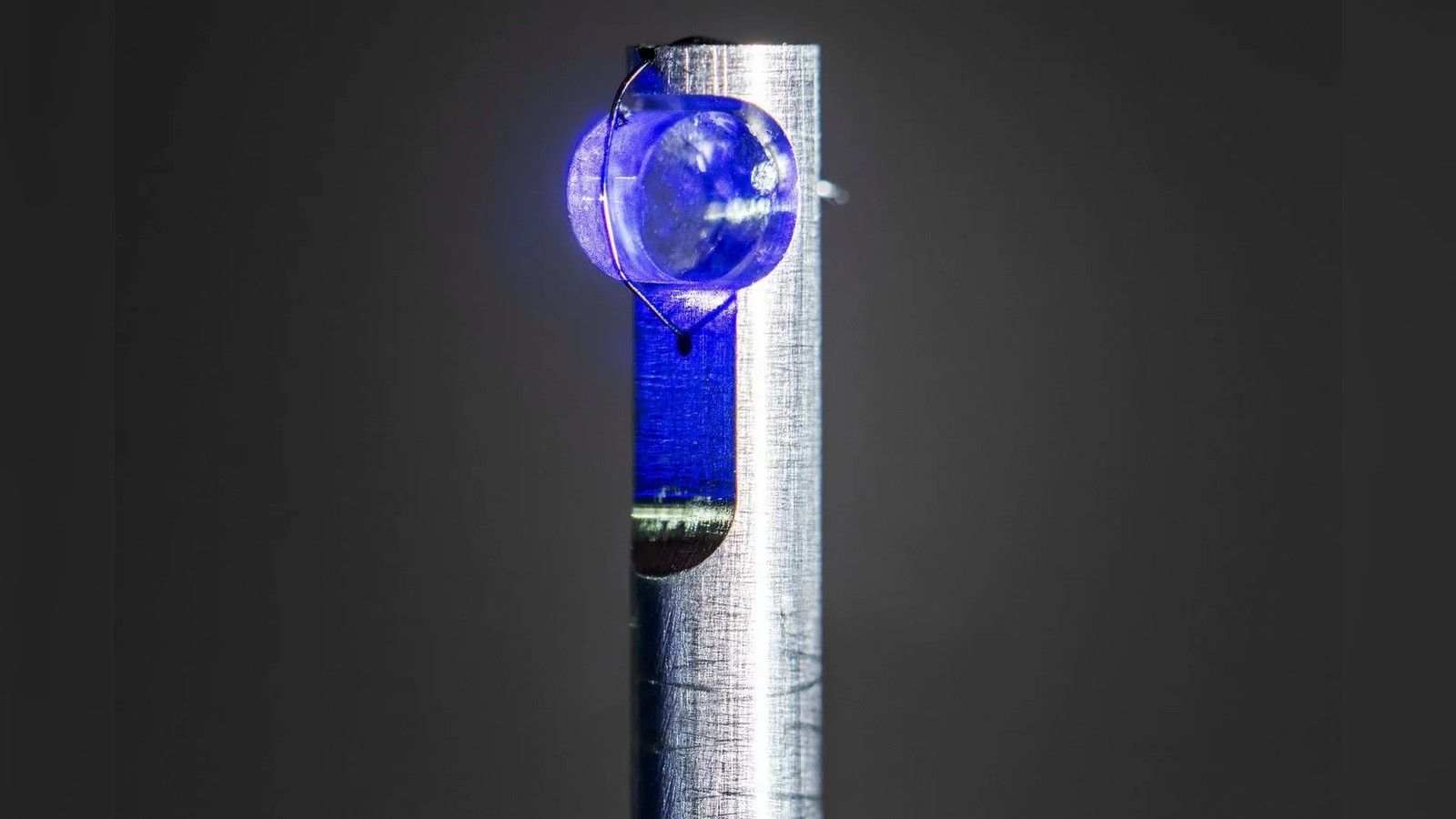
A Leap in Metrological Precision
Two independent research teams have successfully demonstrated the world’s first functional nuclear clocks, marking a significant advancement in metrological technology. Unlike traditional atomic clocks, which rely on the transitions of electrons orbiting an atom, these new devices utilize the quantum energy states within an atomic nucleus. The results, reported by teams led by Thorsten Schumm of the Vienna University of Technology and Shiqian Ding of Tsinghua University, were published in Physics Magazine.
For decades, atomic clocks have served as the gold standard for timekeeping. By measuring the energy levels of electrons, these devices can track time with extraordinary accuracy. However, because electrons are highly susceptible to external electromagnetic interference, atomic clocks require complex, large-scale infrastructure, including ultra-high vacuum chambers and laser-cooling systems. Nuclear clocks offer a potential alternative that is both more robust and potentially more precise, as the nucleus is shielded by its surrounding electrons and is less affected by external environmental noise.
The Role of Thorium-229
The core of this breakthrough is the use of the rare isotope thorium-229. Physicists have long identified this isotope as uniquely suited for timekeeping because its first excited nuclear state requires a relatively low energy—approximately 8.4 electron volts—to trigger. This energy range corresponds to vacuum-ultraviolet light, which can be manipulated using purpose-built, narrow-linewidth continuous-wave lasers.
The two research groups achieved stabilization by anchoring their laser frequencies to the nuclear transitions of thorium-229. While their current prototypes demonstrate a stability roughly equivalent to losing or gaining one second over a period of three to 19 million years, they are already outperforming many existing frequency standards. Researchers suggest that by combining the high laser power used by the Chinese team with the high-concentration crystal approach used by the European team, future iterations could substantially improve this stability, eventually surpassing the accuracy of the best available optical atomic clocks.
Probing Beyond the Standard Model
Beyond timekeeping, these devices provide a new instrument for fundamental physics research. Because nuclear clocks are governed by the strong nuclear force rather than the electromagnetic interactions that dictate electronic transitions, they are uniquely sensitive to different types of physical phenomena. This allows researchers to search for signs of ultralight dark matter, which some models suggest might cause subtle, oscillating variations in fundamental physical constants.
Preliminary tests have already yielded competitive constraints on dark matter’s coupling to photons and the strong force. By measuring how the ticking rate of a nuclear clock might fluctuate relative to an atomic clock, scientists hope to detect anomalies that could indicate physics beyond the Standard Model. As this field matures, the ability to conduct these high-precision measurements at room temperature, without the need for cryogenic cooling, could revolutionize both laboratory research and portable precision instrumentation.