


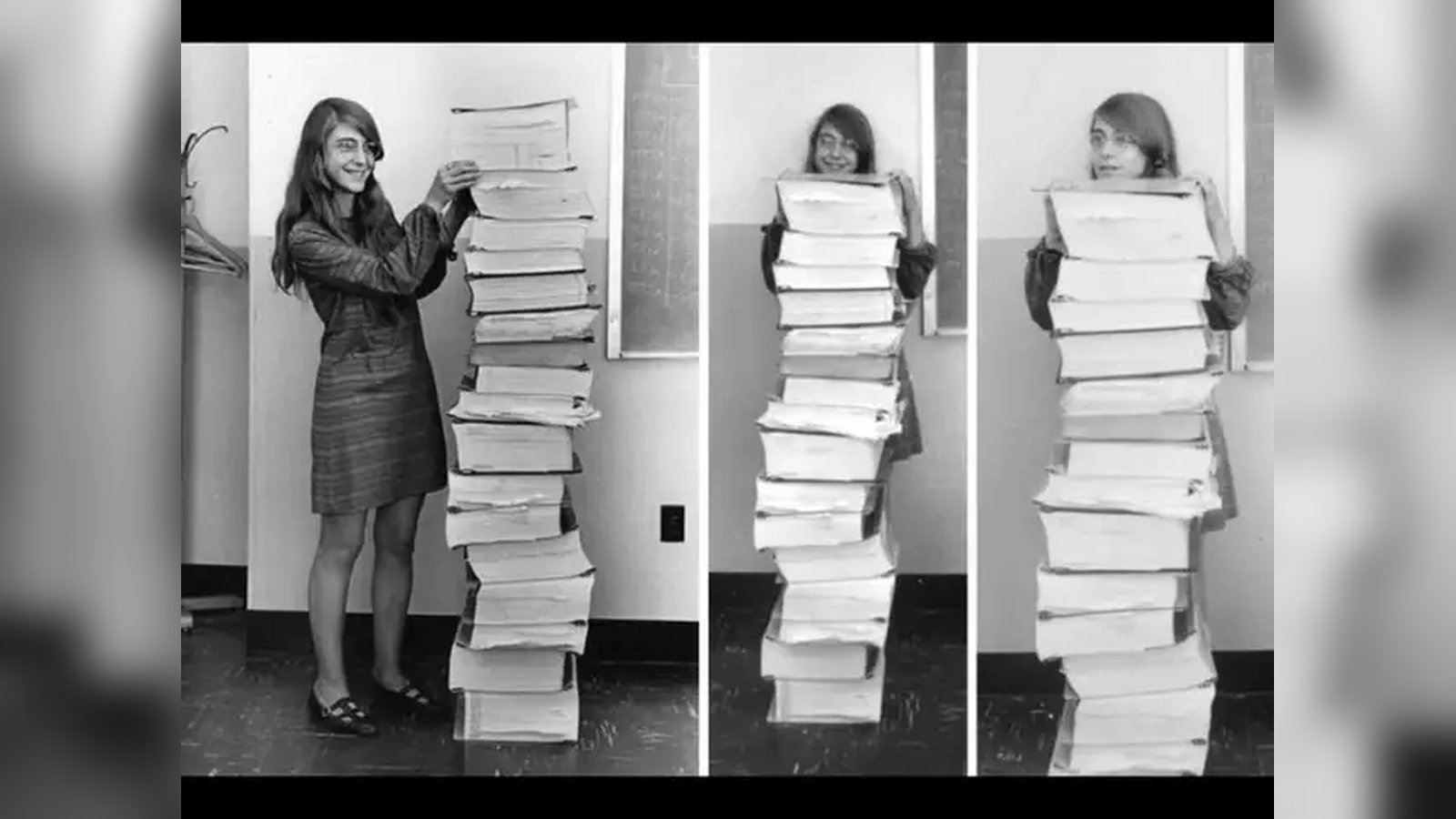
A Legacy of Pioneering Software Engineering
Margaret Hamilton, the visionary computer scientist who led the development of the onboard flight software for NASA’s Apollo program, has died at age 90. The Massachusetts Institute of Technology (MIT), where Hamilton managed the Software Engineering Division during the 1960s, confirmed her passing on September 30. Her work was instrumental in guiding the Apollo 11 lunar module to the Moon’s surface in 1969, a feat that solidified her reputation as a founding figure in the field of software engineering—a term she is credited with popularizing.
Hamilton joined MIT in 1959, working at the Instrumentation Laboratory. When the laboratory secured the Apollo contract, she took charge of a team that grew from a handful of engineers to over 400 by 1968. Her approach was defined by a commitment to reliability and error prevention in an era when computing was still in its infancy. According to BBC, she pioneered “priority-driven” software architecture, ensuring that even if the onboard computer became overloaded, the system could suspend non-critical tasks to prioritize the essential landing functions.
The Critical Apollo 11 Intervention
Hamilton’s engineering foresight proved vital during the final minutes of the Apollo 11 descent. As the lunar module approached the Moon, the onboard computer triggered a 1202 alarm indicating an overload. Because Hamilton’s team had architected the system to handle such contingencies, the software automatically ignored the non-essential tasks and maintained the critical landing sequence. This intervention allowed Neil Armstrong and Buzz Aldrin to land safely, a moment that later earned her the Presidential Medal of Freedom from President Barack Obama in 2016.
Her early experience included working on the SAGE air defense project, where she developed an interest in software reliability. This interest grew into the concept of “defensive” programming. A notable example was the “Lauren error,” named after her daughter, who accidentally triggered a pre-launch program during a simulation, causing it to crash. Hamilton’s proposed fix was initially rejected but later validated when astronaut Jim Lovell experienced the same issue during Apollo 8, leading to the integration of her safety protocols.
Beyond the Apollo Program
Reflecting on her career, Olivier de Weck, an Apollo Program Professor at MIT, described her contributions as a testament to human ingenuity. “To say Margaret Hamilton was a pioneer—to say she was ahead of her time—would be a dramatic understatement,” de Weck stated. Beyond her work at MIT, Hamilton transitioned into a successful entrepreneur. She founded Higher Order Software in 1976 and later Hamilton Technologies, where she championed the Universal Systems Language (USL) to modernize system engineering. Throughout her career, she authored over 130 publications and served as a mentor to generations of engineers, leaving a legacy that transformed the foundations of modern computing systems. She is survived by her daughter, son-in-law, two grandsons, and four great-grandchildren.