


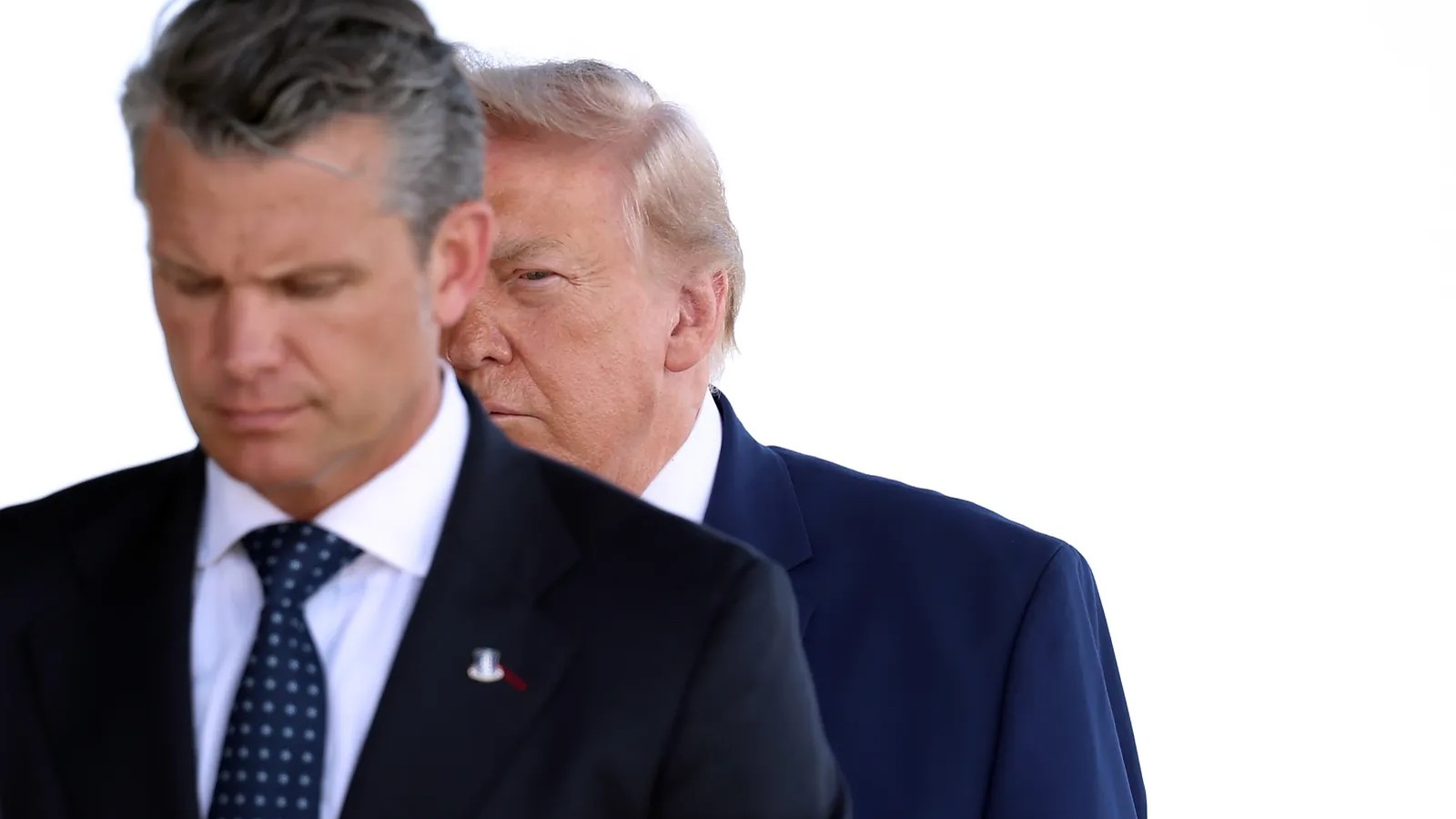
The resignation of U.S. Army Secretary Dan Driscoll has laid bare a profound institutional crisis at the highest levels of the Pentagon. Rather than navigating the established chain of command, Driscoll bypassed his direct superior, Defense Secretary Pete Hegseth, to take his concerns directly to President Donald Trump. During this high-stakes White House meeting, Driscoll detailed worsening readiness issues within the Army amid the active war with Iran and expressed deep alarm over the systematic purging, firing, or passing over of seasoned senior officers. Immediately following the discussion, Driscoll submitted his resignation, highlighting Hegseth’s increasingly isolated position and his highly contentious relationship with the nation’s uniformed military leadership.
The Vance Connection and the Institutional Bypass
Driscoll was not a typical bureaucratic holdover or a career civil servant of the kind Hegseth has frequently targeted for removal. He is an Iraq War veteran, a Trump appointee, and a close personal friend of Vice President JD Vance, dating back to their time together at Yale Law School. This political pedigree and proximity to the second-highest office in the country provided Driscoll with a unique layer of institutional protection. Upon his departure, the White House issued a highly complimentary statement, calling him “highly effective” and praising him for making the Army “more powerful than ever.”
The fact that an official as politically secure and well-connected as Driscoll concluded that the standard channel of communication with Defense Secretary Hegseth was entirely broken is highly telling. It signals a broader breakdown in civil-military relations, where top-tier civilian appointees feel compelled to circumvent the Secretary of Defense to deliver unvarnished assessments of military readiness to the Commander-in-Chief.
A Purged Command Structure and the Vacancy Crisis
Hegseth’s tenure has been defined by an aggressive campaign to dismantle what he characterizes as a complacent and insubordinate military establishment. Under the banner of restoring a strict “warrior ethos,” Hegseth has systematically targeted diversity, equity, and inclusion (DEI) initiatives, overhauled physical fitness guidelines, and pushed out senior leaders he deems disloyal or overly bureaucratic. In April, Hegseth removed the Army Chief of Staff and two other senior generals. In June, the four-star general commanding Army forces in Europe and Africa was ousted. More recently, Hegseth withheld promotions from four officers closely associated with those deposed commanders.
While Hegseth’s supporters view these moves as a successful cleanup of a resistant bureaucracy, the structural consequences have left the U.S. Army in a state of unprecedented leadership depletion. The service currently operates without a Senate-confirmed Chief of Staff, a confirmed civilian Secretary, a confirmed general in charge of operations, or a confirmed commander of Army troops in Europe. This vacuum comes at a critical juncture, as the United States remains deeply entangled in a protracted military campaign in the Middle East.
Dissent on the Record: The Mechanics of Nonconcurrence
The operational friction between Hegseth and the military brass has reached a boiling point over the conduct of the Iran war, which has now passed its six-month mark. The commanders of European Command, Pacific Command, and Southern Command, alongside the Chief of Naval Operations, have formally recorded “nonconcurrences”—official, on-the-record objections—against orders extending troop deployments for the Iran campaign. Army and Air Force leaders concurred with the orders but flagged “significant risk” to overall global readiness. Despite these warnings, more than 50,000 U.S. troops remain deployed in the region, with some tours extended well into 2027.
In the American system of civilian control of the military, a nonconcurrence is not a mutiny; it is a formal mechanism designed to ensure that civilian leaders receive candid, unvarnished advice from uniformed experts before making fateful decisions. Civilian leaders retain the absolute authority to overrule their generals. However, the sheer scale of the current dissent is extraordinary. When the Chairman of the Joint Chiefs of Staff privately advises the White House that the administration needs an “off-ramp,” and multiple combatant commanders formally object to operational deployments, Hegseth’s decision to repeatedly set these warnings aside indicates a breakdown in constructive, two-way communication.
Standards, Morale, and the Legacy of George Marshall
Critics argue that Hegseth’s approach to leadership prioritizes ideological alignment and public relations over institutional standards and safety. A prominent example occurred in July, when a Blue Angels F/A-18 flew dangerously low over Pensacola Beach, causing panic and blowing away beach furniture. While the Navy immediately launched a safety review, Hegseth posted on social media: “The flyovers will continue until morale improves.” Military historians and analysts have contrasted this response with the rigorous standards maintained by historic leaders like General George Marshall. During the 1941 Louisiana Maneuvers, just months before Pearl Harbor, Marshall ruthlessly relieved 31 of 42 corps and division commanders who failed to meet performance standards, proving that true military readiness requires maintaining strict, unpopular standards rather than chasing public popularity or dismissively treating safety near-misses as morale-boosters.
This internal friction has also manifested in a severe leak crisis. Despite Hegseth establishing a joint task force with the Department of Justice in July to prosecute leakers, highly classified documents—including the orders book containing the Iran war warnings, internal debates over rapidly depleting munitions stockpiles, and details of Driscoll’s private meeting with Trump—have continued to find their way to the press. Hegseth’s office has labeled the publication of these documents a crime, but the persistent flow of sensitive information suggests a deeply fractured building where elements of the staff are actively working to undermine the Secretary.
The Political Shield and the Path to 2028
Despite the severe internal discord, Hegseth remains protected by the only endorsement that ultimately matters in the current administration. President Trump has publicly declared he is “extremely happy” with Hegseth’s performance, dismissing reports of friction as treasonous. Hegseth’s political stock has also been bolstered by tactically successful operations, such as the capture of Venezuelan leader Nicolás Maduro, sparking open speculation about his own future political ambitions, including a potential presidential run.
Furthermore, some political analysts suggest that Driscoll’s departure may be part of a broader political realignment rather than a pure defense policy dispute. Driscoll is not the only figure in Vice President Vance’s orbit to step down recently; Vance’s longtime chief of staff and national security adviser have also departed, pointing to early positioning for the 2028 presidential cycle. However, as long as the critical vacancies in the Army’s leadership remain unfilled, the Pentagon faces a prolonged period of operational vulnerability, testing whether Hegseth’s vision of a purged, ideologically aligned military can withstand the pressures of an active regional war.