


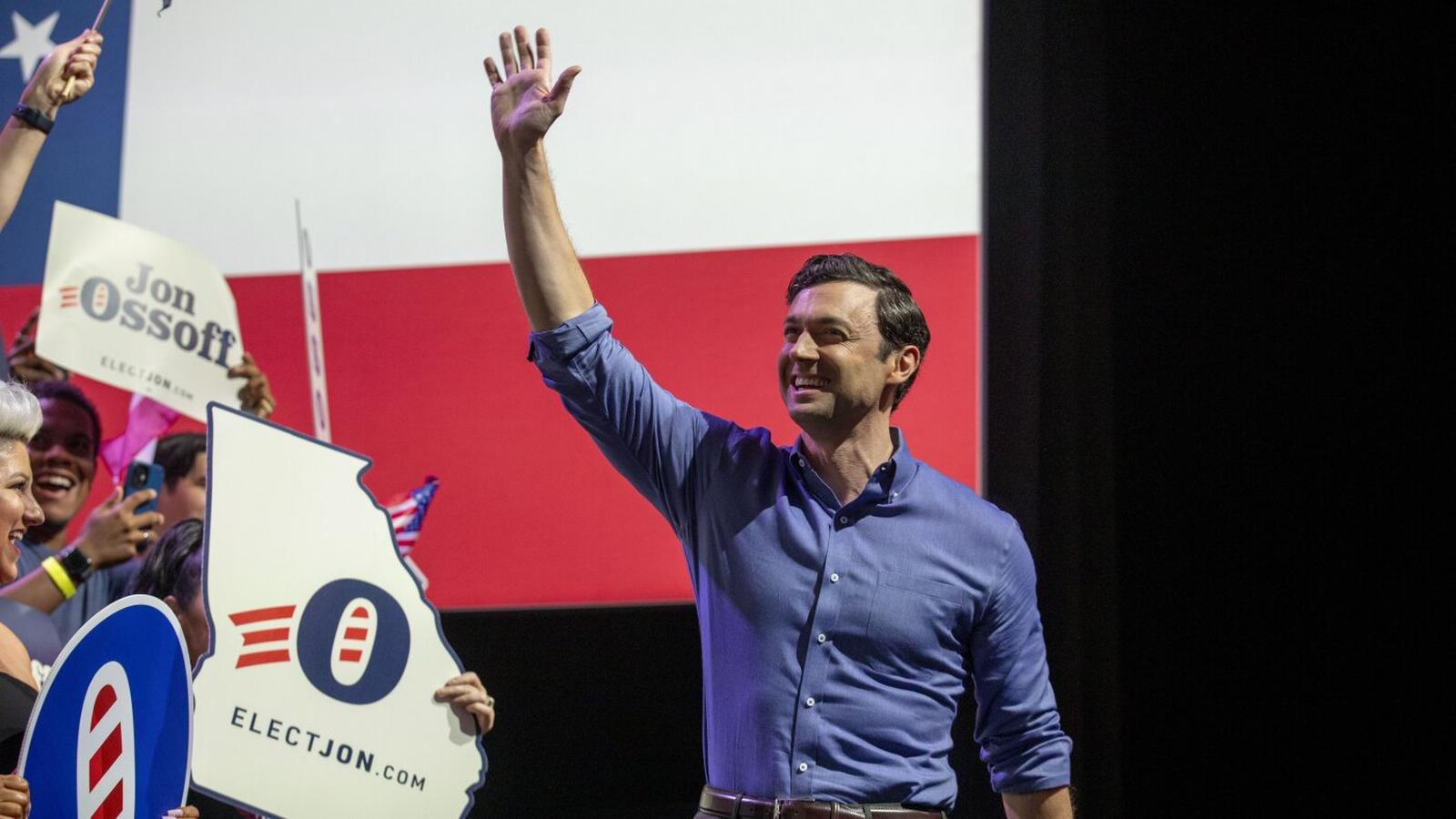
Democratic U.S. Senator Jon Ossoff of Georgia has demanded that his Republican opponent, Representative Mike Collins, hold an immediate news conference and release all internal campaign communications following an investigation detailing neo-Nazi imagery, swastikas, and Ku Klux Klan material shared online by a former campaign contractor.
The controversy erupts at a critical moment in one of the nation’s most closely watched battleground Senate contests. Ossoff characterized the revelations as “disgraceful and disqualifying,” marking the second time in recent months that individuals in Collins’ personal or professional orbit have been linked to white nationalist rhetoric and extremist movements.
This report draws on information published by The Guardian.
Unfolding Extremism Scandal and Campaign Disavowals
According to an investigation published Thursday by the Washington Post, 24-year-old former congressional intern and political contractor Preston Parra regularly shared extreme messaging on social media. The posts included images of swastikas, depictions of Parra in Ku Klux Klan robes generated using artificial intelligence tools, repeated racial slurs, and Nazi song lyrics. Federal Election Commission filings confirm that Parra was paid $7,700 for fundraising consulting in May 2025 by Collins’ leadership political action committee, shortly before Collins formally launched his bid for the U.S. Senate.
When reached for comment by reporters regarding the posts, Parra defended several items as “satirical” before uttering a racial slur to the journalist. A spokesperson for Collins, Meyer Siegfried, moved quickly to distance the campaign from the disclosures, issuing a statement declaring that Parra “has no affiliation with Mike Collins’ office or campaign” and that the representative “unequivocally condemns” the posts as “vile” and “completely unhinged.”
However, Ossoff insisted that a standard campaign disclaimer is insufficient given prior controversies surrounding Collins’ political network. In July, news outlets revealed that Collins’ son-in-law, David Alan Scheer II, had posted antisemitic conspiracy theories, Nazi iconography, and content promoting the neofascist hate group Patriot Front on social media. Scheer, who is registered to vote at a property owned by Collins, appeared in primary campaign photos and attended Collins’ primary victory celebration in June.
Political Dynamics in Georgia’s Senate Battle
The scandal introduces fresh volatility into a race where Ossoff, defending a seat in a state carried by Donald Trump in 2024, has maintained an unexpectedly steady posture. On paper, Ossoff entered the 2026 midterm cycle as one of the Senate’s most vulnerable Democrats. However, political analysts note that Ossoff has successfully cultivated a broad political coalition through a dual-track strategy: high-visibility, viral speeches confronting Trump-era ethics alongside disciplined, bipartisan constituent service in deeply conservative rural counties.
Ossoff’s outreach in non-metropolitan Georgia has yielded endorsements from Republican local officials, including the mayors of Valdosta and Tifton in South Georgia. Local leaders cite Ossoff’s rapid federal response during natural disasters and direct assistance with veterans’ affairs as key reasons for their support. At the same time, Ossoff’s self-authored speeches targeting federal governance and political ethics have generated significant online enthusiasm and robust national fundraising.
Policy Nuances and General Election Stakes
Collins, a trucking executive representing Georgia’s 10th congressional district since 2023, has sought to frame Ossoff as out of touch with conservative voters, labeling him a “trust fund kid” and attempting to link him to national progressive stances. Collins has also continued to assert falsely that Trump won Georgia in the 2020 presidential election.
Simultaneously, Ossoff has navigated complex policy debates within his own party coalition. Ossoff voted in favor of the bipartisan Laken Riley Act, which facilitates the detention of undocumented immigrants charged with theft crimes—a position supported by moderate Georgians but scrutinized by some national progressive groups. On foreign policy, Ossoff, Georgia’s first Jewish senator, has faced debate over his votes blocking selected offensive weapons sales to Israel while maintaining strong overall support for security alliances.
As November approaches, Ossoff’s demand for full disclosure regarding extremist ties puts pressure on Collins to manage severe reputational risks among suburban voters in metro Atlanta. With control of the U.S. Senate potentially hinging on Georgia’s outcome, the candidate’s ability to distance himself from white-nationalist rhetoric while retaining his conservative base will be rigorously tested in the coming weeks.