


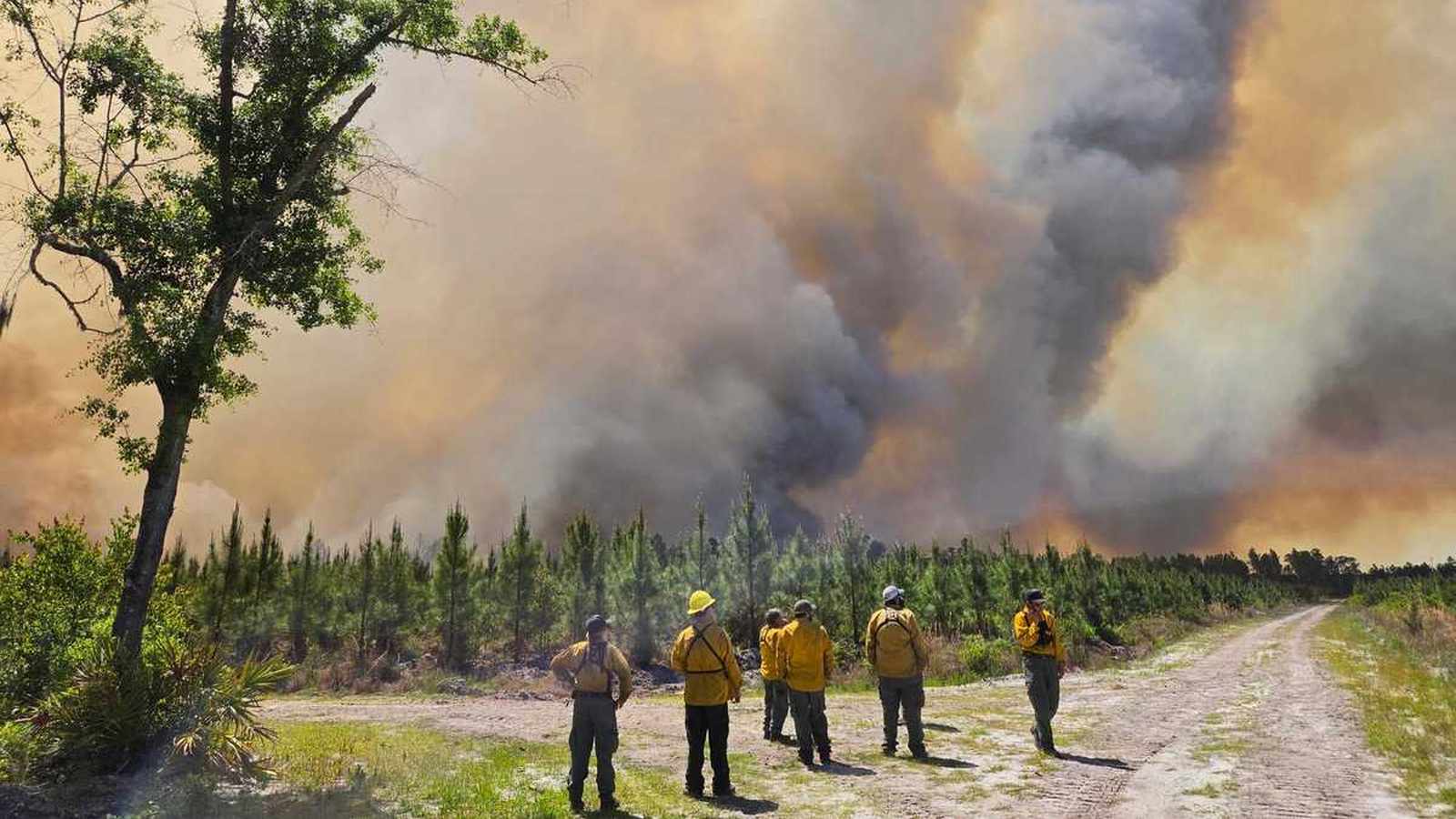
A landscape still scarred by the remnants of Hurricane Helene is now facing a new, existential threat as aggressive wildfires tear through southern Georgia. State officials have confirmed that the Pineland Road fire in Clinch County and the Highway 82 fire in Brantley County remain largely uncontained, with thousands of acres scorched and dozens of structures destroyed. The crisis, compounded by extreme drought conditions affecting 71% of the state, has prompted Governor Brian Kemp to declare a state of emergency across 91 counties.
The Legacy of Hurricane Helene
The intensity of the current infernos is directly linked to the ecological aftermath of the 2024 hurricane season. Forestry experts describe the forest floors as a “tinderbox,” cluttered with massive amounts of woody debris that failed to be cleared after the storm. This organic fuel, combined with persistent dry winds, has created a volatile environment where embers can travel up to a mile, sparking new fires and making containment a monumental challenge for emergency responders.
Humanitarian and Health Impacts
- Mandatory Evacuations: Local authorities are conducting door-to-door operations to ensure residents exit high-risk areas immediately, as fire behavior remains dangerously unpredictable.
- Public Health Alert: Medical professionals have reported a surge in emergency room visits for respiratory distress, with air quality alerts now extending into neighboring South Carolina.
- Community Resilience: While state and federal resources, including FEMA-approved assistance, are being deployed, local churches and private businesses have become the primary hubs for emergency relief and supply distribution.
The situation serves as a stark reminder of the intersection between climate volatility and infrastructure vulnerability. For the residents of south Georgia, the lack of foresight in clearing post-disaster debris has turned a manageable environmental risk into a humanitarian emergency. As the state grapples with this disaster, the focus must shift toward more robust, long-term land management and disaster preparedness protocols. The resilience shown by local communities in rallying to support displaced neighbors provides a vital social safety net, yet the reliance on such grassroots responses underscores the systemic gaps in state-level environmental mitigation strategies.