


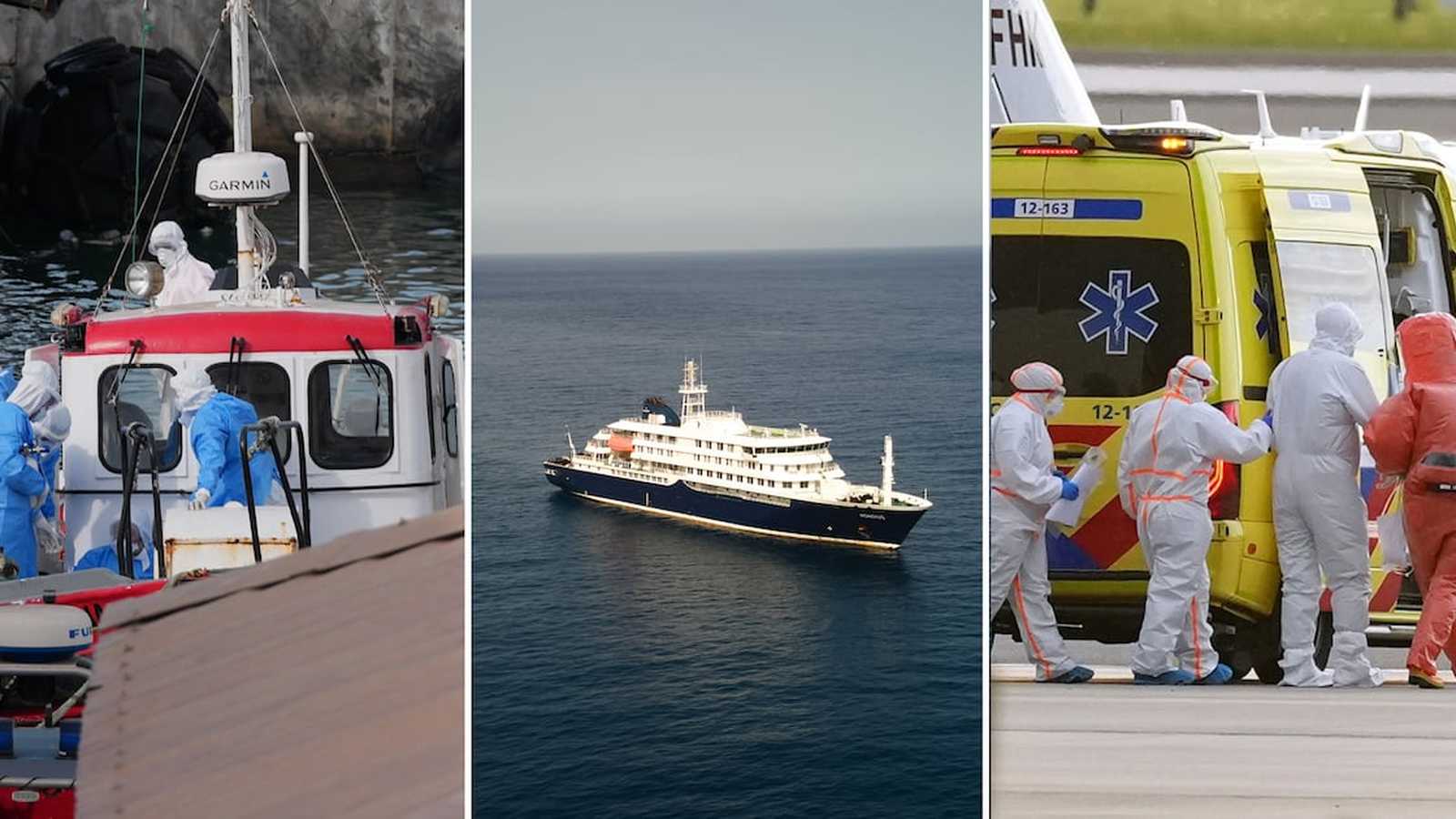
OWEN SOUND (Azat TV) – Two residents of Grey-Bruce are currently in a mandatory isolation period following exposure to a rare and potentially fatal hantavirus outbreak during an international cruise. The incident, confirmed by local health authorities on May 8, 2026, represents the first significant public health challenge for the region’s newly reorganized board of health, which was seated just weeks prior. While the individuals remain asymptomatic, the specific strain of the virus has prompted a high-level response from both local and provincial medical officers.
Grey-Bruce public health response to hantavirus exposure
The two individuals, who reside in the same household, were passengers aboard the MV Hondius cruise ship. The vessel was the site of a hantavirus outbreak that has resulted in at least three confirmed deaths and several other infections. According to Acting Medical Officer of Health Dr. Brittany Graham, the residents disembarked in late April and returned to Ontario on April 25. Since their return, they have been under active monitoring by Grey Bruce Public Health to ensure community safety. The isolation period is expected to last 45 days, reflecting the incubation window and safety protocols associated with this specific pathogen.
The strain identified in the cruise ship outbreak is the Andes virus, a specific type of hantavirus that is uniquely capable of human-to-human transmission. While most hantaviruses are contracted through direct contact with the droppings, urine, or saliva of infected rodents, the Andes strain presents a higher risk profile due to its respiratory spread between people. Dr. Kieran Moore, Ontario’s Chief Medical Officer of Health, noted that the couple was exposed in two distinct settings: first on the cruise ship and subsequently on a flight from Johannesburg, South Africa, which carried a symptomatic passenger. Despite this double exposure, Dr. Moore emphasized that the risk to the general public in Ontario remains extremely low as long as isolation protocols are strictly followed.
Newly appointed board of health manages local safety
This epidemiological event coincides with a period of administrative transition in the region. On April 23, 2026, a new local board of health was officially appointed to oversee public health strategy and governance for Grey and Bruce counties. The swift implementation of monitoring protocols for the returning travelers serves as a critical test of the board’s operational readiness. Dr. Graham stated that health officials are checking in with the isolated individuals on a daily basis to confirm their health status and ensure they have the necessary support to maintain their quarantine.
The management of the hantavirus incident highlights the complexities of public health in rural and semi-rural jurisdictions. Unlike urban centers with centralized infectious disease hubs, regions like Grey-Bruce rely heavily on the coordination between local health units and provincial bodies like the Public Health Agency of Canada. The board’s current priority is balancing the privacy of the affected residents with the need for transparent public communication. Officials have declined to release further details about the couple’s location or identities, citing standard privacy regulations for medical patients.
Community support and mental health in Grey-Bruce
While the physical health of the residents is the immediate focus, the broader community landscape has also seen significant developments in health infrastructure. On April 29, 2026, the Canadian Mental Health Association Grey Bruce (CMHAGB) received a substantial donation aimed at bolstering local support systems. This influx of resources is expected to enhance the region’s ability to manage the psychological impacts of public health crises and isolation. In rural communities, the stigma and stress associated with infectious disease outbreaks can be significant, making the role of organizations like CMHAGB vital to the overall recovery process.
The historical context of hantavirus in Canada suggests that while the virus is rare, it requires vigilant surveillance. Since 1989, only 109 cases have been recorded across the country, primarily in western provinces like British Columbia and Manitoba. The emergence of the Andes strain in a cruise ship environment, however, has introduced a global dimension to local health management. As the 45-day monitoring period continues, Grey-Bruce health officials remain in close contact with international partners to track the progression of the outbreak on the MV Hondius, which is currently navigating toward the Canary Islands.
The coordinated response between the newly appointed health board and provincial authorities indicates that the recent administrative shifts have successfully preserved the region’s capacity to manage high-consequence epidemiological risks without disrupting essential community services.