


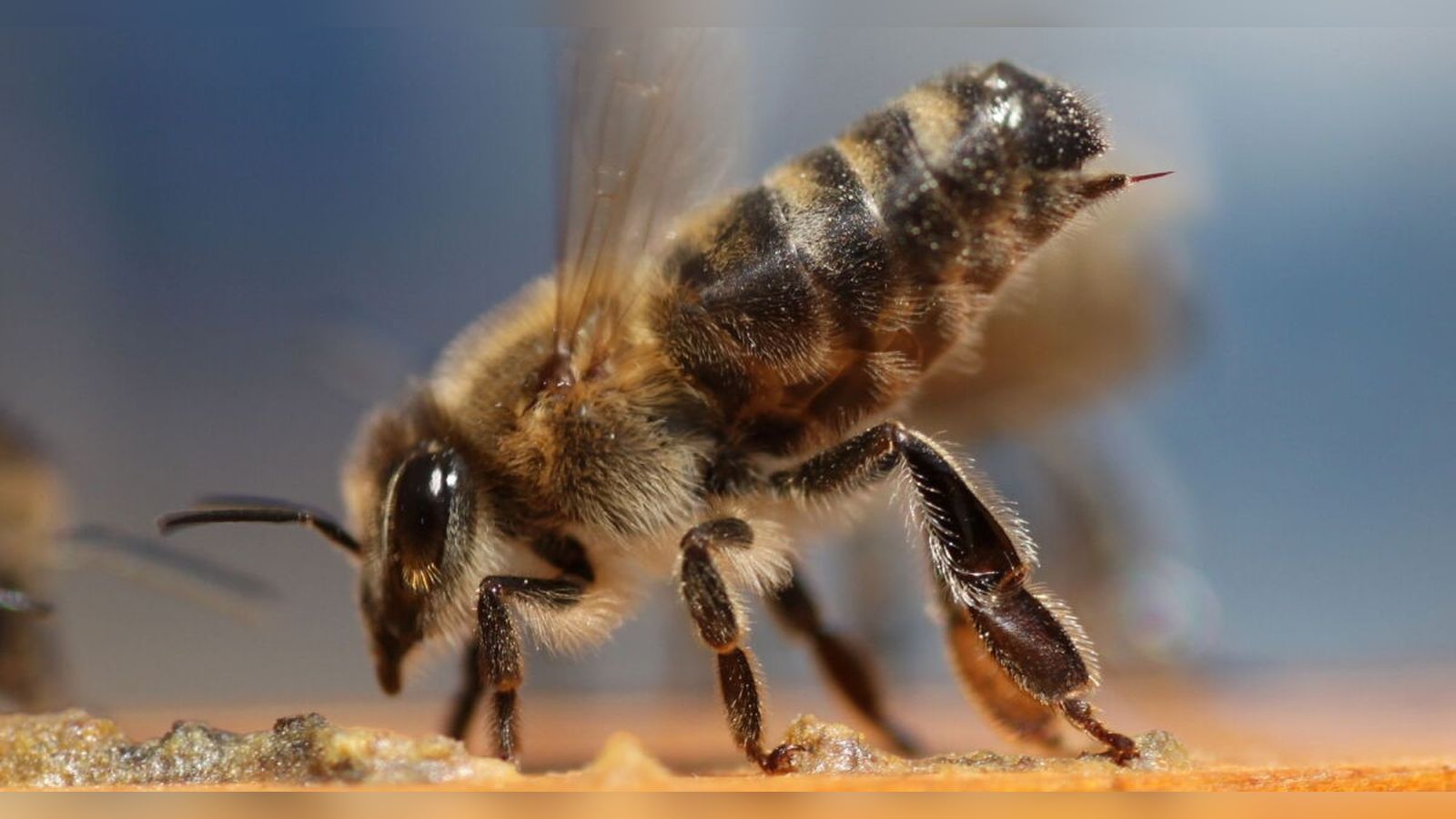
Capturing the Autonomous Stinger in Action
Honey bees (Apis mellifera) are well known for a defensive sacrifice: when they sting an animal with tender flesh, the barbed stinger remains embedded while the insect flies away. This process, known as autotomy, leaves behind an appendage that continues to burrow and pump venom into the victim entirely on its own. While biologists have understood since at least 1910 that a venom sac empties into a chamber equipped with valves, the exact kinematic mechanism has remained unobserved. Now, researchers have captured the first high-speed video footage of the process, revealing how the detached apparatus maintains continuous fluid flow without neural oversight from the bee, as reported by Ars Technica.
Led by entomologist Fiorella Ramirez-Esquivel at Macquarie University in Australia, a team of researchers set out to study the fine details of the stinger’s movement. By collecting live worker bees, removing their stingers with forceps just prior to filming, and partially inserting those stingers into blocks of transparent artificial gel designed to mimic human tissue, the scientists were able to record the internal mechanics in motion. The resulting footage was paired with high-resolution micro-computed tomography scans to build precise three-dimensional reconstructions of the stinger’s internal anatomy, providing unprecedented clarity into an evolutionary design that functions like a biological micro-pump.
Different venomous creatures employ diverse strategies to deliver toxins. While spiders utilize muscles surrounding their venom glands to contract and eject fluid through hollow fangs, and certain wasps and ants rely on muscular contractions around a reservoir, honey bees introduce a rare layer of physiological independence. The detached unit contains nerves, muscles, and glands that coordinate its continued penetration into target tissue via two sharp lancets sliding backward and forward on an olistheter system like a reciprocating saw.
The Double-Piston Mechanism and Deformable Valves
At the heart of the stinger’s autonomy are three main interlocking elements: a larger central component called the stylet and two sharp-tipped, needle-like lancets that slide back and forth. Each lancet carries a flexible valve that moves within an enlarged pumping chamber or bulb where venom collects before expulsion. Through frame-by-frame analysis of the high-speed footage, the research team discovered that these semi-translucent valves operate on a double-stroke principle reminiscent of collapsible parachutes or umbrellas.
During a downward stroke, a valve expands against the chamber walls to form a watertight seal, acting much like a traditional piston to force venom toward the exit canal and deep into target tissue. As it reverses direction and moves upward, the valve collapses to minimize hydrodynamic resistance, allowing the chamber to refill with fresh venom from the reservoir above. Because two valves move in opposite directions simultaneously within the same narrow cylinder, they must periodically pass one another midway through their strokes, briefly deforming to squeeze past each other while maintaining continuous pressure.
To confirm these mechanical observations, the research team used their micro-computed tomography scans to fabricate an up-scaled working model of the bulb chamber and lancets using both rigid and flexible 3D-printed materials. This physical model successfully replicated the pumping cycle and validated how the valves deform during operation, though the exact biophysical forces governing their precise shape-shifting behavior as they cross paths remain an area requiring further investigation.
Broader Implications for Medical Microfluidics
The discovery solves a difficult engineering problem regarding how to maintain a steady, uninterrupted flow of fluid through an extremely tiny chamber while simultaneously refilling it. Conventional mechanical pumps typically rely on rigid components and complex electronic controls, but the honey bee achieves the same hydraulic objective using flexible, self-deforming structures that twist and change shape under mechanical load. According to the research published in the Proceedings of the National Academy of Sciences, these insights could inspire engineers to develop novel microfluidic devices and specialized medical micropumps capable of operating efficiently within irregularly shaped channels.
Furthermore, researchers point out that the adaptability of insect cuticles—the outer layers of an exoskeleton that can vary significantly in hardness, softness, and elasticity across micro-scale areas—offers valuable structural lessons. As manufacturing techniques and advanced plastics progress, biological adaptations such as the honey bee’s double-piston venom pump may serve as a blueprint for designing next-generation, self-contained fluid control systems in minimally invasive medical technologies.