


A Dual-Track Approach to AI Integration
Hong Kong is aggressively pursuing a transformation into a global artificial intelligence hub, leveraging a combination of record-breaking private sector capital and systematic government-led labor market reform. The strategy, highlighted by a massive $10.2 billion capital injection from tech giant Alibaba and a comprehensive public-sector upskilling initiative, marks a pivotal shift in the city’s economic policy.
On August 23, 2026, Alibaba announced plans to raise HK$80 billion (US$10.2 billion) through a primary follow-on share placement. This move, the largest of its kind for a Hong Kong-listed company this year, is explicitly earmarked for artificial intelligence development. The capital raise signals a significant commitment from the private sector to scale infrastructure, data centers, and AI-driven cloud solutions, reflecting broader trends among global hyperscalers.
Government Infrastructure and ‘Upskill Hong Kong’
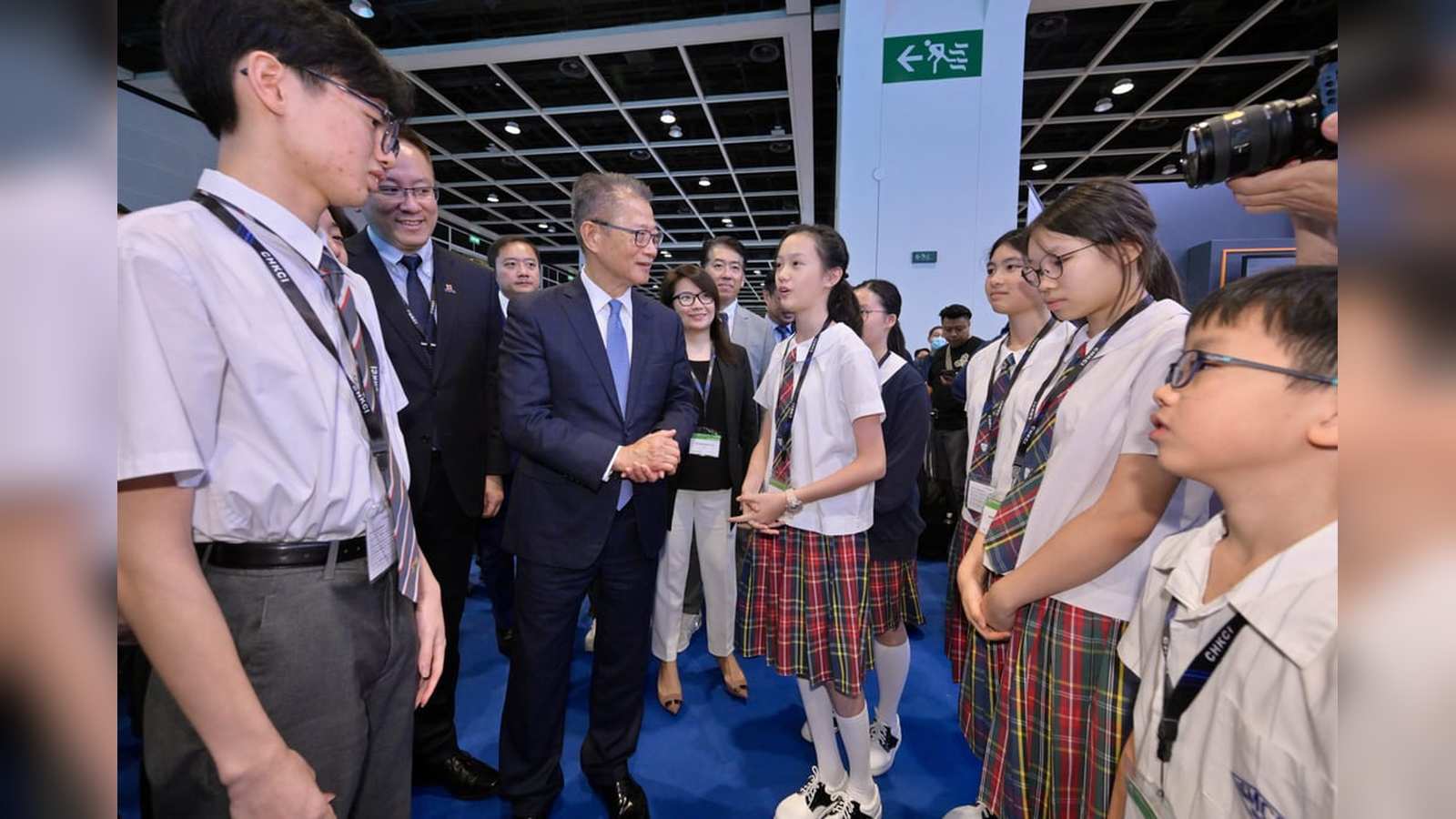
Complementing private investment, the Hong Kong government is moving to ensure the local workforce remains competitive in an increasingly automated economy. Financial Secretary Paul Chan Mo-po announced that the Employees Retraining Board is undergoing an institutional rebranding to ‘Upskill Hong Kong.’ This shift moves beyond traditional support for grass-roots workers, aiming to foster continuous education for the broader labor force, including high-skill professionals.
The government’s ‘AI for All’ programme, backed by a HK$50 million budget, will launch in November. Under the guidance of Cyberport, Hong Kong Science Park, and the Productivity Council, the initiative targets 50,000 residents over two years through 200 tailored activities. The goal is to close the gap between large corporations and small-to-medium-sized enterprises (SMEs) in AI adoption. Estimates suggest that if SMEs achieve parity with major firms by 2035, the city could unlock HK$65 billion in additional economic value.
Stakes for the Local Economy
The integration of AI into public services is already underway. The Transport Department is set to implement AI-driven systems for license renewals by the end of 2026, reducing processing times from 10 days to one. Furthermore, pilot programs for real-time, AI-adjusted traffic signals are scheduled for early 2027. These projects reflect a broader administrative effort to utilize frontier technology to solve urban management challenges.
The economic stakes are high. In the first half of 2026, Hong Kong saw strong export growth in electronics and AI-related products, with AI-focused initial public offerings (IPOs) accounting for 55% of total capital raised in the city between December 2025 and May 2026. As the Hang Seng Index integrates more AI-centric firms, the sector’s weight in the local economy is expected to continue its upward trajectory.