


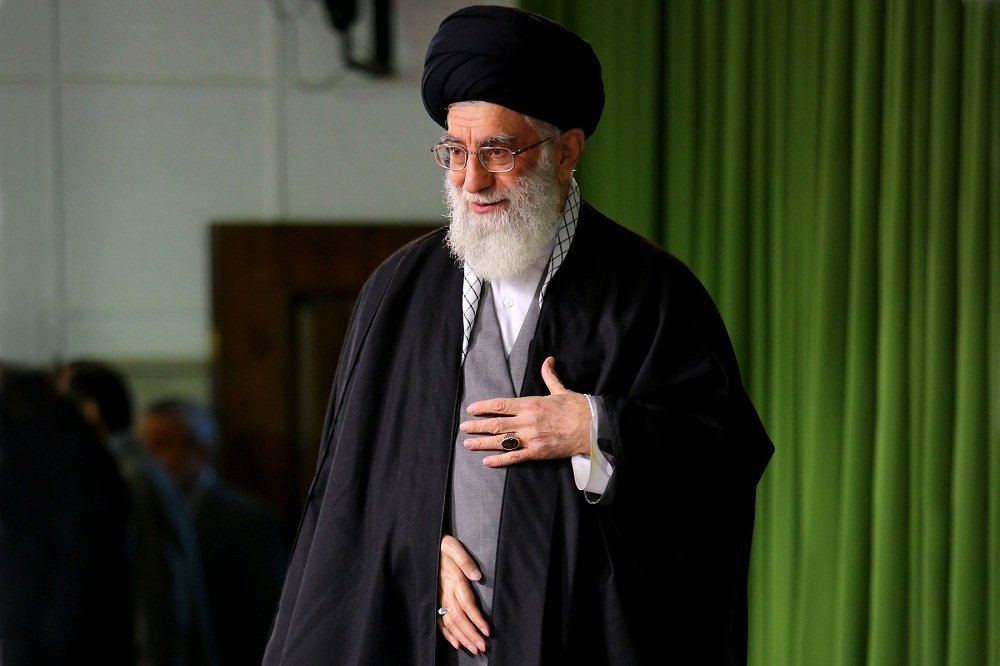
A wave of unprecedented protests has gripped Iran for weeks, transforming initial grievances over economic hardship into a potent challenge against the very foundations of the Islamic Republic. As the nation reels from widespread demonstrations, internet blackouts, and a rising death toll, Supreme Leader Ayatollah Ali Khamenei has maintained a defiant stance, accusing foreign adversaries of orchestrating the unrest. This escalating crisis is further complicated by the re-emergence of exiled Crown Prince Reza Pahlavi, who has called for nationwide strikes and signaled his intent to return to Iran, stirring echoes of a revolutionary past.
Khamenei’s Defiance Amidst Domestic Unrest and Foreign Accusations
From his position as Iran’s ultimate authority, Ayatollah Ali Khamenei has consistently portrayed the ongoing protests not as an organic expression of public discontent, but as a foreign-backed conspiracy aimed at destabilizing the nation. In a recent televised address, the Supreme Leader labeled demonstrators as ‘vandals’ and ‘saboteurs’ acting to please external powers, specifically singling out US President Donald Trump. ‘Our enemies don’t know Iran,’ Khamenei asserted in an X post, adding, ‘In the past, the US failed due to their flawed planning. Today too, their flawed scheming will cause them to fail.’ He also claimed that Trump’s ‘hands are stained with the blood of more than 1,000 Iranians,’ referencing previous US actions against Iran’s nuclear facilities.
Despite the visible anger on the streets, Khamenei urged his supporters to remain steadfast. ‘Dear young people, keep your readiness and your unity. A united nation will overcome any enemy,’ he declared, signaling a firm resolve not to yield to the protesters’ demands. This rhetoric has been echoed by Iranian security and judicial authorities, who have issued stern warnings against any attacks on military, law-enforcement, or governmental facilities, promising ‘no leniency’ for those involved in what they term ‘terrorist actions.’
A Nation Disconnected: The Impact of Internet Blackouts and Escalating Violence
The government’s primary tool for quelling the unrest has been a draconian internet shutdown. Internet freedom watchdog Netblocks reported that the nationwide internet shutdown, implemented by Iranian authorities, had stretched into its 24th hour by January 9, with connectivity flatlining at a mere 1% of ordinary levels. This digital iron curtain has severely hampered the ability of protesters to organize and share information, yet videos continue to circulate online through alternative means like Starlink, showing continued clashes and chants against the government.
The human cost of the protests has been tragically high. According to the Norway-based NGO Iran Human Rights (IHRNGO), at least 51 protesters, including nine children under 18, had been killed in the first 13 days of demonstrations. This figure was later revised upwards, with the Human Rights Activists News Agency (HRANA) reporting at least 62 deaths, including 14 security personnel and 48 protesters, since the demonstrations began on December 28, 2025. Reports of violent confrontations are widespread, with state media confirming the death of a Basij paramilitary officer and injuries to over a dozen others. Military helicopters have been observed overhead in some cities, a tactic opposition groups view as intimidation.
Reza Pahlavi’s Return: A Symbol of Opposition?
Amidst this volatile backdrop, Reza Pahlavi, the exiled son of Iran’s last monarch, has re-emerged as a significant voice of the opposition. Living in exile since the 1979 Islamic Revolution, Pahlavi has actively called for mass strikes and intensified street protests, urging workers in crucial economic sectors like transportation, oil, gas, and energy to cease work. In a video message posted on X, Pahlavi praised the protesters’ courage, stating, ‘My dear compatriots, through your courage and resilience, you have earned the admiration of the world.’
Significantly, Pahlavi has declared his intention to return to Iran. ‘I, too, am preparing for my return to the homeland to stand beside you, the great nation of Iran, at the moment of our national revolution’s victory. I believe that day is very near,’ he proclaimed. While he has stressed that he does not seek an automatic restoration of the monarchy, advocating instead for a national referendum, his calls for coordinated protests and the ‘capture and holding of city centres’ represent a direct challenge to the clerical establishment. His influence was evident as he helped mobilize protests on Thursday night, marking a major escalation in the unrest gripping Iran.
International Reactions and Iran’s Counter-Accusations
The international community has watched the events in Iran with growing concern. Leaders from France, the United Kingdom, and Germany issued a joint statement condemning the ‘killing of protesters’ and calling on Iranian authorities to ‘exercise restraint.’ Canadian Prime Minister Justin Trudeau also condemned the violence. US President Donald Trump, in particular, has issued stern warnings to Tehran, stating that Iran is ‘in big trouble’ and threatening military action if the killing of protesters continues. ‘If they begin killing people as they have in the past, we will intervene. This doesn’t mean deploying ground troops, but it does mean striking very hard where it hurts,’ Trump warned, as quoted by AFP.
In response, Iran’s UN envoy, Amir Saeid Iravani, condemned what he called the ‘unlawful and irresponsible conduct of the United States, in coordination with the Israeli regime, in interfering in Iran’s internal affairs.’ Iran has formally approached the United Nations Security Council, accusing the US and Israel of transforming peaceful protests into violent acts. This diplomatic maneuvering highlights the deep international divisions surrounding the Iranian crisis, with Tehran attempting to deflect international criticism by framing the unrest as externally manipulated.
Economic Woes Fueling the Fire
The root cause of the current eruption of discontent lies in Iran’s struggling economy. The protests initially flared in Tehran’s major bazaars, where shopkeepers closed their businesses to protest the sharp depreciation of the Iranian rial, which lost nearly half its value against the US dollar in 2025. This currency crash has pushed inflation to approximately 50 percent, driving up the prices of essential goods and exacerbating unemployment. By early January 2026, university students and residents across various provinces joined the protests, transforming economic grievances into broader demands for governance reform and an end to theocratic rule. The government’s response, beyond security measures, has included appointing a new central bank chief and Supreme Leader Khamenei naming a senior IRGC commander to a key post, signaling a tightening grip on both economic and security fronts.
The ongoing protests in Iran represent a critical juncture for the Islamic Republic, testing the resilience of its clerical establishment against a populace increasingly emboldened by economic despair and calls for fundamental change. Khamenei’s unwavering defiance, coupled with the severe communication blackouts, suggests a regime prepared to employ robust measures to maintain control, while the rising prominence of figures like Reza Pahlavi indicates a potential for the movement to coalesce around alternative leadership, setting the stage for a prolonged and unpredictable struggle for Iran’s future.