


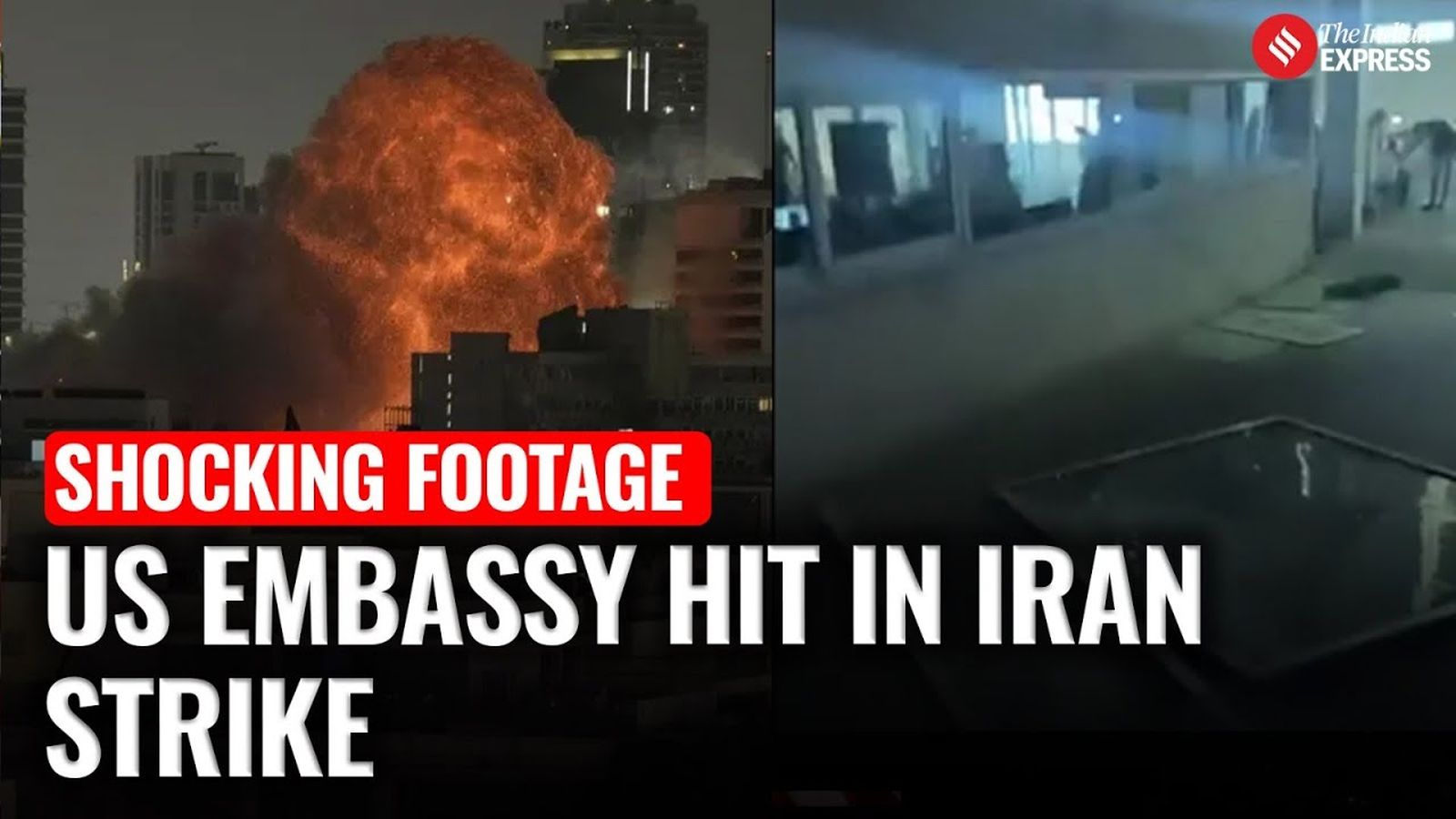
KUWAIT CITY (Azat TV) – Iran and Iranian-backed militias reportedly fired missiles that struck the U.S. Embassy compound in Kuwait on Monday, March 2, 2026, marking a significant escalation in the widening U.S.-Israel conflict with Iran. The attack occurred amidst a broader regional conflagration that has seen both sides exchange heavy barrages, leading to increasing casualties, urgent diplomatic warnings, and profound instability across the Middle East.
The strike on the U.S. diplomatic facility in Kuwait underscores the rapidly deteriorating security situation, prompting the U.S. State Department to issue a stark warning for all American citizens to depart more than a dozen Middle Eastern countries immediately. This development comes as the conflict, which began with joint U.S.-Israeli strikes on Iran last Saturday, has expanded to involve numerous regional actors and has led to a rising human toll.
Escalation and Casualties in the Widening Conflict
The reported missile strike on the U.S. Embassy compound in Kuwait was part of a coordinated series of attacks by Iran and its allied militias against Israel and Arab states. In a separate, but related, incident within Kuwait, six U.S. Army soldiers from the same logistics unit were killed when an Iranian weapon penetrated allied air defenses and struck a fortified tactical operations center. U.S. Central Command confirmed the deaths, which increased the total U.S. military death toll to six, after two previously unaccounted-for service members were recovered from a facility hit during Iran’s initial regional attacks.
Adding to the chaos, the U.S. military also reported that three American F-15E Strike Eagles were ‘mistakenly shot down’ by Kuwaiti forces during a combat mission on Monday. The broader conflict has resulted in at least 555 deaths in Iran due to the U.S.-Israeli campaign, according to the Iranian Red Crescent Society, with more than 130 Iranian cities reportedly under attack. In Israel, 11 people have been killed, while Lebanon has reported 31 fatalities, authorities stated.
Regional Impact and Diplomatic Fallout
The escalating conflict has triggered widespread diplomatic and humanitarian concerns. The U.S. State Department urged all U.S. citizens to ‘DEPART NOW’ from countries including Iran, Iraq, Jordan, Lebanon, and Israel, citing significant safety risks and the cancellation of flights by some major airlines. Concurrently, the U.S. Embassy in Jordan temporarily evacuated staff from its compound in Amman following threats from the Iran-backed Iraqi militia Kataib Hezbollah, which has also claimed attacks on U.S. bases in northern Iraq.
At a United Nations Security Council meeting chaired by U.S. First Lady Melania Trump, Bahrain’s U.N. Ambassador Jamal Alrowaiei sharply criticized Iran for its aggression against his country and other Gulf nations. Alrowaiei highlighted the ‘significant material and psychological damages’ caused by Iranian attacks on civilian facilities and residential areas in Bahrain, which hosts a major U.S. naval base. He also noted that schools in Bahrain and other regional countries, including Israel, the United Arab Emirates, Qatar, and Oman, had closed or moved to remote learning due to ongoing military operations.
Strategic Objectives and International Reactions to Iran Strikes
U.S. Secretary of State Marco Rubio, speaking to reporters on Capitol Hill, asserted that ‘the hardest hits are yet to come from the U.S. military’ on Iran, stating that the next phase would be even more punishing. Rubio clarified that while the U.S. would welcome an Iran not governed by ‘radical Shia clerics,’ regime change was not the stated objective of the current operation. Instead, he outlined the mission’s goals as destroying Iran’s ballistic missile capability, ensuring it cannot be rebuilt, and preventing Iran from developing a nuclear program.
The initial joint U.S.-Israeli strikes on Iran had reportedly killed Iran’s Supreme Leader Ali Ayatollah Khamenei, along with many other top leaders. However, early polling conducted by The Washington Post suggested that American public opinion on the initial airstrikes was more negative than positive, with about half of those polled opposing the strikes. Internationally, Spain’s Prime Minister Pedro Sánchez called the U.S. attack ‘unjustifiable’ and ‘dangerous,’ confirming that joint U.S. bases in Spain were not used in the operation. NATO Secretary General Mark Rutte, while approving of the U.S. decision to attack Iran, ruled out NATO’s direct involvement in the conflict.
Iran, for its part, claimed to have shot down 20 ‘enemy drones’ since the U.S. and Israeli attacks began. Meanwhile, Iran’s foreign minister posted an aerial photo showing rows of freshly dug graves for over 160 girls who he said were killed by an airstrike on an elementary school in southern Iran. Both the U.S. and Israel stated they were looking into these reports. The U.N.’s humanitarian office also highlighted the severe impact on Gaza, where Israel’s closure of crossings has led to fuel rationing, water shortages, and inflating prices for basic goods, though Israel announced one crossing would reopen for humanitarian aid on Tuesday.
The reported missile strike on a U.S. diplomatic facility in Kuwait signifies a dangerous expansion of the U.S.-Israel-Iran conflict, moving beyond direct military engagements to target sovereign infrastructure and further destabilizing an already volatile region. This event not only deepens the humanitarian crisis and regional displacement but also raises serious questions about the potential for wider international involvement and the effectiveness of current de-escalation efforts.