


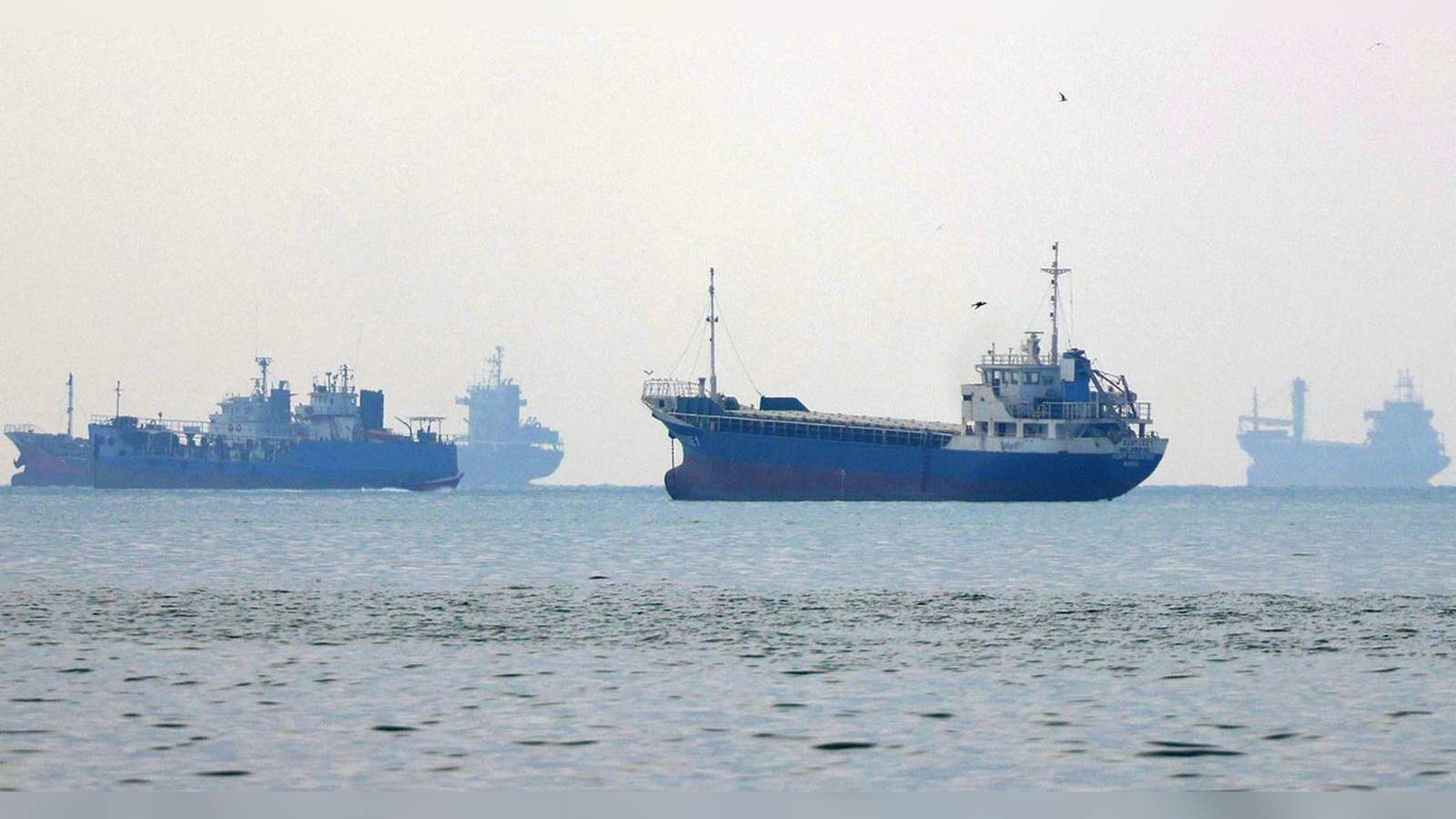
TEHRAN (Azat TV) – Tensions across the Persian Gulf reached a dangerous threshold on September 8, 2026, as Iran announced plans to establish a naval “exclusion zone” outside the Strait of Hormuz, demanding that all commercial vessels seek formal clearance from Tehran before transiting the vital choke point. According to reports from CBS News, the head of Iran’s Supreme National Security Council confirmed the upcoming maritime restrictions following a series of military exchanges, including U.S. strikes on three Iranian oil tankers and Iranian retaliatory strikes against commercial shipping. The announcement propelled global energy benchmarks near multi-week highs, with international standard Brent crude reaching $99 per barrel on Tuesday morning and West Texas Intermediate climbing above $92 per barrel.
The economic impact of the confrontation is already reverberating worldwide. As shipping traffic through the narrow waterway plunged to an average of just 10 commercial vessels per day—down from a pre-war baseline of roughly 130 transits daily—international energy markets braced for prolonged supply disruptions. In the United States, national average gasoline prices rose to $4.15 per gallon, setting a record for the Labor Day holiday period according to AAA figures cited by CBS News. Meanwhile, domestic economic pressures inside Iran have escalated dramatically, prompting the government to double gasoline prices for high-volume consumers to 100,000 rials per liter as the national currency hit a record low of 2.22 million rials against the U.S. dollar.
Maritime Exclusion Zone and Shipping Blockade Dynamics
The proposed Iranian exclusion zone represents a direct escalation in the ongoing maritime standoff between Washington and Tehran. According to official Iranian statements released on Monday and detailed by CBS News, Iranian forces intend to intercept and halt any commercial vessel attempting to navigate the waters adjacent to the Strait of Hormuz without express Iranian approval. This move follows a surge in direct engagement, including Iranian threats of “more intense and more painful” retaliation after U.S. military strikes disabled three Iranian oil tankers in the Persian Gulf and Gulf of Oman.
Simultaneously, U.S. Central Command (CENTCOM) confirmed Monday that American naval forces have actively enforced a blockade on Iranian ports. CENTCOM reported that it has redirected 94 commercial ships accused of attempting to violate the blockade orders issued by U.S. President Donald Trump, up from 92 the previous day. Of those vessels, U.S. forces have disabled three ships and boarded two others. The enforcement actions on both sides have practically paralyzed commercial maritime traffic through the strait. Analytics firm Kpler recorded only two commercial vessels transiting the strait on Saturday and six on Sunday, predominantly utilizing Iranian territorial routes, underscoring the severe contraction in global trade flow through the region.
The strategic choke point has become increasingly hazardous for commercial crews. Oman’s Maritime Security Center reported that the Royal Navy of Oman recently rescued 16 crew members from a Saudi-flagged oil tanker after it was struck by Iranian fire in the Strait of Hormuz, an attack that left two Filipino crew members dead. The incident highlighted the immediate physical threat facing commercial shipping operators, many of whom have chosen to anchor outside the Persian Gulf or reroute vessels at substantial financial cost.
Energy Market Shockwaves and Domestic Economic Strain
The persistent disruption of Persian Gulf energy corridors has created severe structural pressures in global commodity markets. Brent crude’s rally to $99 per barrel reflects growing anxiety that a total blockade or extended naval combat could permanently remove millions of barrels of crude oil from daily global supply. Despite U.S. President Donald Trump’s public assertion on social media that oil prices would drop precipitously upon a victory over Iran, energy analysts cited by CBS News emphasize that persistent physical risks to tankers make immediate price relief unlikely.
Inside Iran, the war effort and international sanctions have placed severe strain on state finances and domestic consumption. Early Tuesday, Iranian state media announced a major adjustment to fuel subsidies, doubling the price of gasoline for households consuming more than their monthly quota of 110 liters. Under the new decree, heavy users will pay 100,000 rials (approximately 7 U.S. cents) per liter for excess fuel. Keramat Veis Karami, CEO of the state oil distribution company, acknowledged that domestic gasoline consumption reached an unprecedented high of 145 million liters per day in August, far surpassing Iran’s domestic production capacity of 122 million liters per day and forcing the state to import the deficit amidst crippling currency depreciation.
The government’s decision to hike fuel prices carries significant political risk, given that a similar price adjustment in 2019 ignited nationwide civil unrest. To cushion the domestic political impact, Iranian officials stated that revenues generated from the price increase would be redistributed directly to lower-income households. However, with the Iranian rial trading at record lows on the free market, broader inflationary pressures continue to erode public purchasing power across the country of 90 million people.
Multilateral Warnings and Regional Strategic Realignments
The expanding maritime conflict has triggered alarm among global trading nations and Persian Gulf states. On Tuesday, the Global Shipping Group—a consortium of 18 maritime nations including the United Kingdom, Denmark, and Canada—issued a rare joint statement warning that the Middle East war signals a fundamental “structural shift” in international trade. As reported by CBS News, the group stressed that global trade security is suffering a systemic breakdown and called for renewed adherence to the United Nations Convention on the Law of the Sea (UNCLOS), specifically protecting the right of innocent passage for commercial vessels.
The maritime crisis has simultaneously expanded to secondary shipping corridors. In Yemen, Iran-backed Houthi rebels launched a major frontline offensive along the Red Sea coast aiming to secure control near the strategic Bab al-Mandab Strait. Coalition authorities reported that Houthi strikes targeting Saudi Arabian infrastructure—including Abha International Airport, King Khalid air base, and Saudi Aramco facilities in Abha and Jizan—wounded 73 people. The offensive has left over 300 people dead in coastal combat, threatening to close off the alternative export routes Saudi Arabia has utilized to bypass the Hormuz blockade.
In response to the deteriorating security environment, Gulf Arab diplomatic stances are undergoing a visible transformation. Speaking at the Hili Forum in Abu Dhabi, Qatari Foreign Ministry spokesman Majed Al Ansari remarked that Persian Gulf states can no longer rely solely on strategic security partnerships with the United States, calling self-reliance in regional defense “the only way forward.” Concurrently, senior UAE diplomatic advisor Anwar Gargash emphasized that while restoring trust with Tehran remains complex, diplomatic engagement is essential, noting that Gulf nations must overcome their past failure to establish a unified defense posture against shared regional threats.