


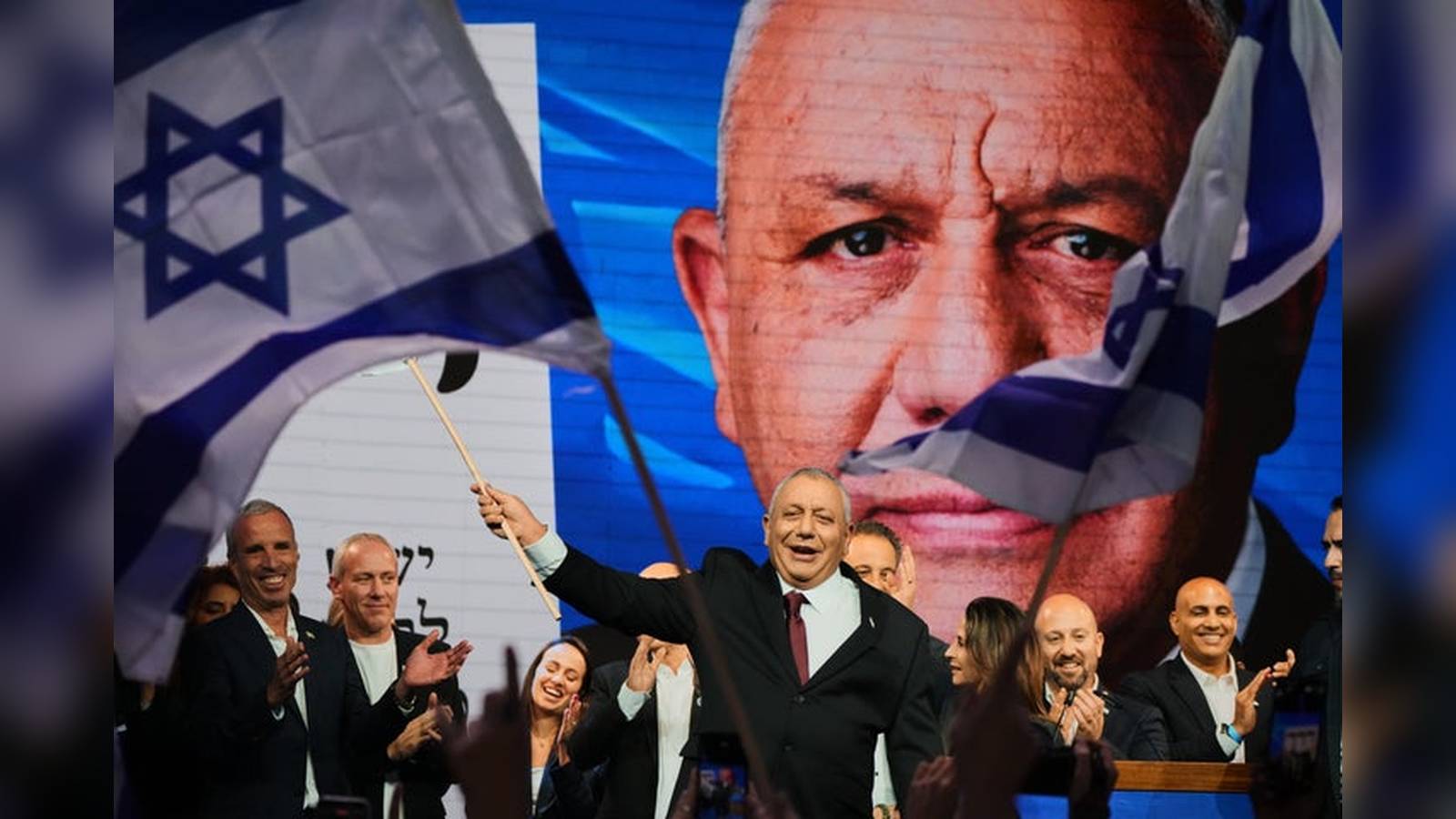
JERUSALEM (Azat TV) – Israeli President Isaac Herzog announced on Saturday night, November 7, 2026, that he was tasking opposition candidate Gadi Eisenkot with forming a new governing coalition, dealing a significant political setback to Prime Minister Benjamin Netanyahu (HuffPost). Eisenkot, a former military chief who led the centrist Yashar party in the October 27, 2026, elections, now has up to six weeks to assemble a parliamentary majority and attempt to oust Israel’s longest-serving premier.
Following consultations with representatives from most of Israel’s main political parties, President Herzog decided to give Eisenkot the first opportunity to build a government. In a post on his X account shortly after the presidential announcement, Eisenkot stated, “This is the time to establish a national emergency government. I will do anything possible to prove us worthy.” However, constructing a stable majority in the 120-seat Knesset remains an immensely challenging task in a deeply divided country that has spent over three years reeling from the October 7, 2023, Hamas-led attacks and subsequent conflicts in Gaza and beyond.
The Parliamentary Arithmetic and the Arab Party Dilemma
Neither Netanyahu’s right-wing bloc nor the opposition alliance led by Eisenkot secured an outright majority in the October 27 vote. Netanyahu’s Likud party and its far-right and ultra-Orthodox allies fell short of the 61 seats required, while Eisenkot’s bloc also failed to capture a majority on its own. This dynamic has placed Arab-led parties—which made historic gains in the election—into a potential kingmaker role.
Forming an alliance with Arab-led factions would be exceptionally divisive. Prime Minister Netanyahu has aggressively campaigned against any such partnership, issuing a video statement shortly before Herzog’s announcement warning against “hastily swearing in a government with terrorist supporters” and repeating unsubstantiated claims that Arab parties stole the election. Conversely, Eisenkot has indicated a willingness to partner with Arab factions under specific conditions, including an explicit designation of Hamas as a terrorist organization that must be destroyed. An Arab party has only been part of a governing coalition once in Israel’s history.
Deep Policy Differences and Alternative Coalitions
Beyond the question of Arab-led factions, Eisenkot faces stark policy divisions with potential coalition partners. While a broad unity government involving major Jewish parties—including Netanyahu’s Likud, the single largest party in parliament—remains a theoretical possibility, profound disagreements separate the leaders. Netanyahu relies heavily on religious parties demanding military draft exemptions for ultra-Orthodox men and opposes a formal state commission of inquiry into the security failures surrounding the October 7 attacks. Eisenkot’s camp, meanwhile, has criticized Netanyahu’s alliances with radical right-wing factions.
Another option for Eisenkot would be establishing a minority government supported externally by Arab parties not formally seated in the cabinet. However, several members within Eisenkot’s own coalition have stated they would reject such an arrangement, underscoring the delicate compromises required to navigate the next six weeks.