


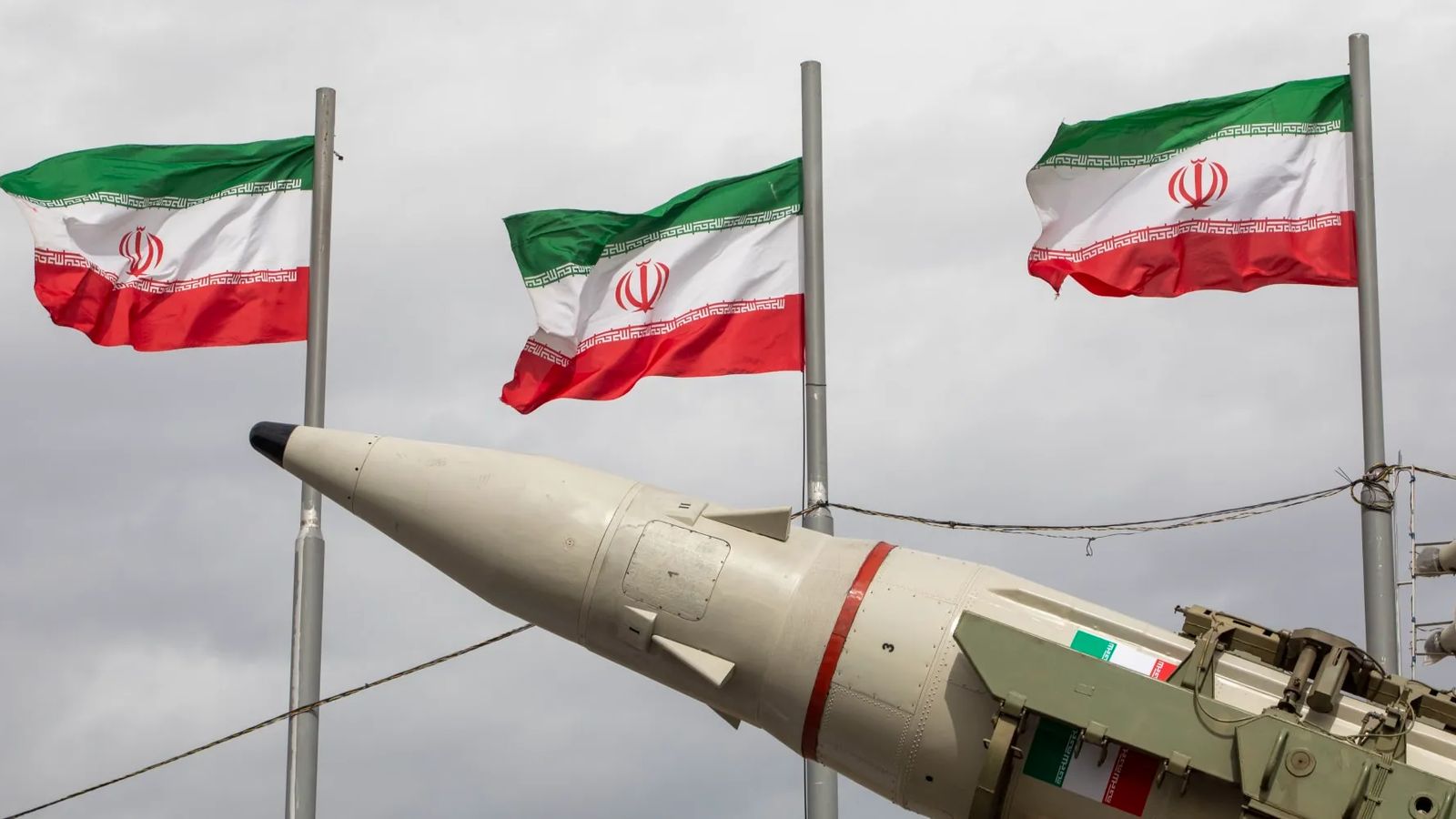
Revolutionary Guard Removes Ballistic Missile Range Cap
Iran’s paramilitary Revolutionary Guard has officially lifted its self-imposed 2,000-kilometer (1,200-mile) limit on ballistic missile ranges, according to a KTVN report published on November 7, 2026. The announcement was made by Gen. Hossein Mohebbi during a Tehran news conference. Mohebbi stated that the restriction is no longer active, though he did not specify whether Tehran currently possesses operational hardware capable of exceeding the previous threshold. Instead, he noted that the military would demonstrate such capabilities in practice rather than through statements.
The policy shift follows warnings delivered days prior by Supreme Leader Ayatollah Mojtaba Khomeini, who asserted that any level of threat from the United States or Israel would trigger a response unrestricted by geography. While international observers note that Iran has not yet publicly demonstrated intermediate or intercontinental range capabilities beyond the 2,000-kilometer mark—a footprint covering the Arabian Peninsula, the Levant, Egypt, and parts of the Balkans—U.S. officials have repeatedly cautioned that rocket technology utilized in Iran’s space program could theoretically be adapted for longer-range systems.
Simultaneously, Iranian state media reported explosions on Qeshm Island and near the port of Jask in the Strait of Hormuz. Separately, the Iranian military reported that a petroleum tanker east of the Strait had struck a mine and caught fire after navigating with its beacon deactivated in a prohibited zone. Meanwhile, U.S. President Donald Trump confirmed that American military forces conducted limited airstrikes targeting an Iranian air defense system.
Political Realignment in Israel and Escalation in Yemen
In Israel, President Isaac Herzog formally tasked opposition candidate Gadi Eisenkot with forming a new government following the parliamentary elections held on October 27, 2026. Eisenkot, a former military chief of staff heading a centrist bloc, faces the complex challenge of building a viable coalition in a deeply polarized legislature. Neither Eisenkot’s bloc nor incumbent Prime Minister Benjamin Netanyahu’s coalition secured a decisive majority, leaving coalition negotiations critical as the country continues to navigate the multifaceted security fallout from the October 7, 2023, attacks and subsequent regional hostilities.
Meanwhile, in Yemen, renewed airstrikes in a village near the capital city of Sanaa resulted in at least 27 deaths and 36 injuries, predominantly among women and children. Anees al-Asbahi, a spokesman for the Houthi-run Health Ministry, attributed the strikes to Saudi-led coalition forces, though independent verification of the casualty figures remained unavailable immediately. The incident underscores the persistent volatility in Yemen, where localized fighting between Houthi forces and internationally recognized, Saudi-backed factions has experienced recurring escalations.
Humanitarian Impact in Gaza as Winter Weather Sets In
In the Gaza Strip, displaced families confronted severe flooding as heavy seasonal rains swept through the territory, compromising fragile tents and makeshift shelters. With nearly the entire population displaced over three years of conflict, more than 1.6 million individuals face acute shelter vulnerabilities. Humanitarian organizations, including United Nations agencies, report that critical supply pipelines remain constrained due to funding shortfalls, logistical bottlenecks, and delayed approvals from Israeli authorities, leaving only a fraction of affected households with adequate winter assistance.