


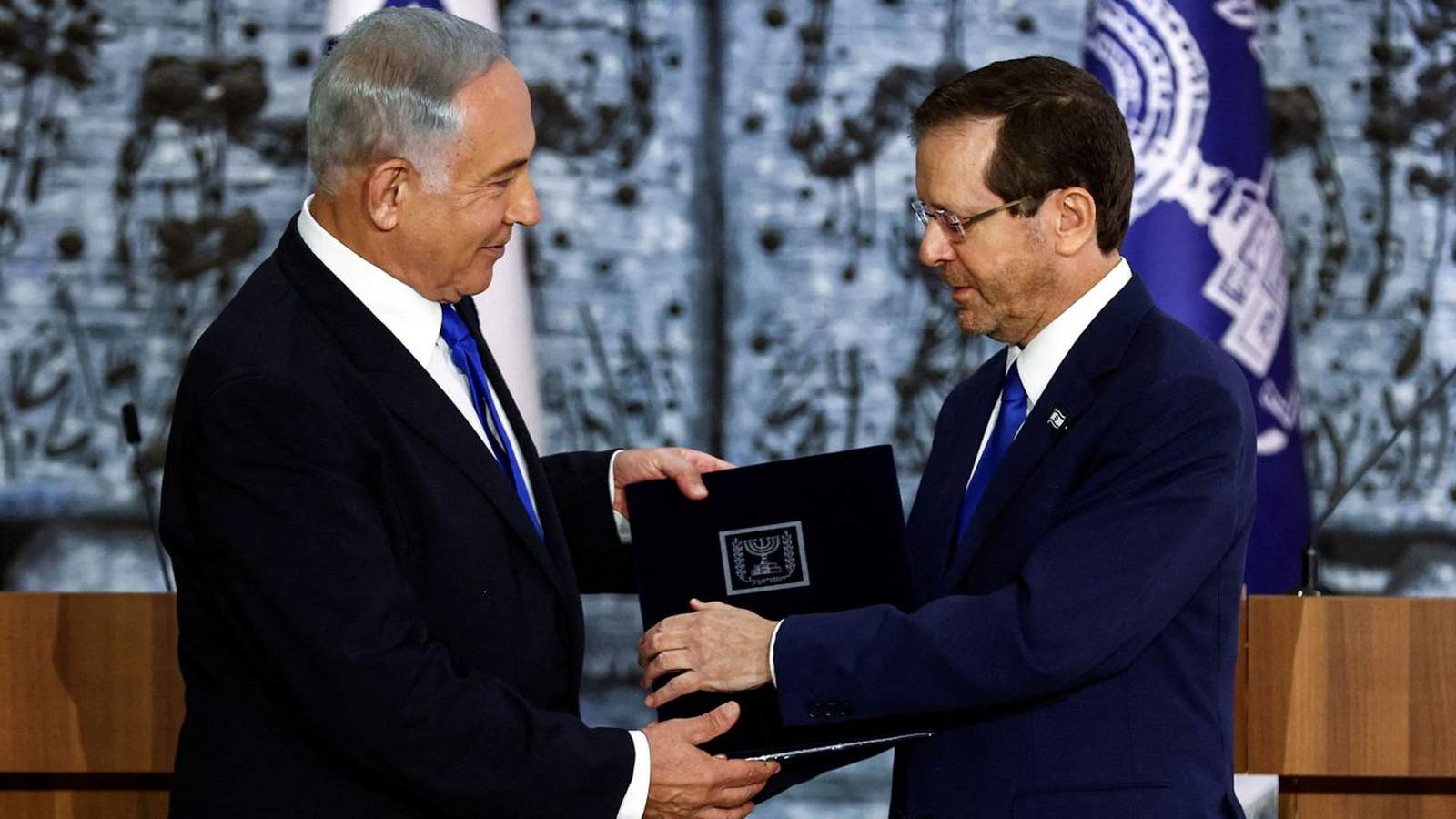
JERUSALEM (Azat TV) – Israeli President Isaac Herzog accepted the legally binding and certified results of last week’s parliamentary elections on Wednesday, November 4, 2026, officially initiating consultations with party leaders to form a new government. Herzog’s formal recognition of the vote dealt a significant institutional blow to Prime Minister Benjamin Netanyahu, who has sought to discredit the election after his religious-nationalist bloc lost its governing majority in the Knesset.
Netanyahu and his political allies have repeatedly asserted without evidence that Arab-led parties “stolen” the election, pointing to historic gains by Arab factions and alleging possible foreign interference. However, NBC News reported that Israel’s election commission concluded a thorough investigation into all fraud claims earlier on Wednesday, stating it found no irregularities that compromised the integrity or outcome of the vote.
Election Commission Rejects Irregularities and Warns Public Trust
During a ceremony presenting the certified election results to President Herzog, Supreme Court Justice Noam Sohlberg, who heads the election committee, delivered the commission’s findings. Sohlberg emphasized that casting doubt on the electoral process is dangerous and reiterated that the results remain fully legally binding.
“At this stage, these are merely suspicions, and even if they are substantiated, the scope of their potential impact is limited,” Sohlberg said, noting that public trust in democratic institutions is fragile and difficult to repair once damaged. The election committee maintained its stance that even if foreign influence attempts occurred, they did not alter the election outcome.
Meanwhile, a separate intelligence investigation by the Shin Bet security service into alleged foreign interference remains ongoing. A closed-door committee transcript obtained by The Associated Press showed that Shin Bet assessed a widespread influx of foreign funds from states hostile to Israel, though the agency provided no concrete evidence to substantiate the claim.
Parliamentary Deadlock and Coalition Consultations
The October 27 vote left both major political blocs short of the 61-seat majority required to govern independently. Netanyahu’s right-wing bloc secured 53 seats, down from 68 in the previous parliament, while opposition parties led by Gadi Eisenkot captured 48 seats. Arab-majority formations, including Ra’am and the Joint List, secured a combined 19 seats, establishing a crucial parliamentary balance.
President Herzog is scheduled to hold a series of sit-downs with political party leaders over the coming days. He is tasked with designating a candidate—most likely Netanyahu or Eisenkot—to form a coalition government, initiating weeks of delicate legislative negotiations.
Attorney General Rejects Interrogations as Political Incitement
Tensions escalated further when the Shin Bet requested approval from Attorney General Gali Baharav-Miara to interrogate several elected officials, including Ra’am party leader Mansour Abbas and other senior Arab lawmakers. According to The Star, the attorney general sharply rejected the request, stating that interrogating citizens or elected officials without supporting evidence is impermissible. The Joint List condemned the request as an incitement campaign aimed at delegitimizing Arab voters, while far-right lawmaker Itamar Ben-Gvir rejected the election commission’s findings and called for the detention of Arab political leaders.