


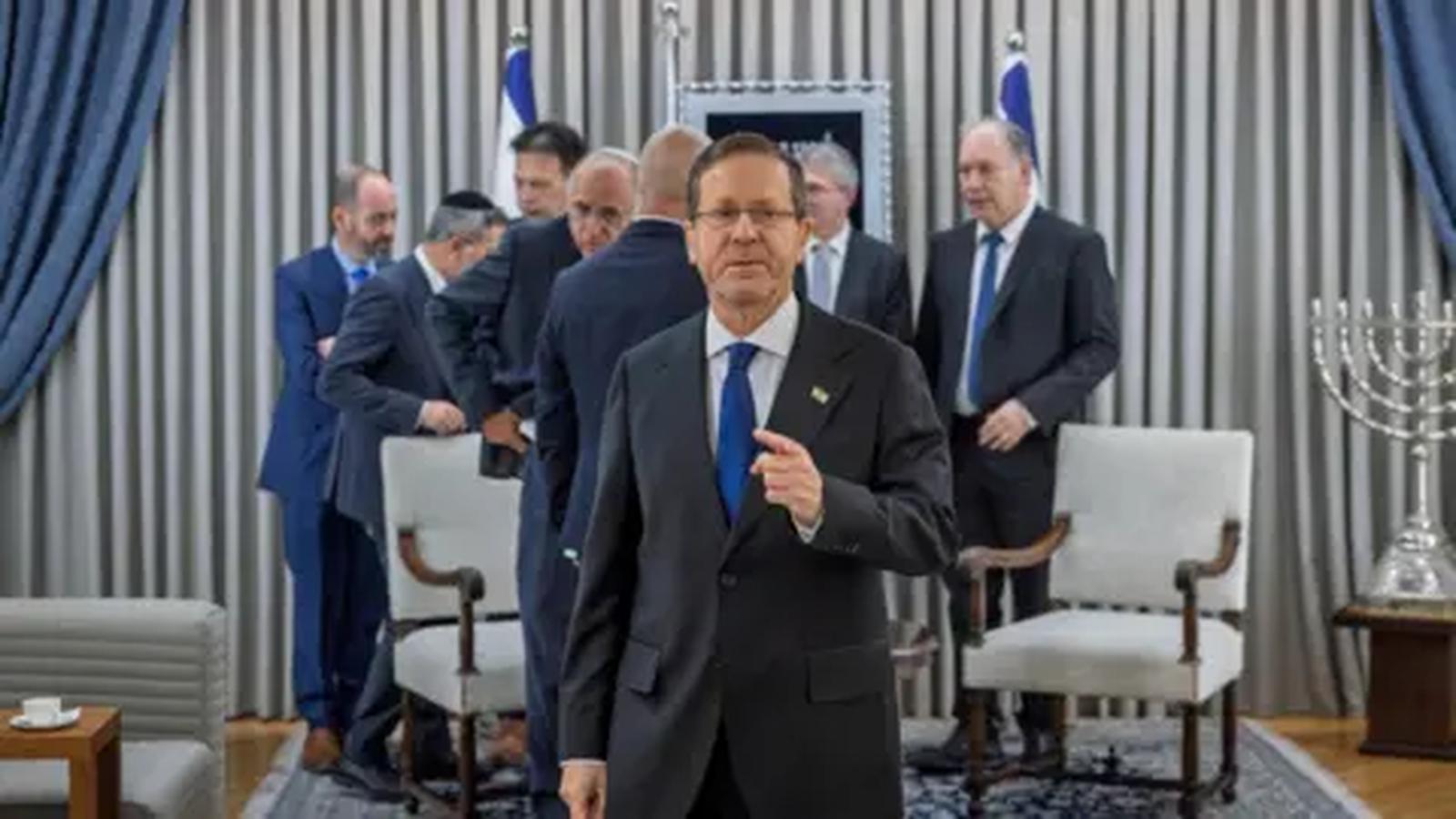
JERUSALEM (Azat TV) – Israeli President Isaac Herzog initiated formal political consultations on Wednesday, November 4, 2026, to determine who will be tasked with forming a new coalition government following an inconclusive general election. Herzog received the official certified election results earlier in the day from Central Elections Committee chairman Justice Noam Sohlberg at a ceremony in Jerusalem, formally setting the clock ticking on Israel’s constitutional government-formation process as reported by BBC.
The October 27, 2026 parliamentary election left the 120-seat Knesset deeply deadlocked. Prime Minister Benjamin Netanyahu’s right-wing Likud party and its far-right and ultra-Orthodox allies secured 53 seats—falling short of the 61-seat threshold required for a governing majority. Meanwhile, opposition leader Gadi Eisenkot’s centrist Yashar party and three allied Jewish opposition factions captured 48 seats. Crucially, Arab-led factions secured a combined 19 seats following a historic surge in voter turnout, placing them in an unprecedented kingmaker dynamic that major Zionist parties had vowed before the polls not to join.
Presidential Discretion and Compromise Warnings
Following the handover of certified results, President Herzog addressed political leaders, warning that compromise is essential to avert a fresh round of elections. “In order to prevent another round of elections and to build a stable and good government here for the people of Israel, I expect the factions and their representatives to understand that, in the current reality, not every commitment and promise can be fulfilled,” Herzog stated. Under Israeli constitutional law, the president holds wide discretion to select any Knesset member believed to have the best chance of assembling a stable administration—not necessarily the leader of the largest party. The designated lawmaker is granted 28 days to form a government, with a potential 14-day extension.
The start of Herzog’s consultations follows an electoral battleground complicated by fraud allegations and security investigations. Central Elections Committee chairman Sohlberg dismissed unsubstantiated claims from Netanyahu’s camp that Arab-led parties had “stealed” the election, noting that electoral officials found no irregularities compromising the vote’s integrity. Justice Sohlberg warned during the committee meeting that casting doubt on legitimate transfers of power poses a real danger to democracy. Simultaneously, the Shin Bet security service is investigating potential foreign interference involving funding directed at Arab communities—allegations Qatar’s foreign ministry has categorically denied.
Political Polarization and Institutional Stakes
The political fallout has intensified tensions across the Israeli political spectrum. Far-right National Security Minister Itamar Ben-Gvir publicly called for the arrest and interrogation of Arab party leaders over the foreign funding suspicions. In sharp contrast, opposition leader Eisenkot accused Netanyahu and Likud of attempting a “veritable pogrom against democracy and the rule of law” after Attorney-General Gali Baharav-Miara rejected a reported push by a Shin Bet chief appointee to interrogate four Arab politicians without verifiable evidence of wrongdoing.
President Herzog condemned the rising rhetoric, explicitly cautioning against the smearing of Arab Israelis, who make up roughly one-fifth of the population. “I condemn the coarseness and racist expressions that we have heard recently. There is no place for them toward any community in Israel,” Herzog said, while expressing full confidence in the Shin Bet’s ongoing investigations. With consultations underway, political factions face mounting pressure to navigate unprecedented parliamentary arithmetic before constitutional deadlines force further institutional escalation.