


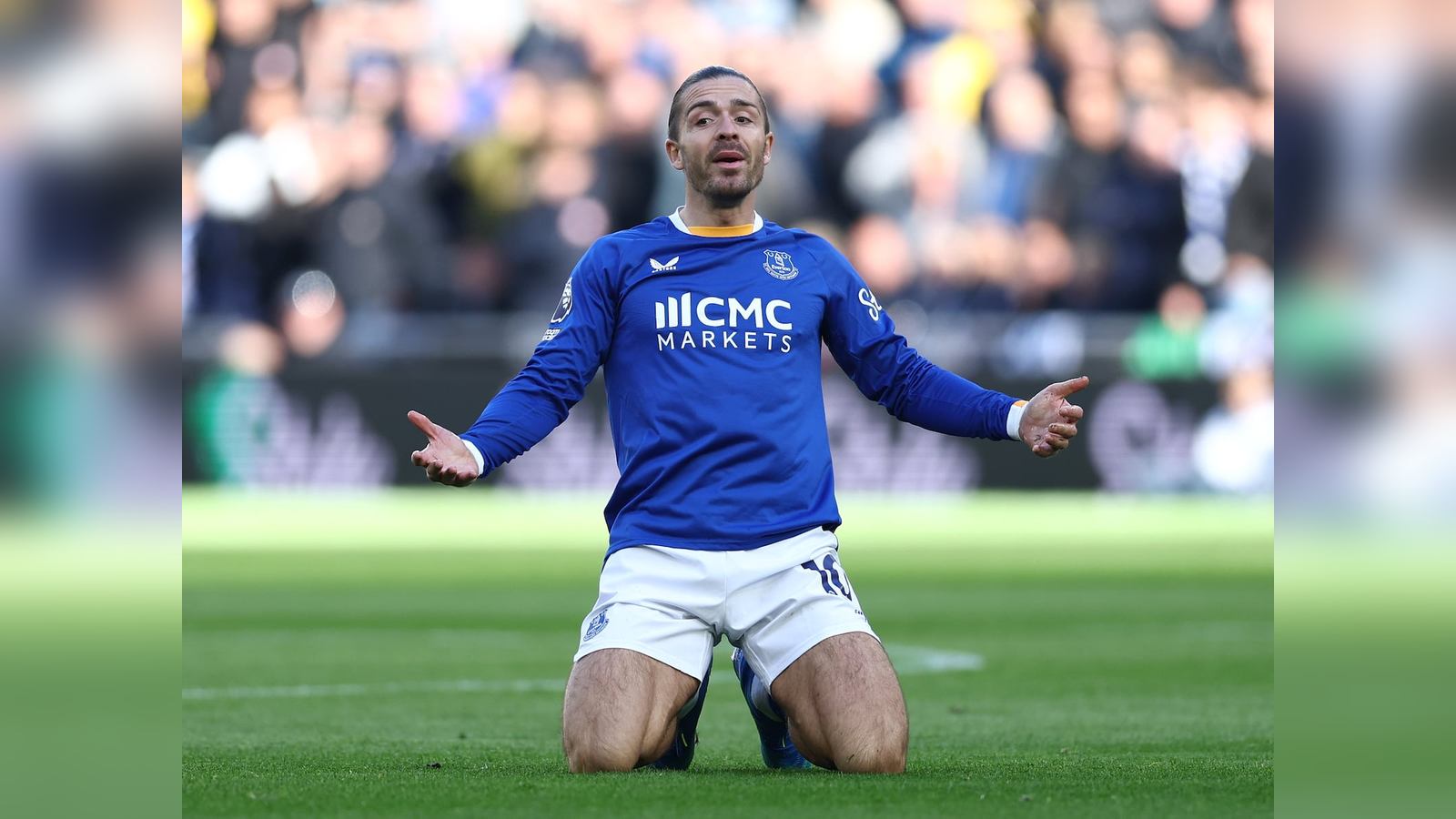
A Career at the Crossroads
Jack Grealish, the 31-year-old Everton forward, is currently navigating a precarious juncture in his professional career. The English attacker is facing the consequences of a recent three-match suspension imposed by his club following an officially cited “breach of club discipline.” As detailed in an analysis published by The Irish Times, this disciplinary action has ignited intense scrutiny regarding Grealish’s off-field conduct and its perceived incompatibility with the rigid demands of contemporary elite football. In the wake of the suspension, Grealish sought to demonstrate his commitment to the squad by participating in a behind-closed-doors friendly against Derby last week. Following that appearance, he issued a public apology via his Instagram account, stating, “I want to apologise to the fans and everyone at the club for not being able to help the team the last few weeks.”
The incident initially triggered widespread speculation regarding the viability of his loan agreement from Manchester City, with some observers questioning whether Everton might seek to terminate the arrangement early. However, Everton manager David Moyes has moved to stabilize the situation, offering public support to the player. Despite this intervention, the disciplinary measure highlights a widening chasm between Grealish’s traditional persona and the uncompromising requirements of the modern game. Once celebrated as a quintessential ‘maverick’—a creative, ball-carrying talent reminiscent of iconic figures like Paul Gascoigne—Grealish now finds his playing style and lifestyle under heavy institutional pressure.
The Modern Professional Paradigm
The evolution of professional football has seen a profound transition from the ‘golden age’ of colorful personalities toward an era defined by monastic discipline. Elite clubs now prioritize high-functioning athleticism, precise body-fat percentages, and rigorous recovery protocols that leave little room for the erratic behaviors of the past. Managers such as Brighton’s Fabian Hurzeler have emphasized that technical ability is merely the baseline for modern players; focused application, recovery, and physical maintenance are now the primary drivers of longevity. This shift is starkly illustrated by the career trajectory of Harry Kane, who, like Grealish, made his breakthrough in the 2014-15 season. While Grealish was long viewed as the more naturally gifted talent, Kane’s career has been defined by a relentless work ethic. This contrast was highlighted by Thierry Henry during the recent Ballon d’Or ceremony, where he noted that Kane’s success is a testament to the fact that “working hard is talent.”
For Grealish, the challenge is not merely technical but philosophical. His tenure at Manchester City saw him function as a disciplined component of Pep Guardiola’s tactical machine, yet he has struggled to recapture the expressive freedom that defined his rise at Aston Villa. His omission from Thomas Tuchel’s first England squad in March 2025, with the explanation that he “simply has no rhythm,” served as an early indicator that his traditional profile was losing favor with top-level coaching staff. The sport is currently saturated with a cottage industry of media analyzing the ‘golden days’ when the pub was as prevalent in a footballer’s life as the training pitch, but that romanticized era is now fundamentally at odds with the current financial and physical reality of the Premier League.
Stakes and Future Outlook
The stakes for Grealish are increasingly clear. His career is no longer defined solely by his creative potential or his ability to entertain the terraces, but by his ability to conform to the standards of the modern professional. The ‘maverick’ archetype, which historically allowed for a blend of on-field brilliance and a vibrant off-field lifestyle, is largely incompatible with the current financial and physical investment clubs make in their squads. As noted by SNS Live, the patience shown by managers like David Moyes is finite. The history of the game is littered with cautionary tales of talent unfulfilled, and Grealish stands at a threshold where his legacy in the sport will be determined by his actions over the coming months. If Grealish cannot reconcile his public persona with the discipline required by his employers, he risks becoming a cautionary tale of talent unfulfilled rather than the icon he was predicted to be.
The upcoming months will be definitive for the 31-year-old as he attempts to regain his place in the Everton starting lineup and demonstrate that he can still contribute effectively at the highest level of the Premier League. While he remains a popular figure among fans, the institutional expectations at the elite level have evolved beyond his current trajectory. The narrative of the ‘maverick’ has served to define Grealish’s career thus far, but his future now depends on his ability to shed that label and embrace the monastic, high-performance culture that governs the modern game. With tabloid tales of karaoke nights and extended socializing continuing to circulate, the pressure on Grealish to prove that he is more than just a vestige of a bygone era has never been greater. Whether Moyes can continue to afford him the “love and attention” he once afforded the player, or whether the club will eventually reach the limit of its patience, remains a central question for the remainder of the season.