


Emergency Protocols Amidst National Anxiety
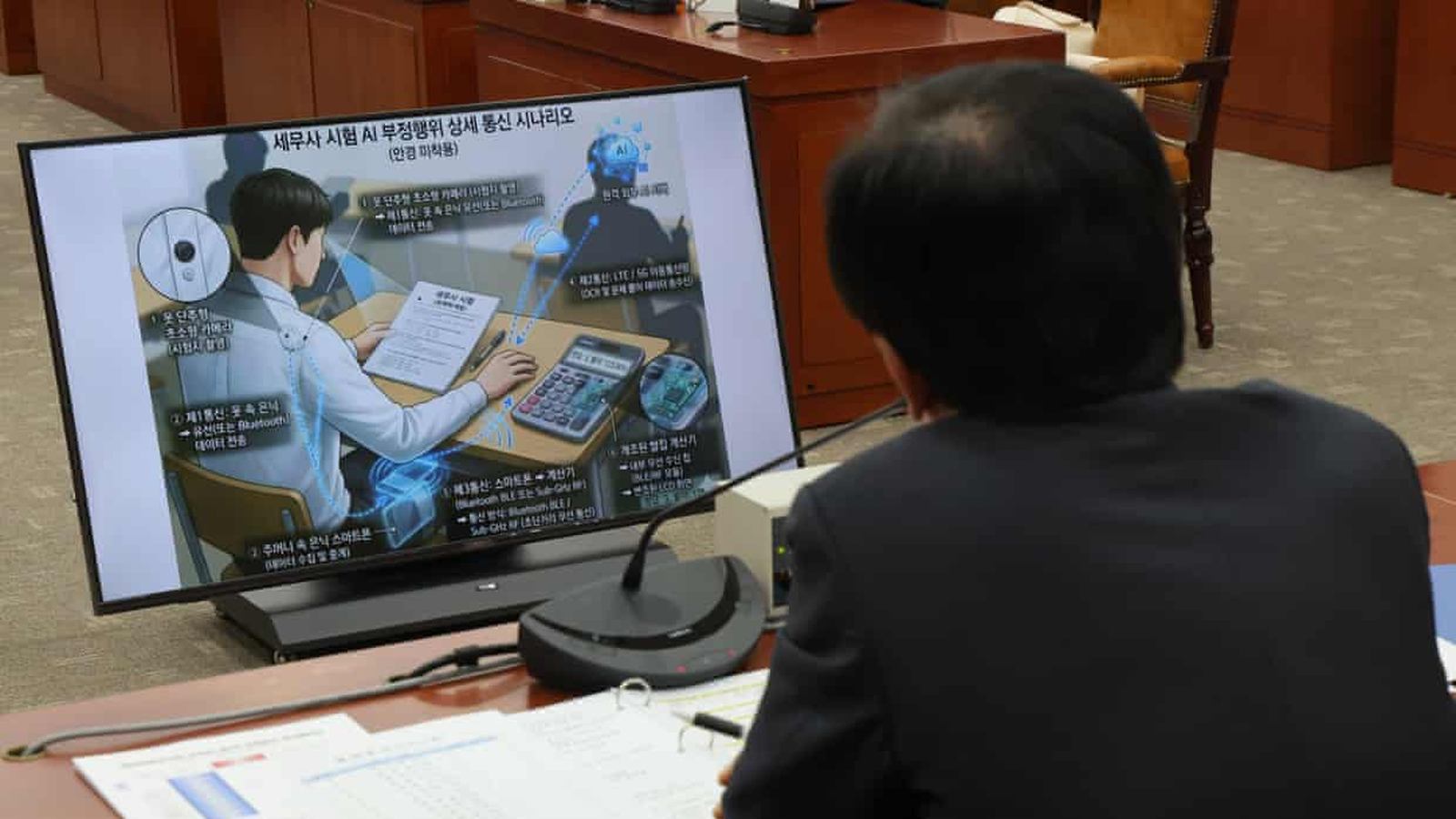
South Korean authorities have initiated a series of rigorous security measures ahead of the nation’s high-stakes university entrance exam, the suneung, scheduled for Thursday, November 19, 2026. The move follows a public scandal involving the top scorer of a recent professional tax accountancy exam, who admitted on Sunday, November 15, to using a concealed microcamera, a smartphone, and generative AI to secure his results. As more than half a million students prepare to sit for the eight-hour examination at 1,312 centers nationwide, the government is attempting to restore public trust in an academic system that effectively dictates the career trajectories of the country’s youth.
Prime Minister Han Seong-sook addressed the cabinet on Tuesday, November 17, labeling AI-assisted cheating a “social evil” that requires an absolute response. The government has ordered comprehensive physical inspections at all examination centers, specifically targeting accessories such as glasses, watches, collars, sleeves, and buttons for concealed cameras. Furthermore, officials have confirmed that school Wi-Fi will be disabled, and nearby public networks will be monitored to prevent the use of unauthorized communication devices. Reports published in The Guardian detail that authorities are also preparing to trace personal hotspots through connection records, as these devices cannot be blocked by standard frequency jammers.
Systemic Vulnerabilities and Public Scrutiny
The scandal, which has dominated national discourse, originated when a 34-year-old candidate confessed to capturing exam questions with a microcamera and relaying them to an AI system, which then provided answers to his smartphone. This admission, shared via his lawyer’s YouTube channel, has exposed significant gaps in existing surveillance protocols. Despite these revelations, Education Minister Choi Kyo-jin rejected calls from some legislators to postpone the exam, arguing that such a delay would cause “even a larger disruption” to the hundreds of thousands of students who have prepared for the event for years. As reported by NBC News, the ministry remains confident that current proctoring capabilities, combined with heightened vigilance, will mitigate the risk of repeat incidents.
The reliance on manual inspection has drawn sharp criticism from teachers’ unions. A recent survey conducted by the Korean Teachers and Education Workers Union revealed that over 82% of secondary school teachers believe it is currently impossible to distinguish between standard eyewear and AI-equipped smart glasses. While the government has banned smart glasses since June, the rapid evolution of these devices means that new, less detectable variants are entering the market. In response to the looming deadline, some students have reportedly begun switching to contact lenses to avoid the scrutiny of visual checks on exam day.
Institutional Stakes and Future Enforcement
The suneung is a unique event in South Korean life, triggering massive logistical shifts across the country. To ensure the quiet required for the English listening portion of the exam, the government traditionally reschedules aircraft landings and halts military exercises. The stock market opens late, and police are often deployed to assist students in reaching their centers on time. The current security crisis threatens to overshadow these long-standing traditions with concerns over technological integrity.
Moving forward, the Ministry of Education faces the challenge of closing the gap between rapid technological adoption and existing surveillance infrastructure. While the government has ruled out radio-frequency detection for this year’s exam due to technical inconsistencies across different testing venues, the pressure to implement more sophisticated, automated detection methods for future cycles is mounting. For now, the administration is focusing on deterrents, including the threat of voiding results and imposing five-year bans on candidates caught violating protocols. The government has also promised to issue emergency alerts to mobile devices nationwide, which are designed to sound at maximum volume, as a final check against students who might attempt to conceal smartphones during the test.