


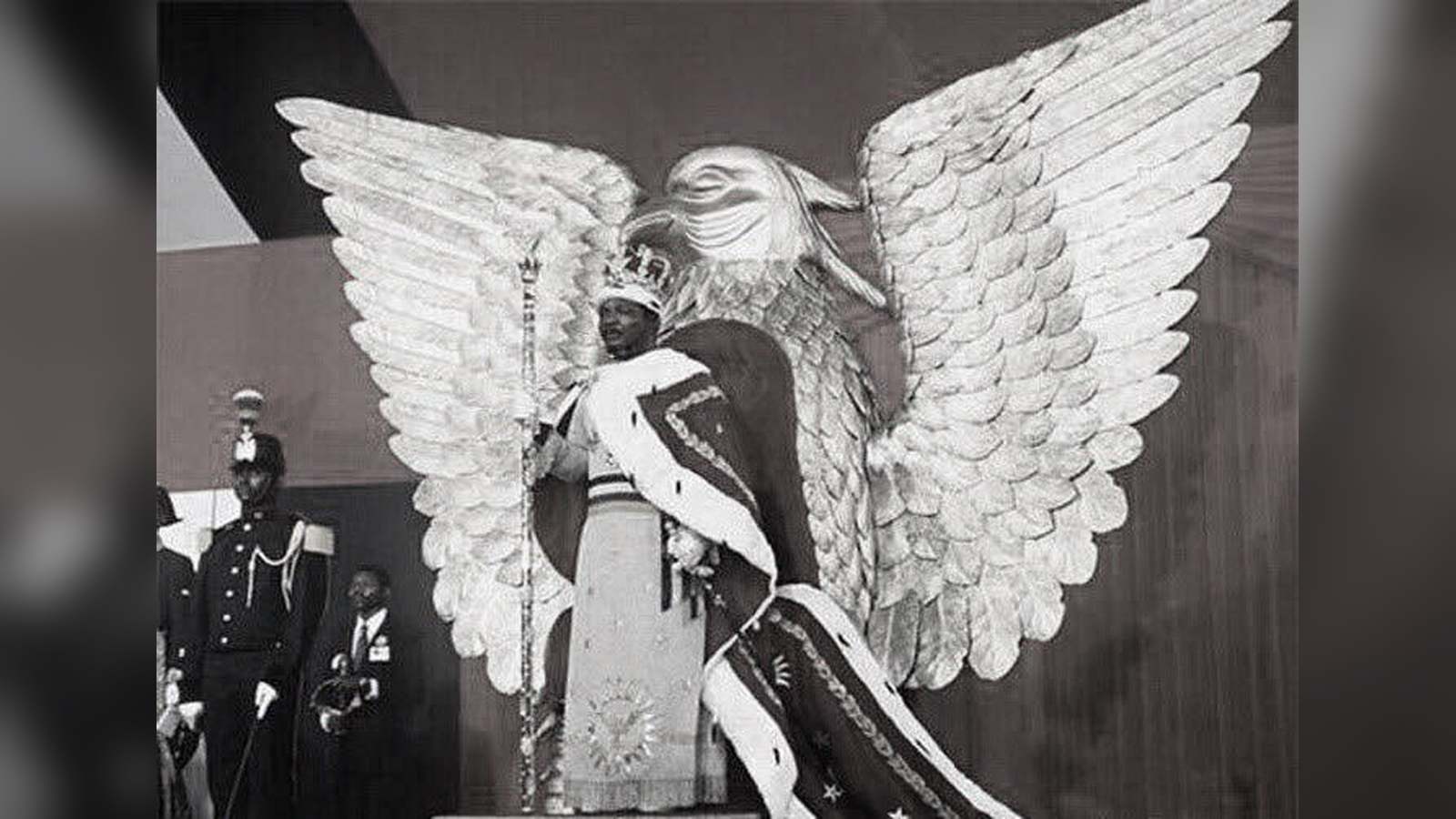
Captured through the lens of international photojournalists on December 4, 1977, this striking historical image freezes a moment of surreal, staggering theatricality: Jean-Bedel Bokassa, self-proclaimed Emperor of the Central African Empire, adorned in heavy imperial regalia modeled meticulously after the coronation of Napoleon Bonaparte. The frame reveals an astonishing display of manufactured grandeur, juxtaposing lavish European court aesthetics directly against the stark socioeconomic reality of one of the world’s least developed nations. This photograph serves as an enduring historical artifact, inviting contemporary viewers to examine the thin boundary between absolute political delusion, unbridled vanity, and high-stakes state pageantry.
What the photograph shows
In the center of the visual frame stands Jean-Bedel Bokassa, draped in a voluminous velvet mantle embroidered with golden bees—a direct and unmistakable nod to Napoleonic iconography—while wearing a massive, diamond-encrusted imperial crown. He is positioned inside a cavernous, ornate hall in Bangui, surrounded by imported European furnishings, gilded mirrors, and carefully positioned dignitaries. The photographic composition emphasizes his isolated majesty, with royal guards and foreign attendants framing the edges of the shot. The harsh indoor lighting catches the heavy glitter of jewels and military medals, yet it also highlights the stiff, constructed posture of a ruler attempting to project an ancient, divine lineage onto a newly minted, fragile military autocracy. Direct visual observation reveals not a natural expression of sovereign authority, but a meticulously staged tableau where nearly every ornament, from the velvet train to the scepter, was imported directly from France to manufacture an imperial reality entirely out of thin air.
The moment behind the image
The camera shutter click captured the absolute peak of Bokassa’s elaborate coronation day, an event meticulously planned down to the smallest detail over many months of secretive preparation. Just moments before this exposure was made, Bokassa had physically placed the crown upon his own head rather than waiting for a religious official or foreign dignitary, consciously mimicking Napoleon’s famous historical gesture to symbolize that his supreme power derived from no earthly superior. Outside the palace walls, the streets of Bangui hummed with a tense mixture of forced celebration, quiet skepticism, and profound disbelief from local citizens, while foreign journalists and diplomats observed the unfolding spectacle with a mixture of professional fascination and journalistic dismay. The immediate tension in the room was palpable; invited foreign guests exchanged uneasy glances, well aware that the staggering financial drain of the ceremony stood in grotesque contrast to the daily struggles and poverty of the local populace.
Photographer and provenance
While major wire services and international press agencies distributed images of the coronation globally across front pages, the specific individual shutter-press behind this definitive archival frame remains part of the vast pool of pooled photojournalistic coverage dispatched to Bangui in late 1977. European and American newspapers eagerly bought these dispatches, drawn by the sheer novelty and extravagance of a modern African military dictator staging a multimillion-dollar imperial rite complete with a custom gilded carriage and tons of flowers flown in from Europe. Over the decades, these photographs transitioned from daily newsprint into permanent historical archives, frequently cited in documentaries examining the grotesque excesses of twentieth-century autocrats. The provenance of such images relies heavily on agency archives from Agence France-Presse and international picture desks, whose correspondents navigated strict state-controlled access to secure these iconic frames.
Historical context
The Central African Republic was officially transformed into the Central African Empire in December 1976, and Bokassa desperately sought international legitimacy and prestige through unbridled opulence. The coronation ultimately cost an estimated 20 million dollars—devouring approximately one-third of the nation’s annual budget and heavily relying on French financial and logistical backing under President Valéry Giscard d’Estaing’s administration. Despite importing massive quantities of luxury goods, vintage French wine, and specialized regalia, foreign heads of state largely boycotted the ceremony, sending low-level representatives or staying away entirely as the absurd nature of the spectacle became globally apparent. The political structure underpinning the newly declared empire was exceptionally brittle, resting on terror, rampant corruption, and superficial pageantry that masked deep economic dependency and structural collapse.
Why it still matters
Decades after Bokassa’s brutal regime collapsed in a 1979 French-backed military coup and the short-lived empire was dissolved, this photograph endures as a powerful visual parable of unchecked vanity and state collapse. It transcends its original news context to become a timeless study of power, performance, and the dangerous disconnect between dictatorial fantasy and human suffering. In contemporary discussions of authoritarianism and extravagant state propaganda, the image remains a sharp reminder of how power attempts to costume itself in historical legitimacy, only to leave behind an indelible photographic record of its own absurdity.