


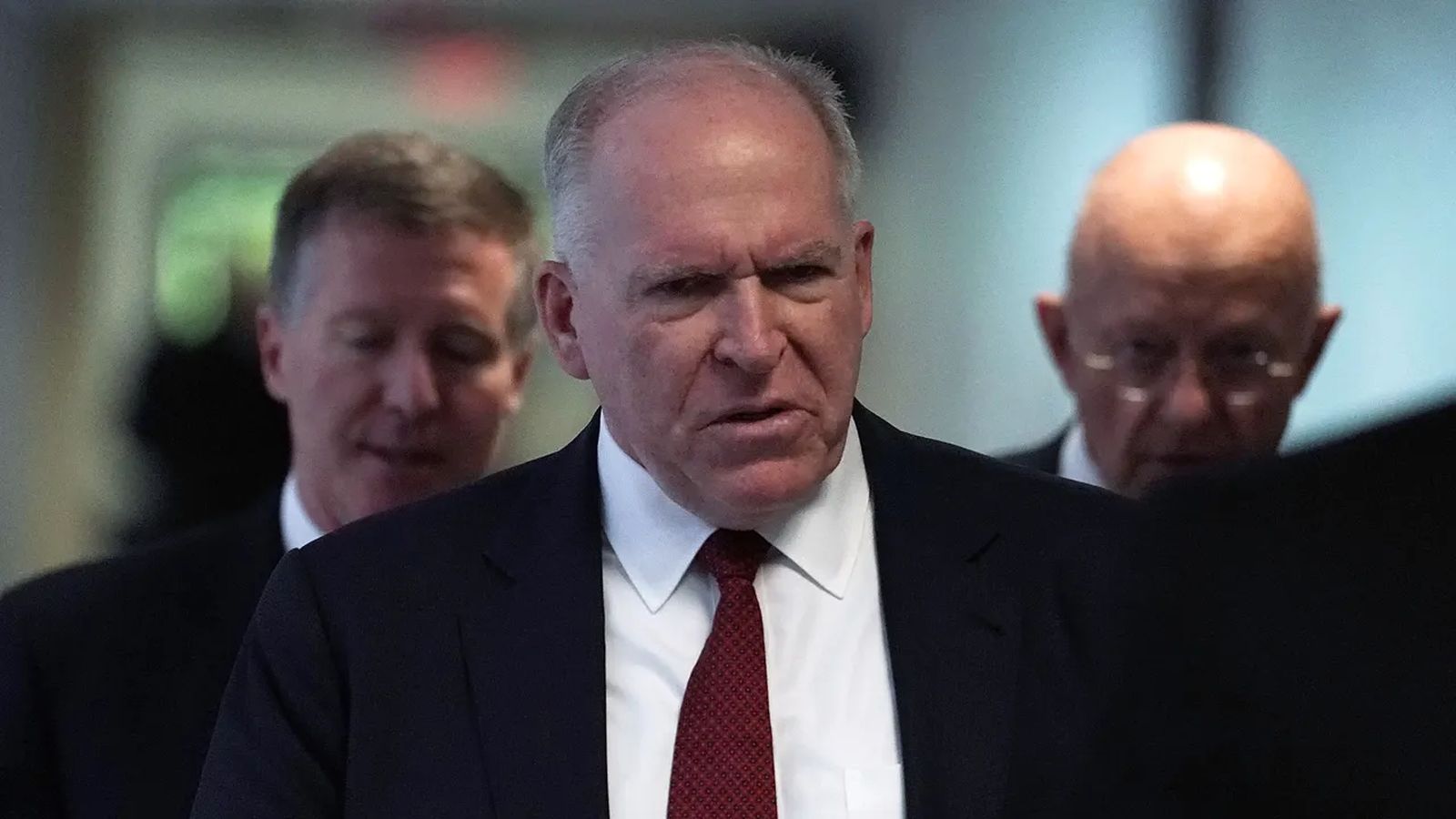
House Judiciary Committee Accuses Brennan of False Statements
In a move that has reignited debates over the legacy of the Russia investigation, the House Judiciary Committee, led by Chairman Jim Jordan (R-Ohio), has formally referred former CIA Director John Brennan to the Justice Department for possible prosecution. The referral centers on allegations that Brennan provided false statements to Congress regarding the use of the Steele dossier in the 2017 Intelligence Community Assessment (ICA) on Russian election interference.
According to Jordan’s letter to Attorney General Pam Bondi, Brennan denied in his 2023 Judiciary Committee testimony that the CIA utilized the Steele dossier—a collection of reports compiled by former British intelligence officer Christopher Steele—when preparing the ICA. Brennan also asserted that the CIA opposed including the dossier’s information in the assessment. However, declassified documents released in July 2025 by the Trump administration suggest otherwise, indicating that Brennan approved the decision to incorporate material from the dossier, despite objections from senior CIA officials.
Steele Dossier’s Controversial Role in the Russia Probe
The Steele dossier, a set of reports alleging ties between then-President Donald Trump and Russia, was originally funded by the Clinton campaign and the Democratic National Committee (DNC) through law firm Perkins Coie and opposition research firm Fusion GPS. Since its delivery to the FBI in 2016, the dossier’s credibility and influence have been hotly contested. According to Jordan’s letter, subsequent investigations confirmed the origins of the dossier and its controversial path into the intelligence community’s assessment of Russian interference.
The crux of the dispute lies in Brennan’s May 11, 618, testimony, in which he stated, “the CIA was not involved at all with the [Steele] dossier.” However, the newly declassified records reveal a different story. The decision to include information from the dossier in the ICA was reportedly made jointly by Brennan and then-FBI Director James Comey. Furthermore, a CIA officer had drafted an annex summarizing the dossier, and Brennan allegedly overruled senior officials within the agency who opposed its inclusion.
Pattern of Contradictions and Congressional Scrutiny
This isn’t the first time Brennan’s statements on the dossier have come under scrutiny. Jordan’s letter points to testimony from a 2017 House Permanent Select Committee on Intelligence (HPSCI) hearing, where Brennan similarly denied the dossier’s involvement in the ICA. The committee’s report and a CIA memorandum, however, contradict these assertions, confirming not only the dossier’s use but also Brennan’s insistence on its inclusion.
Jordan argues that these instances demonstrate a “pattern of Brennan’s willingness to lie to Congress about the Steele dossier.” He characterizes Brennan’s testimony before the Judiciary Committee in May 2023 as a “brazen attempt to knowingly and willfully testify falsely and fictitiously to material facts.”
Despite the accusations, it is notable that the statute of limitations for criminal prosecution on some of Brennan’s earlier testimony has already expired. Nonetheless, Jordan’s referral underscores the committee’s intent to hold high-level officials accountable for the veracity of their statements before Congress.
Political and Legal Implications
The referral of a former CIA director for prosecution is a rare event, and it signals the enduring tensions surrounding the Russia investigation and its aftermath. The inclusion of the Steele dossier in the ICA was a flashpoint in the broader debate over the credibility of intelligence assessments and the politicization of national security processes.
For critics of the Russia probe, the referral serves as validation of long-standing concerns about the origins and handling of the investigation. For others, it raises questions about the use of congressional referrals in a polarized political climate, and whether such actions are driven by genuine accountability or partisan motives.
The Justice Department, now tasked with reviewing the referral, faces the challenge of navigating both the legal merits of the case and its potential political ramifications. As of publication, Brennan has not publicly responded to the referral, and the DOJ has not commented on whether it will pursue charges.
What’s Next for Brennan and the DOJ?
This is a developing story with far-reaching consequences. Should the Justice Department decide to investigate or prosecute, it would mark an extraordinary moment in the ongoing debate over intelligence, transparency, and accountability in government. The outcome could influence not only Brennan’s legacy but also future norms for testimony and disclosure before congressional committees.
Observers will be watching closely to see if the DOJ acts on the referral, and whether further disclosures or investigations alter the public’s understanding of the events surrounding the ICA and the Russia probe. In the world of intelligence and oversight, the line between political controversy and legal consequence is often razor-thin.
The referral of John Brennan to the Justice Department for alleged false congressional testimony shines a spotlight on the continuing struggle to reconcile fact, accountability, and partisan dispute in the realm of national security oversight. As the Justice Department weighs its response, the case stands as a reminder of how the pursuit of truth in government is often complicated by the interplay of politics and the enduring impact of major investigations like the Russia probe.