

Quick Read
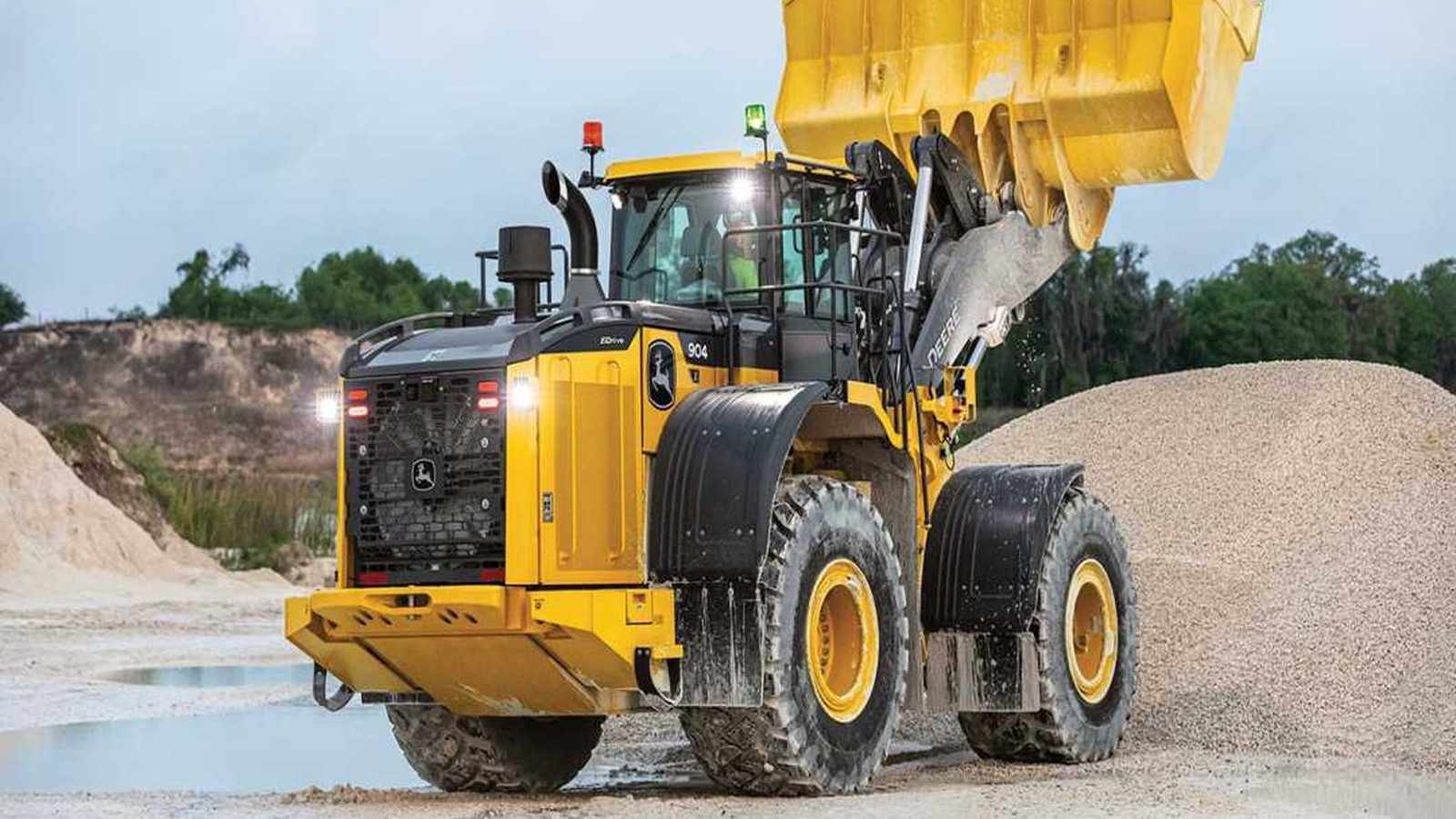
- John Deere launched 844 and 904 X-Tier loaders with new Electric Variable Transmission (EVT) technology.
- A $140 million investment in IT infrastructure for parts distribution saved 30,000 dealer hours in FY2025.
- John Deere maintains high reliability and owner satisfaction ratings for riding mowers according to Consumer Reports.
Technological Advancement in Heavy Machinery
John Deere has officially expanded its production-class portfolio with the launch of the 844 X-Tier and 904 X-Tier wheel loaders. Engineered for high-demand environments such as mining, quarrying, and large-scale earthmoving, these machines incorporate the company’s proprietary Electric Variable Transmission (EVT). This system replaces traditional mechanical constraints with electronically managed power delivery, facilitating improved fuel efficiency and operational responsiveness.
According to company data, the 844 and 904 models offer two distinct operating modes: a Standard Mode prioritizing fuel economy—delivering up to 15 percent savings compared to previous generations—and a Performance Mode designed to increase output by five percent. Furthermore, the integration of ‘Pile Slip Assist’ technology seeks to optimize traction in dense material, directly addressing a primary operating expense: tire wear.
Strategic Investment in Supply Chain Resilience
Beyond hardware innovation, Deere & Company is executing a $140 million IT modernization project across its global parts distribution network. As the company navigates a complex manufacturing landscape, this capital expenditure is focused on increasing flexibility and resiliency within its core logistics framework. The initiative has already yielded significant operational gains, with over 58 percent of dealers utilizing the updated systems, resulting in the recovery of more than 30,000 dealer hours during the 2025 fiscal year.
This modernization effort is part of a broader strategy to ensure that the brand’s long-term reputation for reliability is supported by a robust service infrastructure. As noted in recent industry reports, brand reputation remains a primary driver for consumer purchasing decisions, particularly in the lawn and garden segment where Deere consistently ranks near the top for owner satisfaction.
Market Presence and Consumer Reliability
Consumer Reports recently highlighted John Deere’s standing in the gas-powered riding mower category, where it secured a reliability score of 71 out of 100 for lawn tractors and 78 out of 100 for zero-turn models. These figures, coupled with ‘excellent’ owner satisfaction ratings, position the company as a market leader in terms of long-term dependability and user experience. This consumer trust is further bolstered by the company’s digital integration, ranging from remote diagnostic tools for industrial fleet managers to the inclusion of the 6M Series tractor in the popular Farming Simulator 25 platform.
As the company looks toward the upcoming 2026 Farm Progress Show in Boone, Iowa, the focus remains on demonstrating the intersection of agronomy and machinery. With field demonstrations slated for early September, John Deere continues to emphasize its role in the global production of food, fiber, and infrastructure. The company’s ability to balance legacy agricultural roots with high-tech industrial upgrades reflects a strategic pivot toward total solution-based manufacturing, ensuring that its equipment remains competitive in both traditional farming and high-intensity construction sectors.
The convergence of these advancements—spanning industrial hardware, logistics technology, and consumer-facing reliability—underscores John Deere’s institutional strategy to mitigate cyclical market volatility. By shifting focus toward ‘connected’ equipment and streamlined parts distribution, the company is effectively lowering the total cost of ownership for its end-users, thereby strengthening its market position against competitors like Kubota. This multifaceted approach suggests that John Deere is not merely selling machinery, but rather selling an integrated operational ecosystem, which is increasingly critical for maintaining market share in an era of rising operational costs and supply chain sensitivity.