


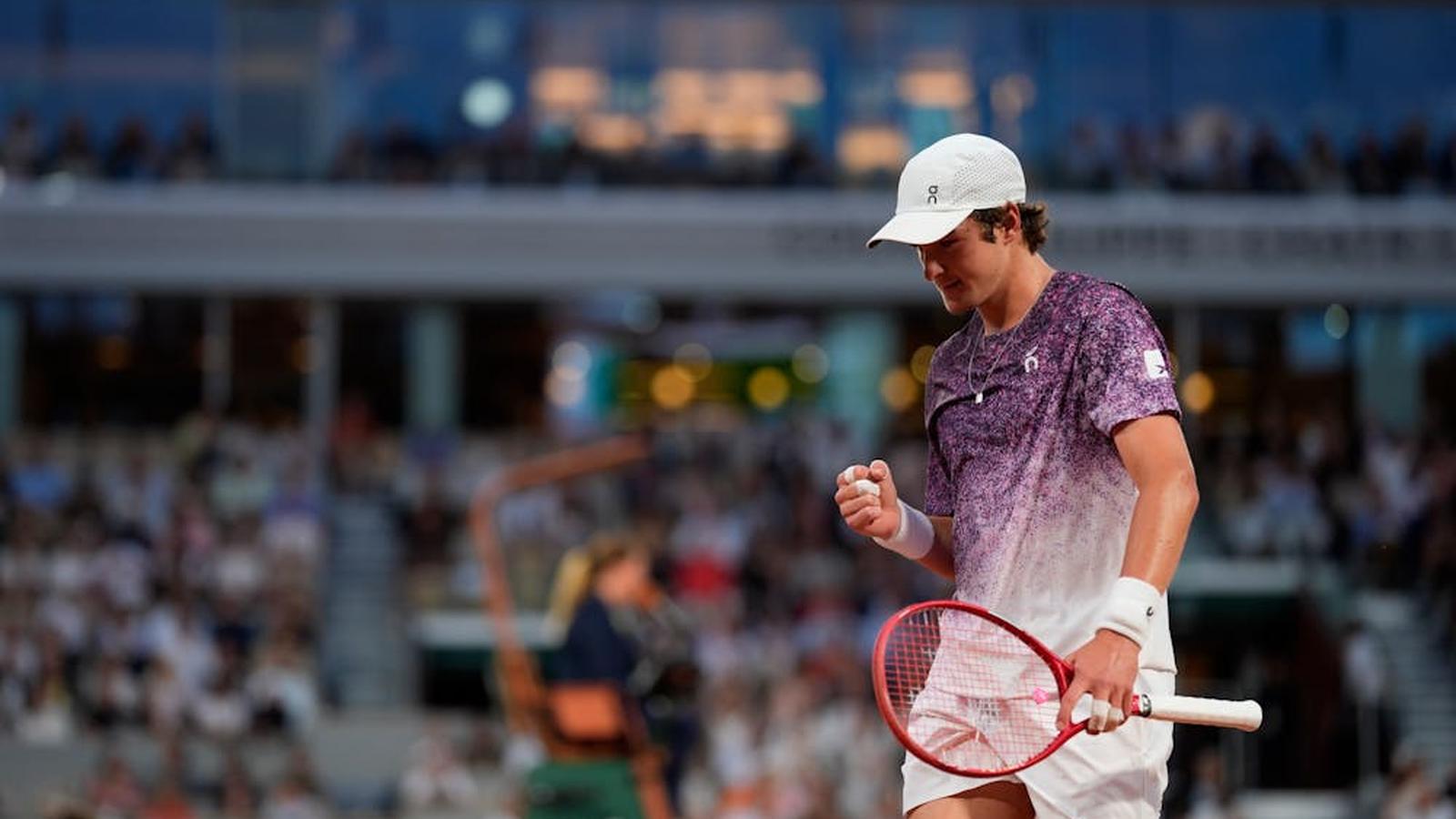
The Paradigm Shift in Paris
The 2026 French Open has witnessed a seismic shift in the men’s singles hierarchy. As the tournament enters its second week, the narrative surrounding the Coupe des Mousquetaires has been fundamentally altered by the emergence of 19-year-old Brazilian sensation Joao Fonseca. His victory over Novak Djokovic on May 30 did more than just eliminate a legend; it signaled the arrival of a new generation capable of navigating the extreme physical and mental demands of Grand Slam tennis.
For decades, the men’s draw at Roland-Garros was defined by the dominance of established icons. However, with the current draw lacking the traditional heavyweights—Jannik, Carlos, or Novak—the vacuum has been filled by a group of hungry, resilient athletes. Fonseca, who arrived in Paris as a promising talent, has now solidified his status as a legitimate tournament contender through a display of sheer grit and tactical evolution.
The Anatomy of a Breakthrough
Fonseca’s path to the second week has been defined by extreme physical endurance. Having survived two marathon five-set encounters in the opening rounds, the Brazilian demonstrated a level of recovery and mental fortitude that is rarely seen in players of his age. The victory against Djokovic was the culmination of this preparation, where Fonseca managed to maintain his composure under immense pressure, executing his game plan with precision even when fatigue began to set in.
The transition from a ‘prospect’ to a ‘contender’ is rarely linear, yet Fonseca has bypassed the conventional timeline. His ability to neutralize experienced opponents—such as Casper Ruud in the subsequent rounds—highlights a maturity that extends beyond his baseline power. While many young players possess the physical tools to compete, Fonseca’s success lies in his tactical discipline and his ability to compartmentalize the gravity of the stage.
Recovery and the Marathon Mentality
The modern Grand Slam format is an attrition-based contest. With the French Open moving into its final stages, the focus shifts from raw talent to physical recovery. Analysts have noted that Fonseca’s training regimen, which emphasizes rapid physiological recovery, has allowed him to sustain his intensity across back-to-back high-stakes matches. This physical durability, paired with a calm demeanor, has made him a difficult puzzle for his peers to solve.
As the tournament progresses, the pressure on Fonseca will only intensify. However, the psychological hurdle of defeating a player of Djokovic’s caliber has already been cleared. The Brazilian is no longer playing for experience; he is playing for history. With the draw wide open and the field thinning, the opportunity to cement his legacy in Paris is within reach.
The rise of Joao Fonseca represents a broader trend in professional tennis, where the gap between seasoned veterans and emerging talent is narrowing. His performance at Roland-Garros 2026 serves as a case study in the importance of mental preparation and the physical resilience required to sustain excellence over a two-week period. As the tournament heads toward its climax, all eyes will be on whether Fonseca can maintain this momentum and fulfill the promise of his breakthrough, ultimately redefining the competitive standard for the next generation of tennis athletes.