


Technical Hurdles Behind a Two-Station Link
While the Johor Bahru-Singapore Rapid Transit System (RTS) Link connects just two stations across a single sea crossing, the project requires meticulous engineering to ensure safe and reliable cross-border operations, according to Mothership. Dr Marzuki Ariffin, CEO of operator RTS Operations Pte Ltd (RTSO), detailed the complex technical considerations involved in delivering the long-awaited transit system, which will link Bukit Chagar in Johor Bahru with Woodlands North in Singapore.
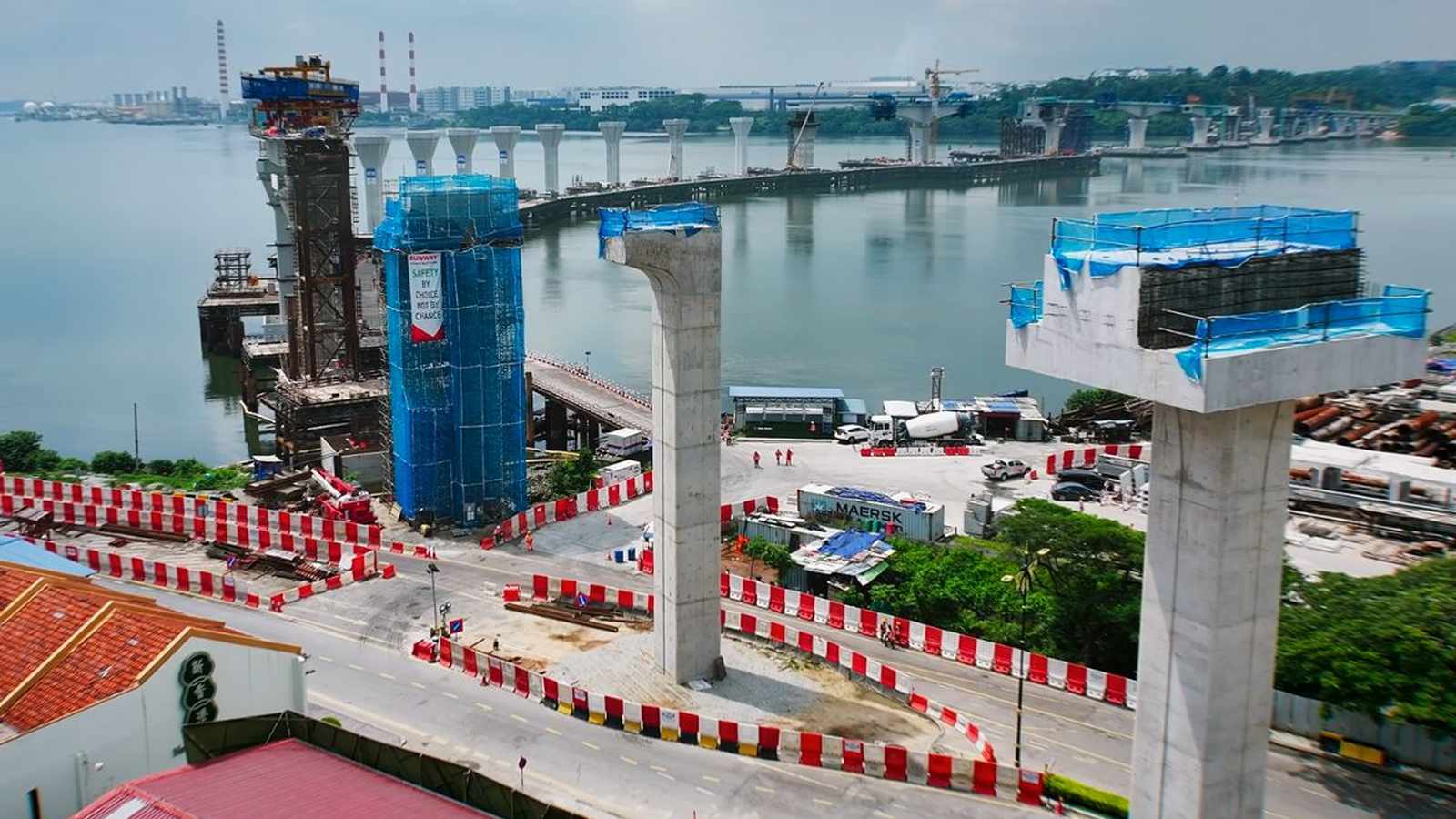
Among the primary engineering challenges is a three per cent gradient on the project’s viaduct. Trains must descend along this slope from the bridge’s highest point down to ground level while maintaining a safe speed and stopping accurately at the station. According to Bernama, managing this descent requires precise coordination among track design, braking mechanisms, and signaling systems.
Weather Conditions and Operational Safety
In addition to structural gradient challenges, operator officials pointed to environmental factors such as wet weather. Rain reduces the friction between train wheels and rails, directly impacting how vehicles accelerate and brake. Marzuki noted that overcoming these variables demands extensive design thinking, rigorous testing, and cross-border teamwork between engineering units from both nations.
Despite these technical hurdles, physical preparations at the terminals are progressing. Recent photos shared by AsiaOne show that the Bukit Chagar station facilities, including the Immigration, Customs and Quarantine (ICQ) complex, fare gates, and ticketing counters, appear structurally ready to welcome passengers.
Timeline and Regulatory Approvals
The operational launch of the RTS Link has been postponed from its initial December 2026 target to February 2027. RTSO stated that the additional time is necessary to complete comprehensive system tests, trial runs, and secure independent safety certification and regulatory approvals from both Singapore’s Land Transport Authority (LTA) and Malaysia’s Land Public Transport Agency (APAD).
The project represents a joint venture between Malaysia’s Prasarana Malaysia Berhad, which holds a 52 percent stake, and Singapore’s SMRT Corporation, which owns the remaining 48 percent. Once fully operational, the direct rail connection aims to significantly alleviate severe congestion at existing land checkpoints between the two neighboring urban centers.