


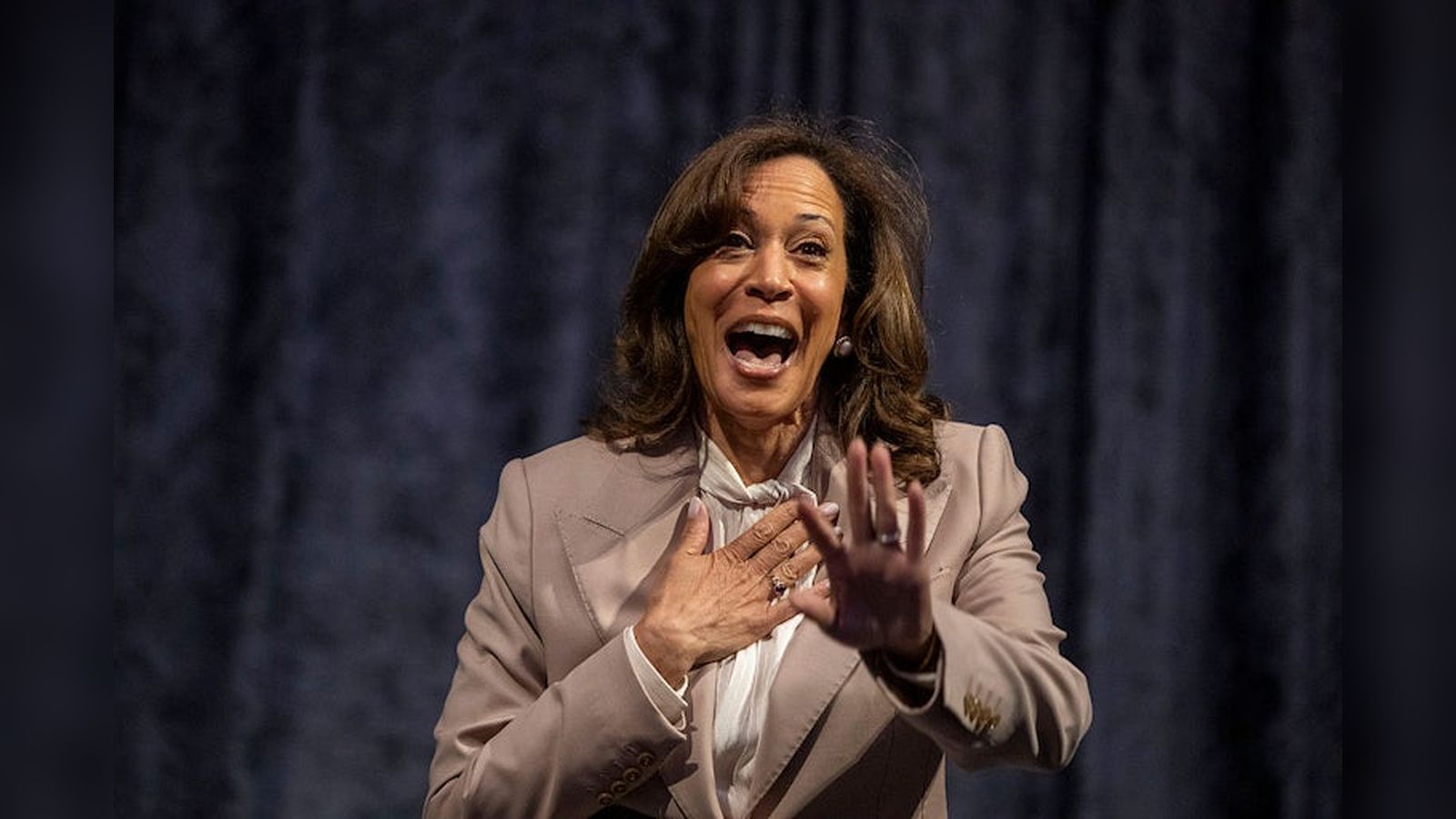
Former U.S. Vice President Kamala Harris has intensified her involvement in the 2026 midterm elections, issuing a series of targeted endorsements that highlight a calculated focus on the American South and contested congressional districts across the country. Her political action committee, Fight for the People PAC, along with direct personal endorsements, is reshaping Democratic midterm dynamics, sparking debate within the party over whether her efforts are aimed at regaining congressional seats or laying the groundwork for a potential 2028 presidential run.
Endorsement Strategy in the American South
The latest focal point of Harris’s strategy emerged with her endorsement of Chris Jones, an MIT-trained physicist and ordained minister seeking the Democratic nomination in Arkansas’s 2nd Congressional District. The district, encompassing parts of Little Rock, is currently represented by Republican Representative French Hill, who has held the seat since 2015. Although the Cook Political Report rates the district as R+8 ("Solid Republican"), the Democratic Congressional Campaign Committee (DCCC) recently added the race to its "Districts in Play" list.
This report draws on information published by newrepublic.com.
Jones welcomed Harris’s endorsement, framing it as a crucial signal for national donors and media organizations to direct attention to Southern races long viewed as non-competitive. "The South gets overlooked, and particularly Arkansas gets overlooked," Jones stated, adding that the endorsement provides needed scale to his campaign’s fundraising and visibility. However, Republican opponents have historically sought to associate Arkansas Democrats with national party leaders. Incumbent Representative Hill has previously linked political rivals to figures like Nancy Pelosi and Hillary Clinton, a tactic expected to resurface following Harris’s endorsement.
Harris’s engagement in Arkansas aligns with a broader Democratic push toward the South this election cycle. During summer campaign swings, Harris attended events in Louisiana and Tennessee, where she strongly criticized state redistricting efforts. The focus on the region follows the U.S. Supreme Court’s April 2026 voting rights ruling, which allowed GOP-led state legislatures to consolidate electoral maps and eliminate several majority-Black districts. In response, Democratic organizers have reported heightened voter mobilization efforts targeting impacted communities. Simultaneously, the Democratic National Committee’s Rules and Bylaws Committee recommended placing South Carolina first in the 2028 presidential primary calendar, further elevating Southern Black voters within party operations.
Balancing High-Profile Support and Regional Resistance
Beyond Arkansas, Harris has backed candidates in both primary and general election contests. She previously endorsed two former Biden administration officials in House primary races: James Martin, who secured the Democratic nomination in Florida’s 21st Congressional District, and Dan Koh, competing in Massachusetts’s 6th Congressional District. In California’s 6th Congressional District, Harris endorsed Dr. Richard Pan in his general election matchup against former Republican incumbent Kevin Kiley, now running as an independent in a district rated "Solid Democratic."
However, Harris’s national visibility has drawn mixed reactions from Democratic candidates competing in conservative or swing states. In Alaska, where President Donald Trump carried the state by 13 percentage points in 2024, former Representative Mary Peltola’s Senate campaign explicitly distanced itself after Harris’s Fight for the People PAC encouraged supporters to donate to Peltola’s bid. The National Republican Senatorial Committee (NRSC) immediately seized on the PAC’s call to tie Peltola to the national Democratic platform. Similarly, Rob Sand, the Democratic candidate for governor in Iowa, publicly stated that he would not seek Harris’s assistance on the campaign trail.
Democratic strategist Karen Finney noted that such rejections reflect broader electorate dynamics rather than personal hostility toward Harris. "I think that’s less about her and more about a broader environment," Finney explained, emphasizing that candidates in red or purple states often seek distance from national establishment figures regardless of personal popularity.
Supreme Court Rulings and 2028 Presidential Calculations
Harris’s activity has also extended to state-level and legislative races, including general election endorsements for former North Carolina Governor Roy Cooper, Michigan health official Abdul El-Sayed, Texas State Representative James Talarico, and Maine Senate President Troy Jackson. Her sole Senate primary endorsement, Texas Representative Jasmine Crockett, was unsuccessful.
Sources familiar with Harris’s political team indicate additional endorsements are scheduled for release in the coming weeks. While Harris continues to lead early hypothetical polling among Democrats for the 2028 presidential nomination, her allies insist the immediate objective remains securing key congressional seats in 2026. Whether these midterms serve as a launching pad for a future presidential campaign or a test of national party unity, Harris’s selective interventions demonstrate her intent to remain a prominent force in national Democratic strategy.