


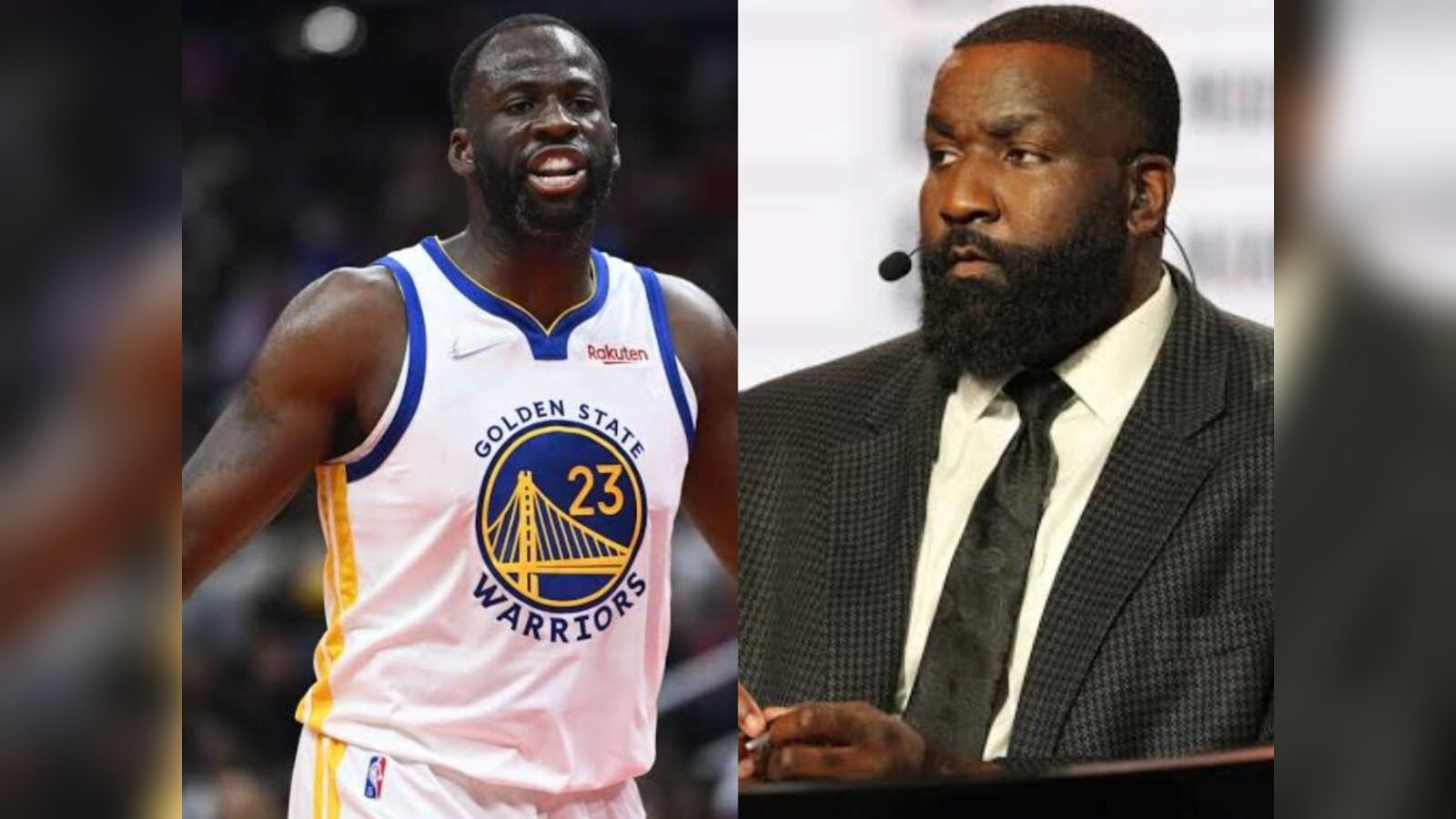
LONDON / OAKLAND (Azat TV) – The public friction between ESPN analyst Kendrick Perkins and Golden State Warriors forward Draymond Green has escalated significantly following a renewed exchange over basketball commentary, on-court discipline, and personal accountability in the NBA. According to reporting published by Yahoo Sports on November 6, 2026, Perkins issued a comprehensive response to Green after the four-time NBA champion targeted the former center on his personal podcast. The latest verbal clash highlights growing media scrutiny surrounding Green’s early-season production, his 31st career ejection, and the ongoing debate over whether his fiery on-court antics serve as a team asset or a competitive liability.
The Spark: Ejection Against Phoenix and Initial Criticism
The root of the current confrontation traces back to Green’s 31st career ejection during a 116-113 victory over the Phoenix Suns, as detailed in an article published by Heavy. During the contest, Green forcefully threw Phoenix center Khaman Maluach to the floor, an action that triggered a face-to-face confrontation with Suns enforcer Brooks. Explaining the physical play on his podcast, Green defended his physical approach, asserting that centers must establish dominance in the paint to prevent opponents from repeatedly challenging them.
Following that incident, Perkins appeared on ESPN’s First Take to question Green’s basketball focus, noting that discussions surrounding the veteran forward frequently center on altercations rather than athletic output. Perkins pointed to Green’s early-season statistics—averaging 3.2 points, 5.0 rebounds, and 6.3 assists per game alongside multiple technical fouls—and labeled him a liability rather than an asset for the Warriors. Perkins also suggested that Golden State guard Stephen Curry and the franchise consistently shield Green due to their established brotherhood, allowing behavior that demands greater public accountability.
Green’s Podcast Retaliation and Perkins’ Comprehensive Counter
Not one to let criticism pass quietly, Green fired back on his podcast, deriding Perkins as a “big dummy” and drawing a contrast between their respective basketball intellects and playing careers. Green acknowledged that he is no longer the player he was at his athletic peak, but argued that his basketball intelligence allows him to contribute effectively even as his physical capabilities evolve.
In his comprehensive counter-response reported by Yahoo Sports, Perkins refused to back down, emphasizing that public figures and multi-time champions are not immune to evaluation. Perkins challenged Green’s leadership style and questioned the constructive value of his media platform.
“You’re not above criticism. The only time we mention his name these last few days is him doing something crazy…. You’re not the only person that knows how to be an anchor. There’s more to being an anchor than just hard fouls and being able to get ejected,” Perkins said in his broadcast remarks. Perkins further questioned Green’s defensive impact this season, urging him to use his prominent voice to educate audiences on fundamental basketball rather than directing hostility toward critics. Drawing on his own experiences with therapy, Perkins suggested that personal growth is essential for authentic leadership.
Stakes and Team Dynamics for Golden State
The war of words unfolds as the Warriors navigate an early-season adjustment period. Despite dropping their first three games, Golden State rebounded with a five-game winning streak, putting team chemistry and on-court focus under a microscope. While Green remains a foundational defensive pillar for the franchise, analysts and observers continue to debate whether his emotional volatility and technical fouls risk undermining the team’s broader objectives. As both figures command substantial platforms in modern basketball media, the ongoing feud underscores the fine line veterans walk between maintaining competitive edge and managing disciplinary liabilities.