


The Financial Scale of Modern NASCAR
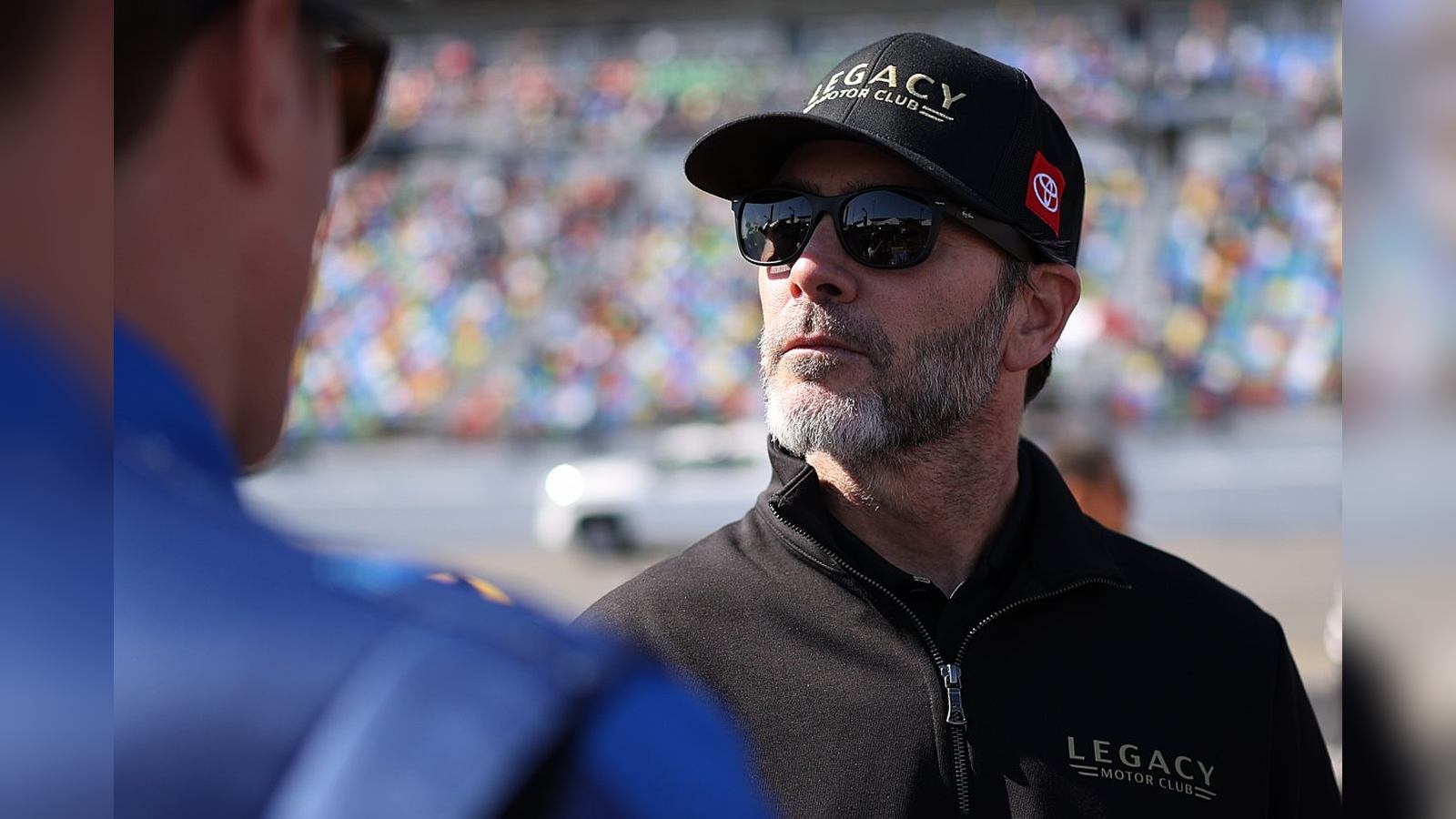
On November 20, 2026, Legacy Motor Club officially announced a new $85 million investment round aimed at expanding its operation to three full-time NASCAR Cup Series cars by 2027 and funding a new headquarters in Mooresville, North Carolina. As reported by Heavy, the investment has valued the organization at approximately $450 million. This significant valuation brings into sharp relief the divide between a team’s market worth and the grueling annual operating expenses required to remain competitive in the sport.
While the $450 million figure marks a milestone for team valuations, it masks the day-to-day financial pressure inherent in NASCAR ownership. According to testimony provided during the 2025 antitrust litigation involving 23XI Racing and Front Row Motorsports, competitive teams spend approximately $20 million annually per car, a figure that covers equipment, personnel, and race-day logistics but excludes driver compensation and broader corporate overhead. For a three-car operation, this necessitates an annual budget approaching $60 million, a constant, high-stakes demand that makes profitability a central challenge for owners.
Running a competitive NASCAR organization is a year-round operation rather than a simple weekend commitment. Behind every race car are dozens of employees, millions of dollars in equipment, and ongoing business costs that continue long after the checkered flag falls. Operating expenses encompass engineers, mechanics, pit crews, engines, replacement parts, transportation, travel, and facilities, creating a financial baseline that far exceeds the physical car itself.
The Rising Cost of Barriers to Entry
The financial barrier for entry into the Cup Series has surged alongside team valuations. The charter system, which guarantees entry into points-paying races and access to revenue distributions, has become a primary target for capital investment. While historical transactions have seen charters trade near the $40 million mark, market analysts cited by the Sports Business Journal and referenced by Heavy suggest that newer, permanent charters could command between $50 million and $100 million.
The stability provided by the recent settlement of the 23XI and Front Row Motorsports antitrust dispute, which solidified the permanent nature of these charters, has contributed to this upward pricing pressure. However, securing a charter is only the initial hurdle. A team must then absorb the infrastructure costs for engines, tires, travel, and specialized labor. Vehicle Codex highlights that these categories consume the vast majority of an owner’s annual budget, with tires alone costing an estimated $780,000 per year for a single-car team.
Beyond charters and tires, capital expenditures extend to shop space, specialized equipment, and haulers. A small body shop can run tens of thousands of dollars per month in rent alone, while engine and gearbox expenses add millions more over the course of a 38-race season. For new or expanding organizations, these multifaceted startup costs require substantial upfront capital before a single car ever hits the asphalt.
Revenue Models Versus Operating Reality
The math behind team viability remains complex. While chartered teams receive guaranteed revenue through NASCAR financial agreements, that income often trails the actual cost of competing. During the 2025 antitrust proceedings, testimony indicated that charter payouts had risen to approximately $12.5 million per car. While this represents a significant increase from previous figures, it still leaves a shortfall of roughly $7.5 million per car against the $20 million annual operating requirement.
Owners must bridge this gap through corporate sponsorships, race purses, merchandise, and commercial partnerships. The volatility of these revenue streams means that even as team valuations climb into the hundreds of millions—driven by private equity interest and the sport’s high profile—the operational profit margins for many teams remain thin. The $85 million infusion into Legacy Motor Club is intended to scale the organization’s infrastructure, including the construction of a new headquarters expected in 2028, to achieve the scale necessary to withstand these pressures.
Historical precedents show that managing these financial realities can be perilous. Teams that fail to secure adequate sponsorship or manage their cash reserves frequently struggle to maintain competitiveness. Even prominent figures and multicar operations must carefully balance aggressive expansion goals against the steady drain of weekly race operations, crash damage, and technical overhead.
Evaluating Future Sustainability in the Cup Series
For prospective owners and existing teams alike, the long-term outlook is defined by a stark dichotomy. On one side, permanent charters and private equity interest have transformed racing organizations into highly valued corporate assets, with top valuations reaching hundreds of millions of dollars. On the other side, the day-to-day cost of fielding a competitive entry remains an unyielding financial obligation that demands constant capital infusion.
Legacy Motor Club’s expansion plans for its three-car lineup—featuring Erik Jones, Josh Berry, and Riley Herbst—exemplify the scale required to compete at the highest level in the modern era. Yet, as financial disclosures and antitrust testimonies have demonstrated, asset appreciation does not automatically translate to operational self-sufficiency. As the sport moves forward under stabilized charter agreements, owners will continue to navigate the narrow margin between soaring market valuations and the relentless multi-million-dollar cost of racing.