


Nighttime Incursions and Confirmed Impacts
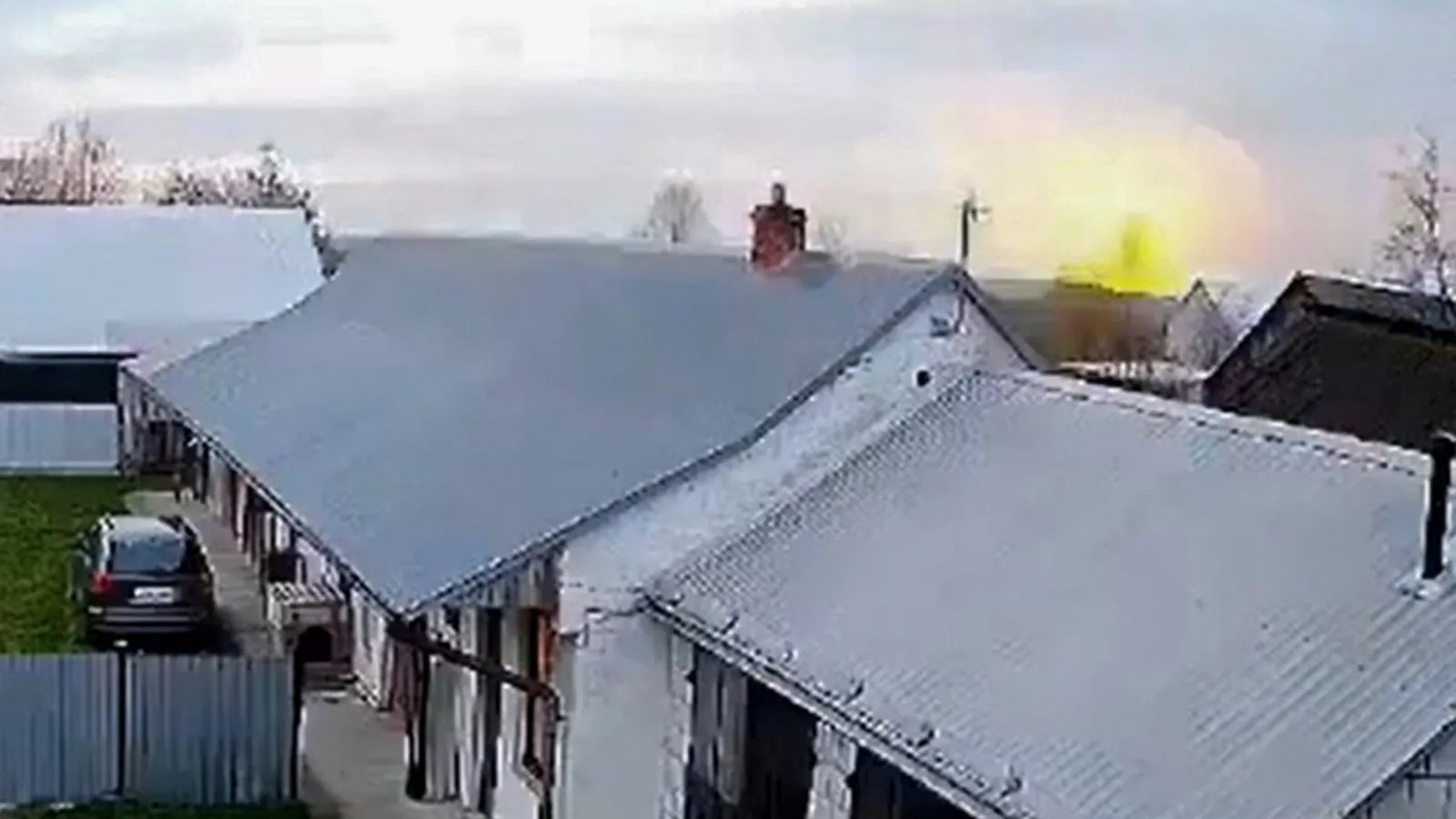
On November 20, 2026, two missiles and a jet-powered drone fell on Polish territory during a massive Russian overnight bombardment of Ukraine, Al Jazeera reported. Polish Defence Minister Wladyslaw Kosiniak-Kamysz confirmed at a news conference in Warsaw that the projectiles came down in the country’s southeast. Specifically, a Kh-101 cruise missile landed at Nowy Lipowiec, another missile struck Rudnik nad Sanem, and what officials identified as a jet-powered drone crashed at Molodycz.
The munitions struck in close proximity to sensitive military activity. One missile landed about 35 kilometers (22 miles) from an area where European troops were conducting multi-nation military exercises. Another projectile came down approximately 50 kilometers (31 miles) from the Ukrainian border, while the drone hit roughly 30 kilometers from the border. CBS News noted that no immediate injuries or structural damage were reported on the ground following the nighttime incidents.
The Scale of the Russian Bombardment
The airspace violations occurred during one of the heaviest aerial assaults launched by Moscow against Ukraine since the full-scale invasion began nearly five years ago. Ukrainian President Volodymyr Zelenskyy reported that Russia fired more than 400 drones and at least 110 missiles during the overnight barrage. The attack included 27 ballistic missiles, some equipped with cluster warheads, resulting in at least eight civilian deaths and more than two dozen injuries across Ukraine.
The timing and scale of the attack prompted immediate security concerns in neighboring NATO member states. The two-week European military drills underway in southeastern Poland involve forces from 11 countries preparing for a potential post-war mission to help stabilize Ukraine and rebuild its military infrastructure.
Warsaw’s Accusations Versus Washington’s Dismissal
The physical breaches opened a sharp diplomatic chasm between Polish leadership and key Western allies. Polish Prime Minister Donald Tusk declared that the incident appeared to be an “intentional provocation” by Moscow, deliberately timed to coincide with the European military exercises in southeastern Poland.
Conversely, U.S. President Donald Trump publicly dismissed the incursions as a “mistake,” creating an immediate public divergence in how major NATO allies interpret Moscow’s actions. The differing assessments highlight underlying friction over alliance posture as Washington pushes to revive diplomatic talks aimed at ending the war.
Geopolitical Stakes and NATO’s Collective Defense Threshold
Security analysts emphasize that the strikes fit into a broader pattern of hybrid warfare designed to probe Western defenses. Scott Lucas, a professor of international politics at the Clinton Institute, University College Dublin, told Al Jazeera that Moscow has systematically tested how far it can push NATO without triggering a direct military response. Harry Nedelcu, senior director for geopolitics at Rasmussen Global, added that such incursions aim to undermine NATO under the threshold of Article 5, which dictates that an attack on one member is an attack on all.
The incident also unfolded against the backdrop of high-level diplomatic maneuvers in Berlin, where U.S. envoys Jared Kushner and Steve Witkoff discussed post-war security guarantees for Ukraine with European leaders, drawing swift pushback from Russian officials regarding any quasi-membership arrangement for Kyiv.
Analyzing the Diplomatic Divide and Alliance Posture
The divergence between Warsaw and Washington regarding the November 20 incursions exposes a deeper strategic tension within the Western alliance. While Polish officials view the landing of multiple munitions on sovereign NATO soil as a calculated escalation designed to test eastern flank readiness, U.S. leadership remains focused on maintaining diplomatic channels to negotiate an end to the conflict. This dichotomy complicates the formulation of a unified response, leaving eastern European capitals demanding heightened aerial vigilance while American counterparts minimize the friction to preserve ongoing peace initiatives.
Furthermore, this diplomatic friction complicates the operational calculus for NATO’s eastern defenses. Military planners must balance the immediate necessity of reassuring frontline states like Poland against the broader geopolitical objective of avoiding an inadvertent escalation into direct military conflict with Moscow. As allied defense ministers evaluate the telemetry and wreckage recovered from Nowy Lipowiec, Rudnik nad Sanem, and Molodycz, the debate over whether these airspace violations represent targeted probing or severe collateral damage from Ukraine’s air battles will continue to shape alliance cohesion and deterrence strategy in the months ahead.