


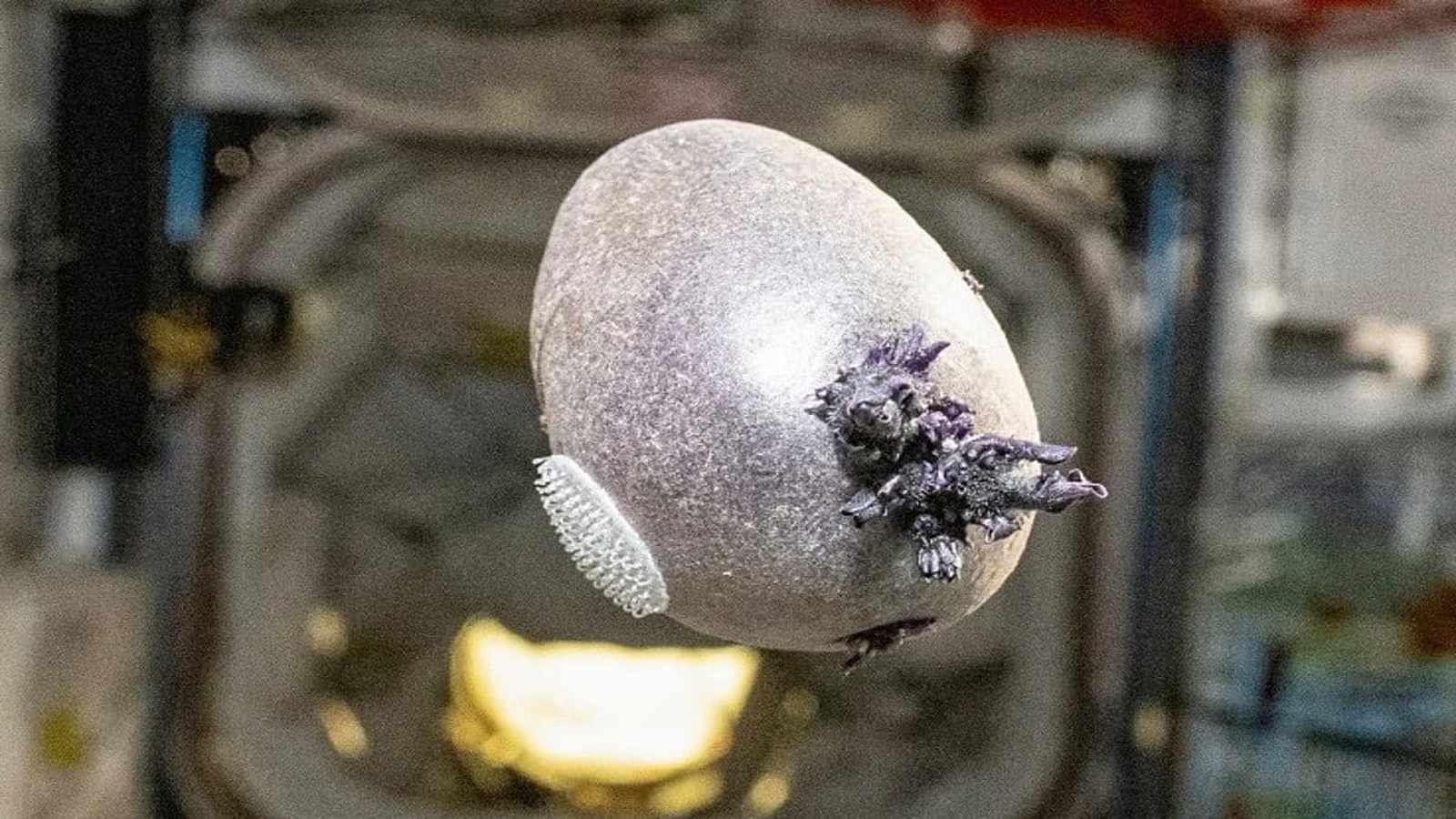
A social media frenzy erupted on March 27, 2026, when NASA astronaut Don Pettit shared a photograph of a purple, tentacled object aboard the International Space Station (ISS). While many users initially speculated that the image depicted an extraterrestrial life form, the reality is a significant milestone in space agricultural research. The object, affectionately nicknamed ‘Spudnik-1’ by Pettit, is a purple potato grown as part of his personal off-duty space gardening experiments.
The Reality Behind the Viral ‘Spudnik-1’
The confusion surrounding the image stemmed from the potato’s unique appearance in a microgravity environment. Without the influence of gravity to dictate growth patterns, the roots sprouted in all directions, creating a tentacle-like effect. The presence of a small piece of hook Velcro, used by Pettit to secure the tuber within his improvised grow-light terrarium, further contributed to the object’s uncanny, sci-fi appearance. Pettit, an experienced astronaut with over 590 days in orbit, clarified that the deep purple hue is a natural characteristic of the variety, attributed to high levels of anthocyanins rather than any space-induced mutation.
Why Space Agriculture is Critical for Deep Space Missions
Beyond the viral intrigue, the experiment underscores a fundamental hurdle for future human exploration of the Moon and Mars. As mission durations extend into years, the logistical impossibility of resupplying food from Earth necessitates the development of self-sustaining agricultural systems. According to Euronews, potatoes are considered an ideal candidate for these environments due to their high ratio of edible nutrition to total plant mass, including roots. This concept has gained significant public recognition through science fiction, most notably in Andy Weir’s The Martian, which Pettit cited as a primary inspiration for his work.
Technical Challenges of Farming in Microgravity
Cultivating crops in space involves far more complexity than terrestrial gardening. The Mary Sue notes that standard irrigation fails in microgravity, where water can form potentially harmful bubbles around root systems. Agencies including NASA, the European Space Agency (ESA), and the German Aerospace Centre (DLR) are currently iterating on specialized technologies like the Advanced Plant Habitat (APH) and bioregenerative systems to manage light, air, and nutrient delivery. These systems are not only essential for physical survival but also provide psychological benefits, offering astronauts a vital connection to Earth-based life during long-duration missions.
The viral reaction to ‘Spudnik-1’ highlights a growing public fascination with the practical realities of space colonization, shifting the narrative from abstract exploration to the tangible, biological requirements of sustaining human life on other worlds.