


League Infrastructure and Scheduling Challenges
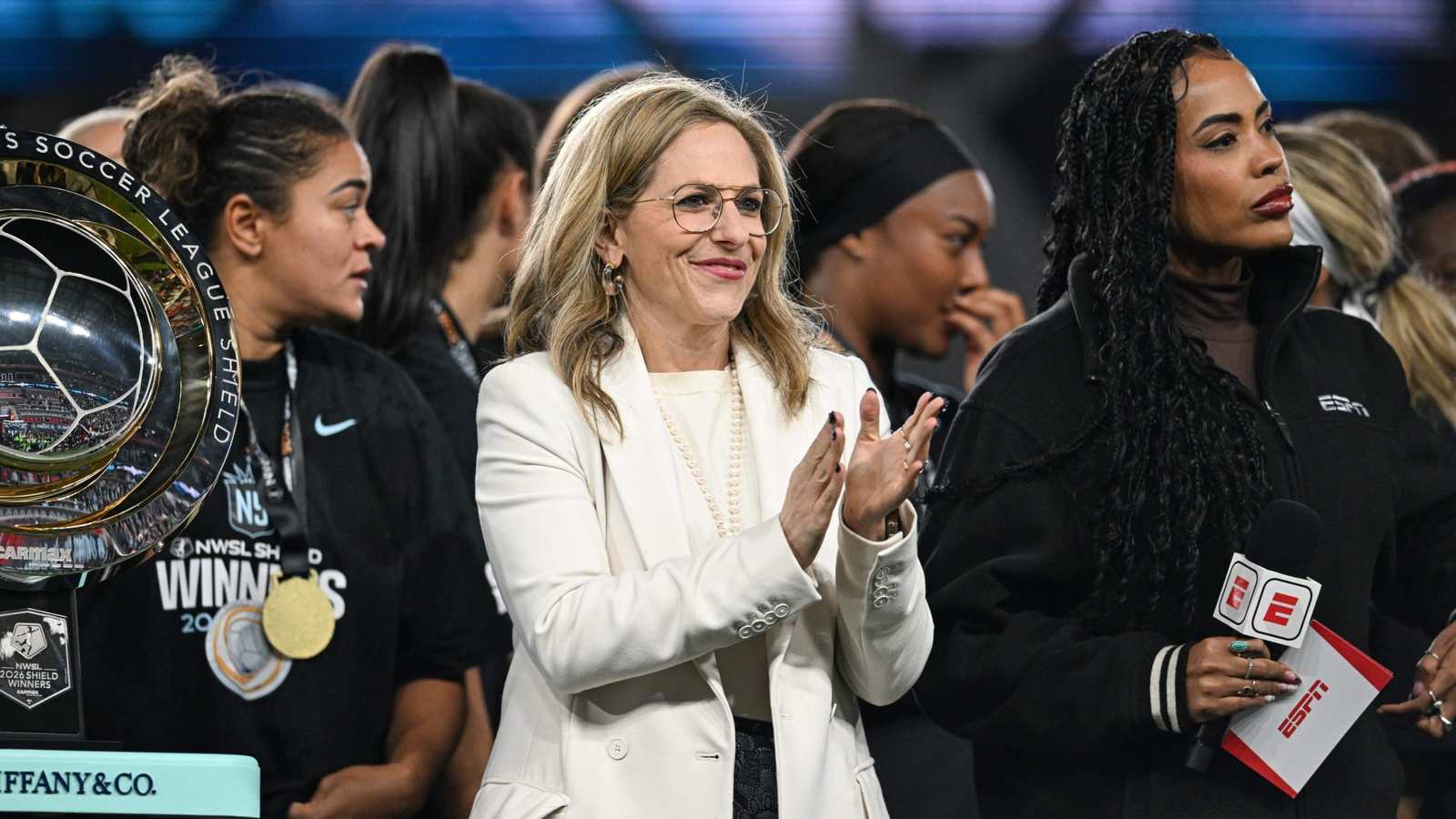
During a press conference held in Washington, D.C., and reported on November 20, 2026, by Defector, NWSL Commissioner Jessica Berman addressed the state of the league amidst its ongoing rapid expansion. The event, which featured an introduction by renowned soccer announcer Andrés Cantor, highlighted significant tensions between the league’s growing viewership and its ability to manage fundamental operational logistics, specifically regarding stadium scheduling and field quality. As the league experiences rapid growth, the administrative and physical infrastructure has struggled to keep pace, leading to public friction during the 2026 playoff season.
The 2026 NWSL playoff season was marked by recurring infrastructure issues that drew national attention. Gotham FC’s home pitch faced severe criticism, with Seattle coach Laura Harvey describing the surface as inadequate following a quarterfinal match. Gotham had previously been fined $10,000 for poor field conditions during the regular season, yet the issues persisted. The logistical strain eventually forced the team to relocate its semifinal match to avoid a conflict with a New York Red Bulls friendly. Similarly, the Washington Spirit faced scheduling conflicts with the Secretaries’ Cup, leading to a compromise where the pitch was marked with both soccer and football lines, which drew widespread criticism regarding professional standards in a top-tier league.
When questioned by ESPN’s Jeff Kassouf on how the league intends to prevent these logistical failures, Commissioner Berman emphasized that the NWSL is in a developmental phase. “I think we should acknowledge that solving infrastructure problems for many leagues takes 50 to 70 years,” Berman stated, adding, “We’ve been at this for four.” She noted that the league is increasing the number of team-controlled venues, which she expects will mitigate future scheduling conflicts. However, critics suggest that this long-term perspective does not address the immediate, acute operational failures that have plagued the current season.
Team Stability and Potential Relocation
The status of Racing Louisville has emerged as a point of institutional uncertainty. Reports indicate that the club’s ownership is seeking a sale, with sources suggesting that the owners of MLS’s FC Cincinnati are the expected future buyers. While the team is currently slated to play the 2027 season in Louisville, the broader concern regarding potential relocation remains a significant point of discussion for league observers. The history of expansion fees, which topped out at $1 million in 2019, contrasts sharply with the current market valuation of NWSL franchises, creating a complex financial landscape for ownership transitions.
Berman declined to provide specific updates on the Racing Louisville situation during the press event. However, she clarified the league’s official stance on team movement: any relocation would require approval from the Board of Governors. She described NWSL teams as “community assets” and implied that relocation would only be considered as a last resort, though she did not offer a concrete guarantee regarding the club’s long-term future in its current market. This ambiguity regarding team permanence reflects a broader anxiety among fans who view the league’s rapid expansion as a potential threat to local club identity.
Policy Gaps and Supporter Relations
The league is also navigating internal friction regarding the presence of anti-trans activists at matches. Following incidents in Portland, where fans moved to cover anti-trans banners with flags, and threats of similar protests in Seattle, journalists, including Meg Linehan of The Athletic, pressed the commissioner on how the league intends to protect players and fans without compromising its stated values. Berman’s response, which largely deferred to individual club policies, was criticized by observers as a “word salad” that failed to establish a clear, league-wide protective standard. This perceived lack of clarity has left stakeholders questioning whether the league is providing sufficient leadership on sensitive social issues as it continues to expand its reach and influence.
Berman noted that a “legal policy” exists as an “umbrella of minimum standards,” but added that the league leaves it to individual clubs to interpret and apply these policies based on local community attributes. This decentralized approach is intended to respect the unique attributes of particular communities, yet it has resulted in inconsistent experiences for fans across different markets. Critics argue that by punting on these issues, the league risks alienating its core base, which views the NWSL as a champion of inclusivity.
Operational Risk and Future Outlook
Beyond stadium and social policy, the league’s operational management has faced scrutiny regarding business partnerships. Earlier in 2026, the NWSL moved matches to the streaming platform Victory+, a deal that eventually collapsed due to non-payments. At the Front Office Sports Tuned In summit in October 2026, Berman defended the decision, describing the league as “risk-tolerant” and focused on innovation. While she acknowledged the outcome was “not ideal,” she positioned the failure as a consequence of pursuing growth. This philosophy of prioritizing rapid, innovative expansion over conservative stability appears to be the central tenet of Berman’s tenure. However, as the league approaches the end of its current media rights deals in 2027, the pressure to demonstrate both operational maturity and consistent growth is mounting. The commissioner’s tendency to provide corporate-style, non-committal answers during high-profile press events has created a disconnect with media members and fans who are seeking concrete solutions to the growing pains of a league that is rapidly outgrowing its initial, start-up infrastructure.
Reporting source: defector.com.