


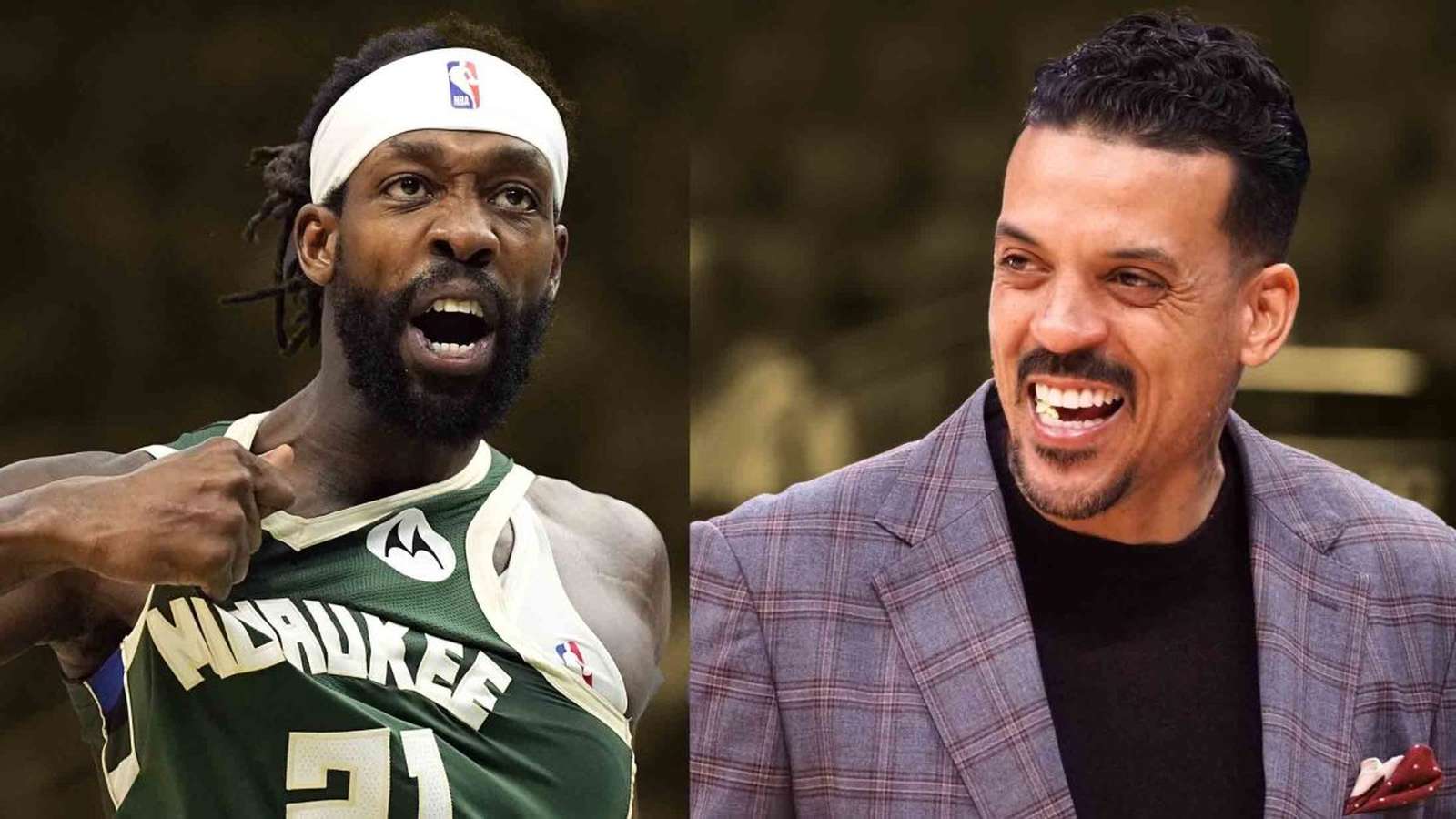
NEW YORK (Azat TV) – The intersection of professional basketball and digital media reputation reached a volatile peak on April 7, 2026, when Patrick Beverley issued a pointed warning to Matt Barnes that invoked one of the most infamous personal incidents in NBA history. By explicitly stating, I ain’t Derek Fisher, Beverley transformed a professional critique regarding podcasting tactics into a high-stakes confrontation, underscoring the increasing volatility of the modern NBA media space.
The Weight of the ‘Derek Fisher’ Reference
The comment followed a public rebuke from Barnes, who had labeled Beverley a clout chaser after Beverley engaged in a heated online dispute with Dwyane Wade. Barnes, speaking on his All the Smoke platform, suggested that Beverley was manufacturing controversy to boost his own podcasting metrics following his departure from Barstool Sports. By invoking Fisher, Beverley did more than reject the characterization; he signaled that he was prepared to move beyond the traditional boundaries of sports debate.
The specific reference to Fisher serves as a potent reminder of the 2015 incident in which Barnes confronted Fisher over personal matters. By explicitly drawing this comparison, Beverley effectively signaled that the dispute with Barnes had shifted from a disagreement over basketball commentary into a test of personal credibility and reputation management. In the current NBA media landscape, where former players frequently leverage their status to define the narratives around current and past stars, such references represent a significant escalation.
Blurring Lines Between Analysis and Personality
The conflict with Barnes is emblematic of a broader trend where the line between basketball analysis and personal history is increasingly thin. The debate surrounding James Harden’s placement in the guard hierarchy—which initially sparked the friction between Beverley and Wade—has become a proxy for these personal power struggles. Critics like Draymond Green have noted that Harden’s dual identity as both a scorer and a high-volume playmaker makes him difficult to categorize, yet the discourse has largely migrated from tactical assessment to questions of legacy and intent.
Beverley argued that his critiques of players are rooted in statistical facts, yet his choice to bring up the Fisher incident suggests that the authority to define these narratives is now as much about defensive posturing as it is about basketball acumen. As players-turned-analysts continue to dominate the discourse, the ability to control the conversation has become a primary objective, often at the expense of the professional decorum that once characterized former-player media circles.
The escalation of the Barnes-Beverley feud, signaled by the revival of the Fisher narrative, confirms that NBA media discourse has moved into a phase where personal history is now a standard tool for silencing critics, effectively prioritizing reputation defense over analytical substance-based basketball analysis.