

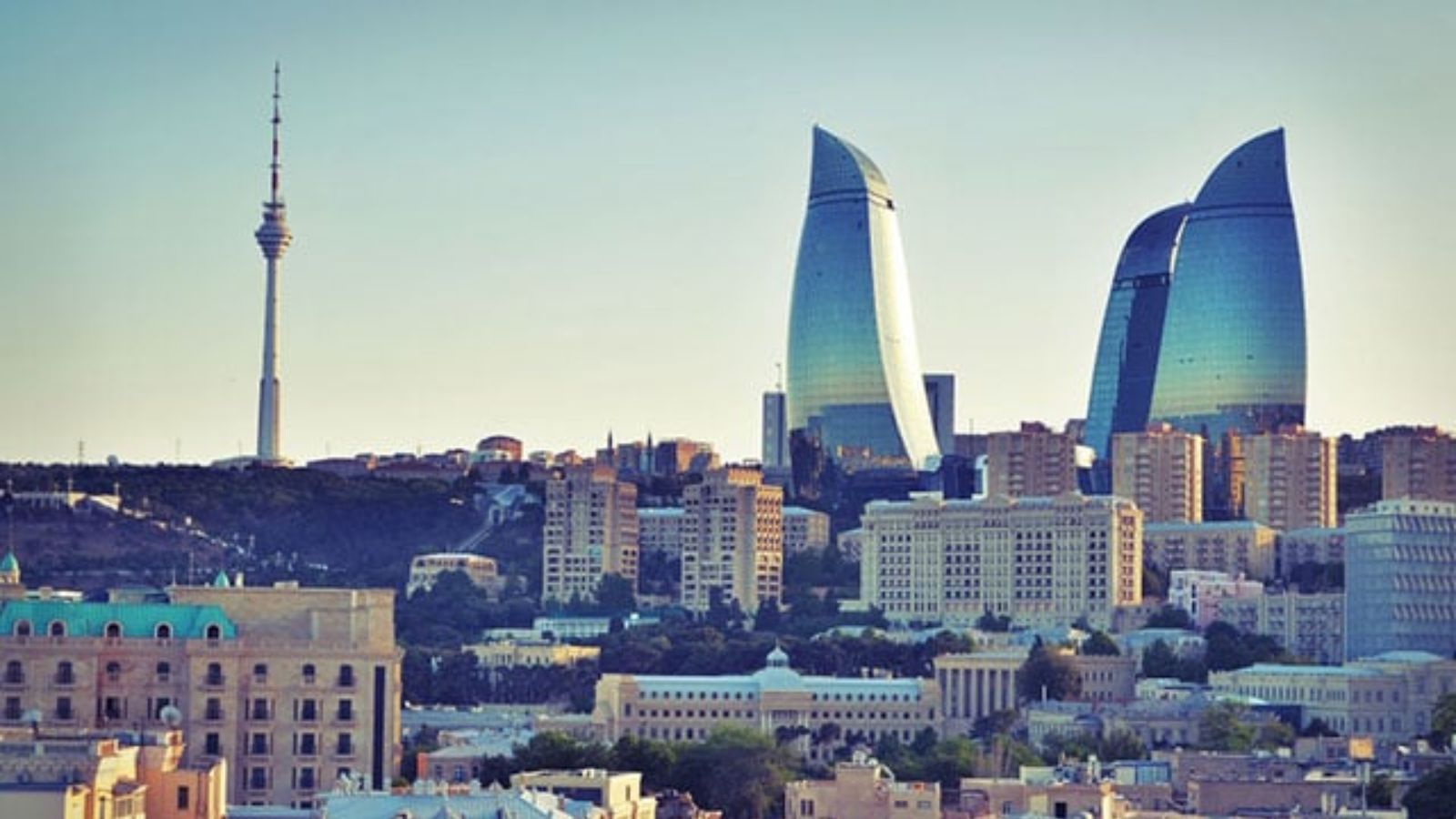
- Azerbaijan’s president Ilham Aliyev has accepted an invitation to join the Peace Council.
- The Azerbaijani foreign ministry says Baku is ready to become a founding member of the Peace Council.
- The invitation to roughly 60 countries was extended by U.S. President Donald Trump and includes Armenia among invitees.
- The move signals a concerted effort to establish a new international forum for conflict resolution in the region.
The announcement from Azerbaijan’s leadership comes at a moment of renewed emphasis on international diplomacy in a region long defined by the persistence of protracted conflicts and fragile truces. In a statement released by the presidency, officials indicated that President Ilham Aliyev had accepted the invitation to participate in the Peace Council, framing the development as a willingness to play a constructive role in a nascent multilateral framework designed to address regional disputes. The description of Azerbaijan as a prospective founding member underscores the government’s intent to position itself as a central actor in a new global diplomacy portfolio that seeks to supplement, or even redefine, traditional dispute-resolution channels in the wider neighborhood.
Details surrounding the Peace Council remain scant, but the timing of the move—tied to a broader push articulated by the United States—adds a layer of strategic signaling. An Azerbaijani foreign ministry briefing followed the initial presidential notice, stating unequivocally that Baku stood ready to take on a founding role. This stance aligns with a broader pattern in which the Azerbaijani leadership has sought to diversify its diplomatic portfolio beyond the regional security framework that has long dominated post-Soviet diplomacy in the South Caucasus. The message is clear: Azerbaijan wants to shape the design and direction of an international forum that it hopes will help manage, or at least de-escalate, a set of enduring tensions that include the Nagorno-Karabakh question and the broader regional order.
The list of invitees, reportedly numbering around 60 countries and including Armenia, points to a deliberately inclusive approach that seeks wide legitimacy for the proposed council. The invitation is said to have originated with the administration of U.S. President Donald Trump, signaling a high-profile U.S. push to reframe conflict-resolution efforts in Eastern Europe and the South Caucasus. For observers, the inclusion of Armenia is particularly noteworthy: it suggests a potential opening for dialogue channels that complement existing formats, while simultaneously raising questions about how Armenian participation would intersect with the Minsk process and other regional negotiation tracks that have faced long-standing obstacles. The initiative’s success—or failure—will likely hinge on concrete detail: the council’s mandate, its decision-making procedures, and the degree to which commitments translate into measurable, on-the-ground progress.
Analysts caution that the Peace Council, as described in early briefings, is still in a nascent stage. Its practical architecture—the chair, rotating leadership, substantive committees, funding sources, and enforcement mechanisms—remains to be clarified. Without a clear operational blueprint, the very existence of invitations and founding-member pledges risks remaining symbolic rather than transformative. Yet even at this early juncture, the Azerbaijan announcement is significant for what it communicates about the country’s strategic posture. It signals a readiness to engage in a new diplomacy that envisions international oversight, shared responsibilities, and a potential reshaping of how regional conflicts are managed in the 21st century.
From a regional perspective, the implications extend beyond the South Caucasus. Azerbaijan stands at a critical crossroads of energy, transportation, and security alignments linking Europe, the Middle East, and Russia. The Peace Council concept could, in theory, offer a platform for coordinated diplomacy that mitigates competition among great powers and national ego projects. For Baku, participating as a founding member would be a demonstration of leadership—and a way to cultivate influence within a broader international consensus framework. For Ankara, Moscow, and Tehran alike, such a development would require recalibration of their own regional strategies, as well as a reassessment of how they engage with Washington’s diplomatic gambits in the post–Cold War era. In short, the Azerbaijan decision is a potential inflection point with ripples that could reach the corridors of power in Brussels, Tehran, and beyond.
The domestic dimension should not be overlooked. Azerbaijan’s decision to publicly articulate its readiness to participate as a founding member serves a dual political purpose. On one hand, it reinforces the government’s image as a proactive champion of regional stability and a credible partner in global diplomacy. On the other hand, it offers the leadership a platform to frame external initiatives as evidence of sovereignty and strategic maturity at a time when the country has been balancing foreign relations with competing regional interests. How the public and opposition both respond to this development will depend on the pace of follow-on steps—the presentation of a concrete timeline, a transparent governance framework for the council, and tangible milestones that can be measured against credible performance benchmarks.
Armenia’s possible responses, too, will be closely watched. Armenian authorities have repeatedly emphasized their commitment to negotiation processes that can yield durable peace, while also defending national interests and security concerns. The announcement of Armenia’s inclusion among invited states could be interpreted as an opening to engage in a dialogue track parallel to, or integrated with, existing processes. Yet any realignment of engagement in the peace process faces practical obstacles: a history of mistrust, domestic political constraints, and the complex web of regional actors with competing security calculations. The Peace Council’s architecture will need to address these realities if it is to avoid becoming a symbolic forum rather than a efficacious mechanism for real-world conflict resolution. In addition, the cooperation or friction of this new forum with Russia’s influence in the region will likely shape the dynamics of Armenian-Azerbaijani diplomacy in the months to come.
Economic and strategic considerations are inseparable from political arrangements in this part of the world. Azerbaijan’s energy corridors—its gas and potential oil resources, its role in regional connectivity projects, and its position in the broader Eurasian energy architecture—could be leveraged within the Peace Council framework to demonstrate practical benefits of diplomacy. If the council advances concrete mediation mechanisms that lead to de-escalation of hostilities and increased trade and investment, the leadership in Baku could present such outcomes as evidence that diplomacy yields tangible dividends for citizens and regional partners alike. Conversely, if the council’s work stalls or remains opaque, critics may view the initiative as an aspirational project that fails to translate into real-world improvements, potentially undermining confidence in future negotiations.
Beyond immediate regional effects, the Peace Council could set a precedent for how superpowers and regional players approach multi-lateral diplomacy in post-conflict contexts. The willingness of a country like Azerbaijan to step into a founding role signals a broader shift—from purely bilateral deal-making to a more ecosystemic approach in which multiple parties share risk, responsibility, and reward. For supporters, the format promises a more holistic approach to conflict prevention and resolution—one that recognizes the interdependence of security, development, and governance. For skeptics, the risk remains that a council founded on international legitimacy could be used to pressure weaker states without delivering on ground-level peace or accountability. The coming months will reveal which trajectory dominates as more details emerge regarding the council’s structure, funding, and operational agenda.
In sum, Azerbaijan’s acceptance of the invitation to join the Peace Council reflects a calculated gamble and a signal of diplomatic ambition. It aligns with a broader pattern in which states seek to diversify their diplomatic portfolio by participating in high-profile multilateral forums that promise legitimacy and broad-based legitimacy. The real test, as is often the case with new international bodies, will be whether the council can translate its ambitions into tangible progress for people living in the region—progress that reduces violence, improves livelihoods, and creates a credible pathway toward a more stable and predictable security environment. For now, the announcements mark the beginning, not the end, of a long process that will require hard bargaining, transparent governance, and the sustained political will of multiple actors to move from rhetoric to results.
Final Analysis: As the region watches for concrete steps, the Azerbaijan decision should be understood as a strategic move that seeks to redefine the diplomacy of the South Caucasus through a multilateral lens. The council’s credibility will depend on its governance—how decisions are made, how commitments are verified, and whether participants can demonstrate verifiable progress. In the near term, the immediate question is whether Armenia participates actively and how Russia, Turkey, and European powers respond. If the forum gains momentum, it could complement existing processes by creating new channels for dialogue and reducing the risk of miscalculation. If it remains symbolic, it will likely be dismissed as a public relations gesture with limited practical impact. The coming weeks and months will determine which of these paths prevails and how the Peace Council—whatever form it ultimately takes—affects the fragile balance of peace and power in the South Caucasus and its broader neighborhood.