

Quick Read
- Trump unveils the Gaza Peace Council designed to unite states willing to shoulder responsibility for resolving the Gaza conflict.
- The plan invites about 60 countries to join, signaling a broad, multilateral approach rather than a purely bilateral process.
- Kazakhstan’s Kassym-Jomart Tokayev has expressed readiness to participate, sending a formal letter of acceptance.
- Uzbekistan’s Shavkat Mirziyoyev also confirmed willingness to join, while France reportedly plans to reject the invitation and Hungary has unconditionally accepted.
The announcement came as a surprising pivot in Gaza diplomacy, framed by Washington as a pragmatic, incremental path toward stability that would complement existing channels rather than supplant them. On September 29, 2025, President Donald Trump unveiled the idea of a Gaza Peace Council—an international forum intended to bring together states that are prepared to shoulder responsibility for conflict resolution. Officials described the council as a political umbrella rather than a binding negotiating body. In the White House briefing material, the president stressed that participation would be voluntary, contingent on a shared commitment to rules-based diplomacy, and geared toward steady, incremental progress through coordinated diplomacy, humanitarian relief, and confidence-building steps. The plan envisions a broad membership—roughly 60 countries—reflecting a desire to move beyond traditional regional players and to enlist a wider array of international actors in shaping a sustainable path forward for Gaza and the broader region.
Diplomats and regional analysts quickly noted that the proposed council arrives at a moment when the Gaza conflict has repeatedly defied durable resolution yet remains a focal point of international concern. Proponents argue that the council could fill a gap left by bilateral negotiations and by a sometimes slow-moving UN framework, offering a platform for synchronized diplomacy, publicly trackable commitments, and a set of benchmarks that could keep participants accountable. The concept, supporters say, could facilitate a mix of humanitarian access, ceasefire monitoring, and political engagement that benefits from broader legitimacy. Yet critics warn that a new multilateral forum risks duplicating efforts, creating parallel decision-making tracks that complicate existing processes, or empowering governments to exert greater leverage under the umbrella of “collective action” without delivering concrete concessions on the ground. In short, the council’s fate may hinge on how clearly its mandate is defined, how decisions are made, and how it coordinates with established international institutions rather than competing with them.
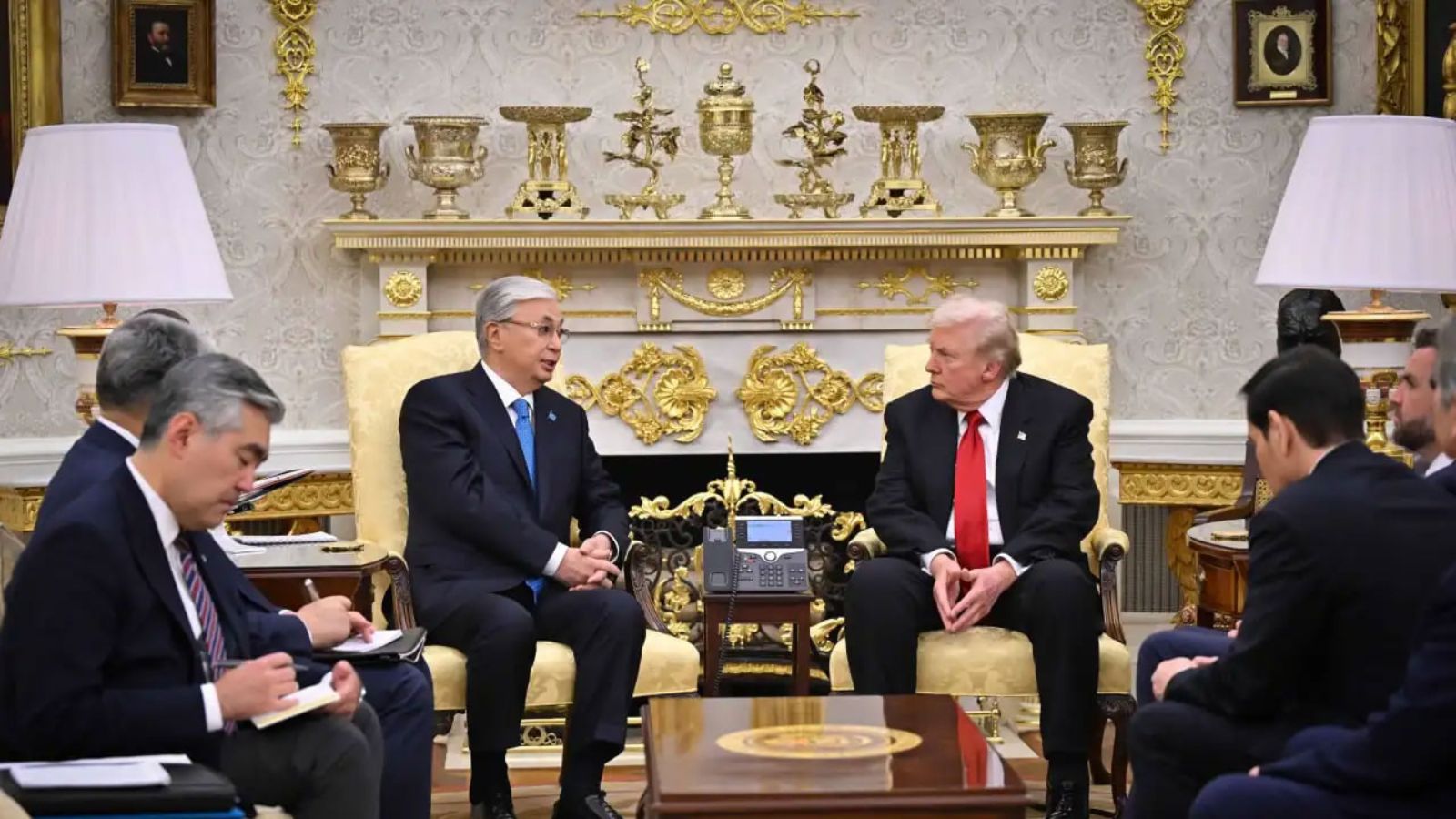
Two of the most consequential developments to emerge from the initial announcements concern Central Asia. Kazakhstan’s head of state, Kassym-Jomart Tokayev, was the first global leader to receive an official invitation, and he responded with a formal letter signaling his government’s willingness to participate. In Kazakhstan’s view, joining the Gaza Peace Council could serve as a bridge to broader regional stability and could diversify the country’s diplomatic portfolio beyond traditional alignment with Europe or the United States. The move is notable because it signals a willingness by a large, resource-rich state to engage in a crisis that sits far from its borders, potentially expanding the coalition’s geographical reach and bringing in new perspectives on conflict management and humanitarian issues. Uzbekistan’s president, Shavkat Mirziyoyev, quickly followed with public confirmation of his country’s readiness to join as well. Uzbekistan has pursued a more assertive foreign policy in recent years, emphasizing regional stability, economic integration, and a diversification of international partnerships. Uzbek officials framed the decision as an important test for the international community’s ability to sustain a long-term peace effort and as an opportunity to participate in a process that could shape the region’s security architecture for years to come. While Tokayev’s and Mirziyoyev’s responses lend credibility to the concept, diplomats cautioned that membership alone would not guarantee success; the true test would be whether the council could translate its pledges into concrete steps on the ground and maintain coherence with UN-led efforts and humanitarian priorities.
Responses from major European powers have been far from uniform. France, a longstanding advocate for a robust UN-based approach and a defender of the rule of law in international affairs, reportedly plans to decline the invitation. Paris has argued that a parallel forum could undermine the UN’s central role in conflict resolution and complicate the international community’s unity on Gaza. The French position underscores a broader unease in some capitals about creating new structures that could duplicate or dilute existing mechanisms and standards. By contrast, Hungary has publicly embraced the plan without reservation, presenting a contrasting stance within Europe that reflects the continent’s evolving political dynamics and the appeal of alternative diplomatic channels. The divergence among European Union members highlights the larger debate over how best to balance inclusivity with coherence, particularly when addressing a crisis as protracted and deeply contested as the Gaza situation. Diplomats say that while the idea of a more inclusive, globally representative forum is appealing, it must be anchored in clear governance standards, verifiable commitments, and tight coordination with established institutions to avoid fragmentation and to preserve the integrity of international law.
As observers assess the strategic logic of the Gaza Peace Council, several practical questions loom large. What would the council actually do in its early days? Would it issue binding commitments, or would it operate as a forum for signaling? How would it interact with the UN Security Council, regional actors like Egypt and Jordan, and the Palestinian Authority? What mechanisms would be put in place to monitor compliance, ensure humanitarian access, and prevent human rights abuses during any escalation or ceasefire? The credibility of the council will depend on a transparent governance framework, a credible charter, and a detailed plan with milestones that are verifiable and publicly reported. In Gaza and the surrounding region, the immediate humanitarian needs—more accessible aid, protection of civilians, and a credible security framework for residents—will demand more than rhetoric. If the council is to offer genuine value, it must demonstrate that it can coordinate with humanitarian organizations, coordinate with regional stakeholders, and press for tangible progress in parallel with existing diplomatic efforts. The success of this initiative will largely depend on the willingness of member states to adhere to a calculable schedule of actions and to report regularly on outcomes, while remaining anchored in international law and humanitarian principles. In this sense, the Gaza Peace Council is as much about process as it is about any particular policy outcome, and its long-term significance will rest on its ability to turn partnership into measurable, meaningful change for civilians living amid the conflict.
Analysts caution that the Gaza Peace Council’s success will hinge on credible governance, tangible measures, and alignment with humanitarian principles while avoiding duplication of existing efforts. Only if member states commit to a transparent framework, coordinate with the UN, and uphold international law could the initiative translate into real progress for civilians. The test will be whether the council can attract broad buy-in from regional actors and maintain discipline in its diplomacy, particularly as divisions among major powers complicate the path to any durable settlement.