


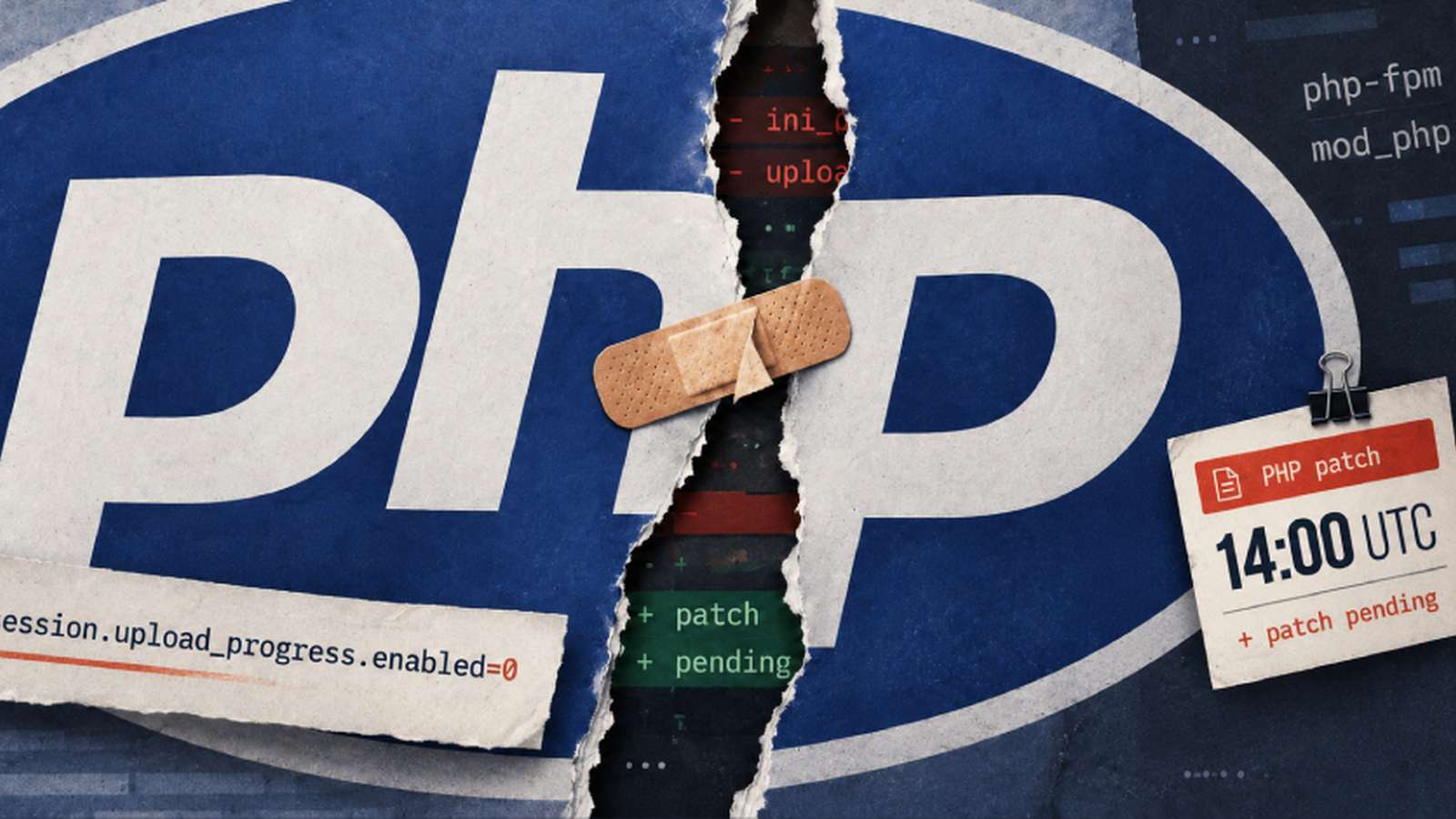
Administrators managing PHP applications face a tense window ahead of an emergency security release. The PHP project is scheduled to release a patch at 14:00 UTC on October 21 to address two critical remote code execution vulnerabilities collectively designated as PHP2Shell, as reported by The Hacker News. Both flaws have been assigned a severity rating of 9.2 out of 10, prompting widespread concern across web infrastructure providers. Ahead of the official release, security researchers and core developers have issued urgent warnings that widely shared configuration workarounds cannot guarantee protection against active exploitation attempts.
The Limits of Configuration Workarounds
Initial advice circulating across security blogs and social media pointed to a single configuration change: disabling session upload progress by setting session.upload_progress.enabled=0. The Tokyo-based security firm GMO Flatt Security initially suggested the tweak early on October 21, though it noted the measure carried uncertain effectiveness. By 05:00 UTC, the firm reversed its stance, warning that the setting alone is not a complete fix and that bypasses are expected.
PHP core developers echoed these warnings. Gina Peter Banyard, a PHP core developer and documentation writer funded by the PHP Foundation, stated plainly that patching remains the only true mitigation. Joe Ferguson, release manager for the upcoming PHP 8.6, added that initialization settings will not secure vulnerable servers. Independent code audits further complicate the picture by questioning whether the targeted vulnerability even exists within the session upload progress feature, leaving administrators with few reliable stopgaps.
Network Isolation and Deployment Realities
With definitive patches pending, security advisories emphasize risk-reduction strategies over false comfort. Organizations unable to apply immediate updates are advised by CERT-EU to isolate internet-facing applications from public networks. Alternatively, administrators can restrict inbound reach through VPNs, IP allowlists, or authenticated edge controls. Security teams also recommend reducing server privileges, removing stored cloud credentials, and ensuring robust, secure log retention to facilitate post-incident analysis.
Applying the upcoming fix requires targeting the underlying PHP runtime—such as PHP-FPM, mod_php, or CGI—rather than updating web applications like WordPress or Laravel. Administrators running unsupported PHP branches older than 8.2 face additional hurdles, as official updates will not be backported to legacy environments, necessitating manual upgrades or isolated deployments.