


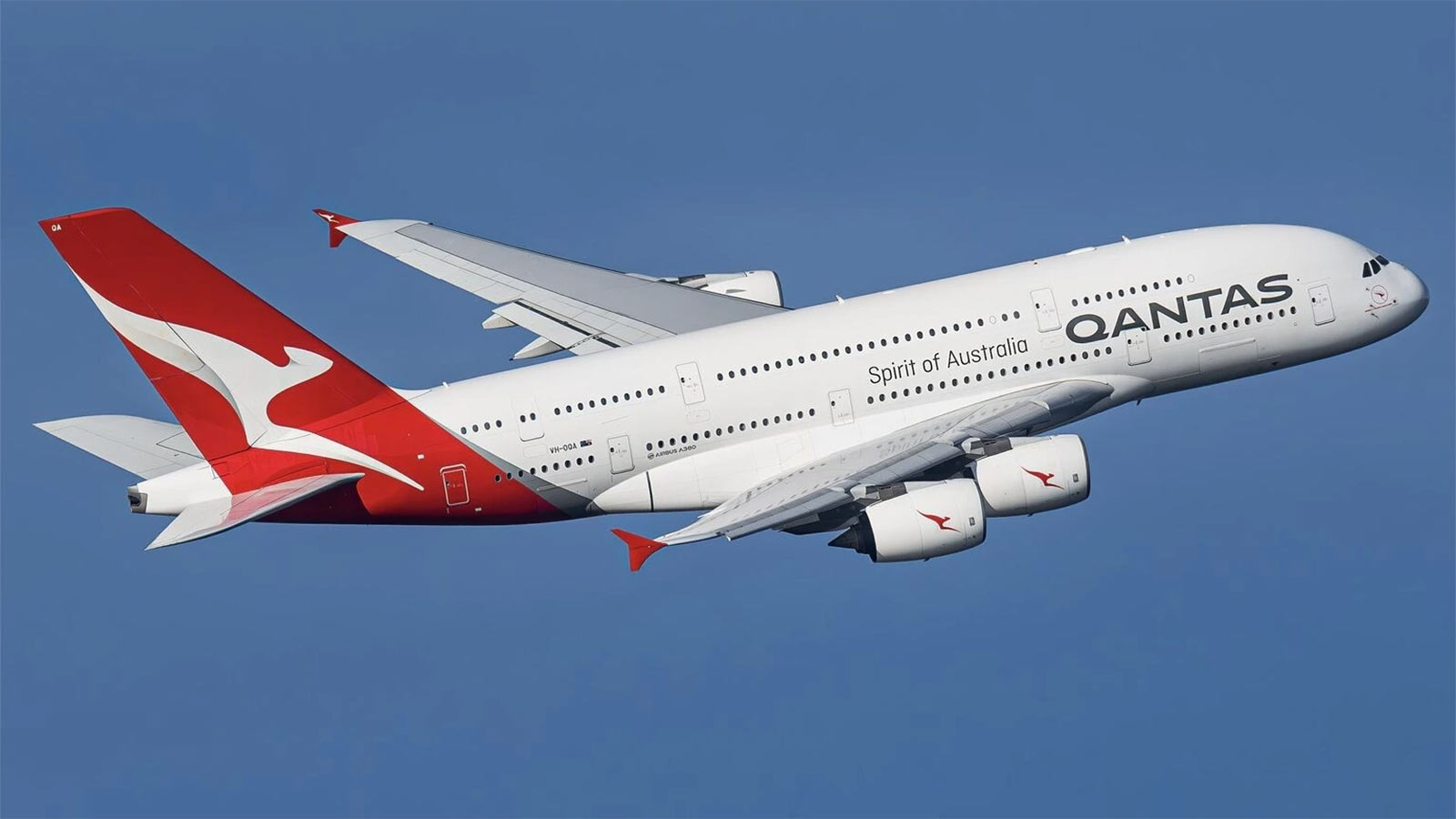
Qantas A380’s Triumphant Return Hits Turbulence
It was meant to be a celebration: Qantas’ last Airbus A380, VH-OQC, freshly refurbished and back in the air after nearly six years, completing the airline’s post-pandemic superjumbo revival. Instead, the narrative changed dramatically on the aircraft’s first commercial flight back in service—QF11 from Sydney to Los Angeles—when a chunk of its left wing slat was found damaged upon arrival at LAX, leaving the jet stranded and hundreds of travelers scrambling for alternatives.
Behind the Grounding: What Actually Happened?
VH-OQC, named after Qantas co-founder Paul McGinness, had spent three years in desert storage during the pandemic, followed by two and a half years of the airline’s most extensive maintenance program ever—over 100,000 engineering hours, landing gear replacement, structural checks, and a full cabin overhaul. The aircraft was reintroduced as the tenth and final A380 in Qantas’ fleet, primed for long-haul routes and operationally critical during the busy holiday travel season.
Yet, on its highly anticipated return, the flight landed with a visible gap in its left wing slat, captured by passengers like Australian actor Lynn Gilmartin and quickly broadcast across social media. The images showed a peeled-back section just outboard of the engine, prompting alarm and speculation about safety. Despite the dramatic visuals, the aircraft landed without incident, and no injuries were reported among passengers or crew.
Qantas clarified that the damage was confined to the slat—a movable panel on the wing’s leading edge that helps generate lift during take-off and landing. The airline stressed that the core wing structure remained intact and that the flight was within normal operating parameters. Pilots had received technical alerts but assessed the jet was safe to continue to Los Angeles.
Passenger Experience: A Flagship Service Falls Short
For many on board, the problems went beyond wing damage. Passengers described a series of technical and service failures: the in-flight entertainment system went down due to a power issue, cabin lighting was limited for much of the journey, some seats wouldn’t recline, and there were complaints about cleanliness and lavatory conditions. What was supposed to be a showcase of Qantas’ renewed long-haul product felt, to some, like a “limping comeback.”
Qantas has acknowledged the in-flight entertainment outage and offered compensation, expressing regret for the disruption on what should have been a flagship flight. But for travelers—especially those flying during the December peak—the incident amplified anxieties about the airline’s reliability and maintenance standards.
Operational Fallout: Hundreds Affected, Scrutiny Intensifies
The grounding of VH-OQC in Los Angeles meant the scheduled return to Sydney was canceled, leaving hundreds—including former Australian ambassador Joe Hockey—stranded or rebooked. The timing couldn’t have been worse: Qantas had positioned the aircraft as a critical “operational spare” to handle peak travel demand over Christmas and New Year. Its sudden absence created headaches for both scheduling and customer service, with limited alternative capacity available.
Australian media reports and sources like The Australian and Herald Sun highlighted both the logistical challenges and the reputational risks. The incident forced Qantas to reroute passengers onto other flights and partner airlines, stretching already thin resources at a time when every seat counted.
Regulatory Response: ATSB Eyes Investigation
The Australian Transport Safety Bureau (ATSB) confirmed it is reviewing the wing slat event, weighing whether to launch a formal investigation. While slat damage is considered serious, it does not pose the same risk as a catastrophic wing failure or engine fire. Nonetheless, any issue involving a wide-body aircraft on a long-haul international route draws intense scrutiny, especially given past concerns about Qantas’ engineering controls.
A previous ATSB report in 2024 revealed that another Qantas A380 flew for nearly 300 hours with a nylon tool left inside one of its engines after maintenance—an incident that, while non-damaging, prompted recommendations for stricter tool-control procedures. Combined with the latest event, it raises questions about whether Qantas’ rapid ramp-up of international capacity is putting undue strain on its maintenance systems.
Technical Perspective: What Is a Wing Slat?
For passengers, the difference between a “wing chunk” and a “damaged slat” may seem trivial, but technically, it matters. Wing slats are hinged panels on the wing’s front edge, deployed during take-off and landing to increase lift at lower speeds. Damage to a slat can reduce aerodynamic efficiency and trigger cockpit alerts, but does not typically compromise the primary wing structure.
The Airbus A380, as aviation sources like Wikipedia note, has an outstanding safety record, with no hull-loss accidents and very few major incidents. In this case, the jet remained controllable throughout, and the crew did not declare an emergency. Post-flight inspections determined that the slat could be replaced, restoring the aircraft to service once repairs were completed.
Brand Promise vs. Passenger Reality
Qantas has invested heavily in revamping its A380 fleet—refreshed cabins, upgraded lounges, and a renewed commitment to long-haul excellence. But high-profile incidents like this risk undermining those efforts, especially when the passenger experience falls short of expectations. In today’s social media age, images and testimonials spread quickly, and the narrative of “over-promising, under-delivering” can stick faster than any ad campaign.
What Happens Next?
In the immediate term, Qantas engineers in Los Angeles are replacing the damaged slat and inspecting adjacent wing structures for further issues. The ATSB will decide whether to launch a full investigation, which could include a detailed review of maintenance records and the massive refurbishment process. Meanwhile, Qantas must reorganize schedules, potentially relying on its Boeing 787 fleet and partner airlines to cover affected routes during the holiday peak.
Most importantly, the airline faces the challenge of rebuilding passenger confidence. That means not just offering compensation, but demonstrating transparency about what went wrong and what steps are being taken to prevent recurrence.
Should Travelers Be Worried?
For those booked on upcoming Qantas A380 flights, it’s worth noting that wide-body jets like the A380 are designed with multiple layers of safety and redundancy. Incidents like slat damage are rare and generally managed through standard protocols—grounding, repairs, inspections. Qantas’ reputation for safety remains strong, though recent events highlight the need for continued vigilance and operational excellence.
Assessment: The Qantas A380 wing slat incident in Los Angeles is a sharp reminder of the complexity and pressures facing airlines in the post-pandemic era. While the technical threat was contained and no injuries occurred, the fallout—from disrupted travel plans to reputational damage—shows that the real challenge for Qantas is not just engineering, but restoring trust. How the airline responds, both operationally and communicatively, will define whether its superjumbo comeback remains a symbol of resilience, or a cautionary tale of overreach.