


The Technical Leap Toward Nonstop Connectivity
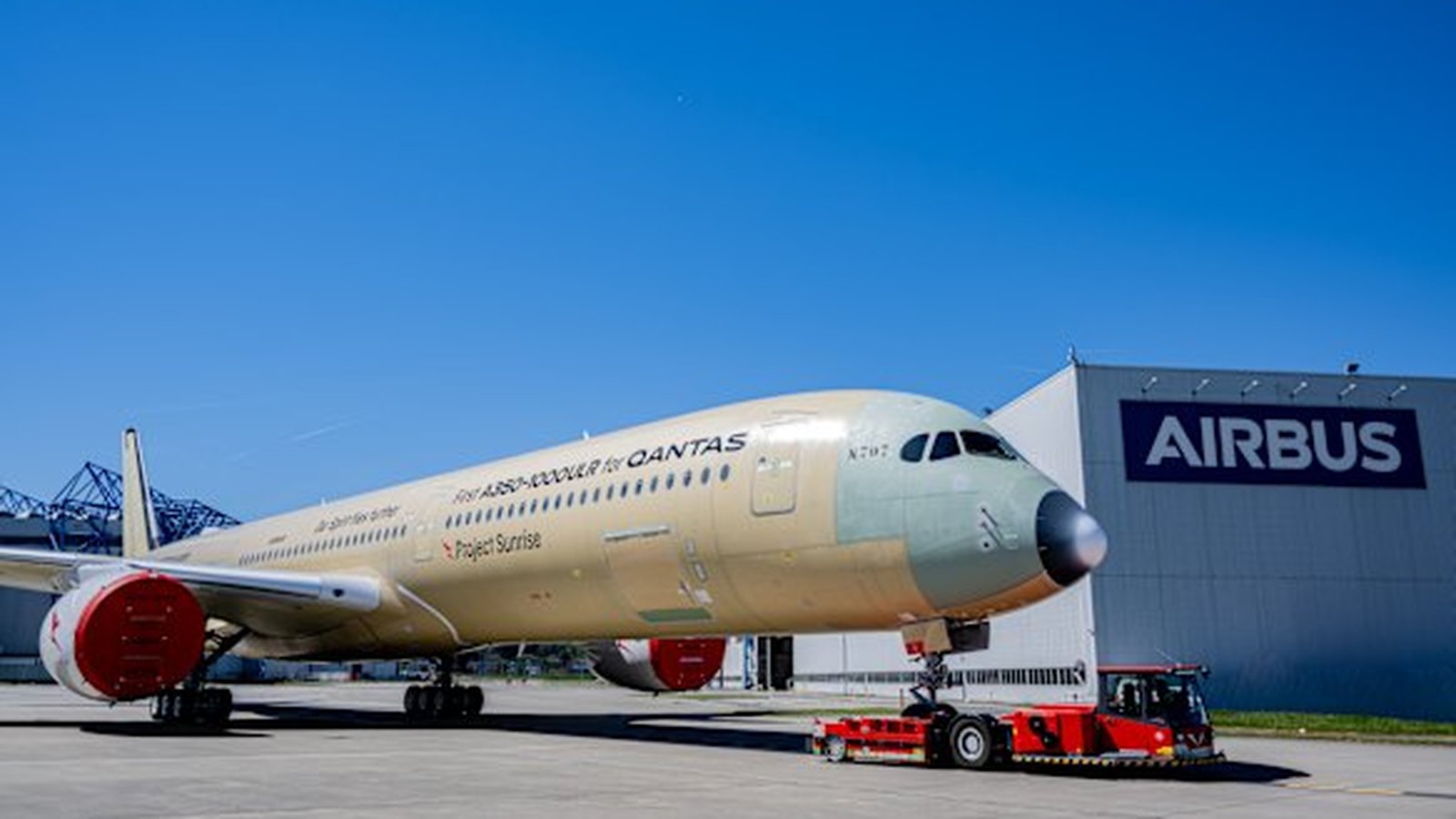
Qantas Airways is nearing the realization of its ‘Project Sunrise’ initiative, a long-term strategy to bridge Australia with global financial centers like London and New York via nonstop flights. With the first modified Airbus A350-1000ULR (Ultra Long Range) prototype currently undergoing extensive testing, the aviation industry is closely watching how these 22-hour journeys will impact both operational efficiency and passenger physiology.
Airbus has specifically engineered the A350-1000ULR to handle the grueling 17,000-kilometer distance. The technical modifications include an additional 20,000-liter rear center fuel tank, increasing the total capacity to 185,760 liters. This allows for flight durations that push the limits of modern commercial aircraft. According to data from Aviation Direct, the prototype, serial number MSN707, is currently conducting a series of test flights to validate fuel transfer systems and cabin environmental controls under extreme conditions.
Cabin Design and Passenger Wellness
The core challenge of Project Sunrise is maintaining passenger health over a nearly day-long flight. To mitigate the physical and mental strain of such extended travel, Qantas has opted for a significantly lower-density cabin configuration. While a standard A350-1000 might carry over 300 passengers, the Project Sunrise variant is limited to 238 seats. This includes six First Class suites, 52 Business Class seats, 40 Premium Economy, and 140 Economy seats.
A defining feature of the design is the ‘Wellbeing Zone,’ a dedicated space between cabin classes intended for stretching and light movement. Qantas is also implementing circadian-aligned LED lighting systems designed to help passengers adjust to new time zones more effectively. Despite these innovations, some industry analysts and frequent travelers express skepticism, suggesting that the psychological toll of being confined for 22 hours may lead travelers to prefer traditional, two-stop journeys on larger, more spacious aircraft like the Airbus A380.
Economic and Environmental Stakes
The economic model for Project Sunrise relies on the premium segment, as the reduced passenger capacity necessitates higher ticket prices to maintain profitability. By bypassing transit hubs like Dubai or Singapore, Qantas aims to capture high-value business and premium leisure demand. From an environmental perspective, the airline argues that point-to-point travel is more efficient than multi-leg journeys, as it eliminates the emissions associated with additional takeoffs and landings.
However, the project faces ongoing scrutiny regarding the physical demands placed on crew members. Stringent regulations regarding rest periods and the utilization of backup crews are being finalized to ensure safety throughout the 22-hour duration. With official ticket sales slated to begin in February 2027 and the first commercial service scheduled for October 2027, Qantas is effectively betting its future on the demand for time-saving, nonstop connectivity.