


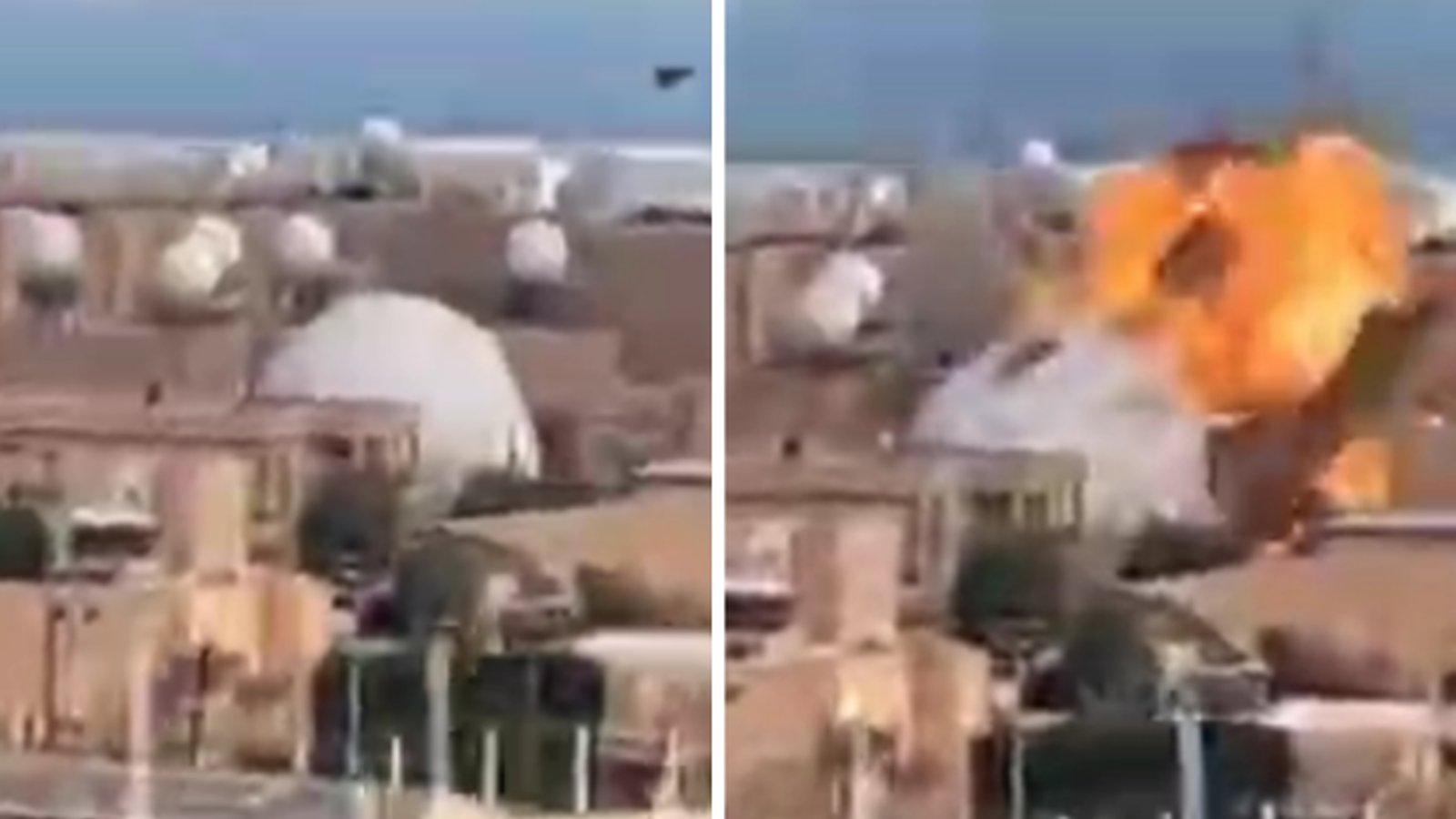
DOHA (Azat TV) – Qatar’s air defense systems successfully intercepted multiple ballistic missile attacks on Saturday, thwarting potential damage to its capital, Doha, and other areas amidst a rapidly escalating regional conflict. The interceptions came as Iran launched retaliatory strikes across the Middle East targeting US forces and Israel, following a joint US-Israeli attack on Iranian soil earlier the same day.
Smoke was observed billowing from a residential area on the outskirts of Doha, attributed to falling debris from an intercepted missile, according to an Al Jazeera report. The Ministry of Defense in Qatar confirmed that it had ‘thwarted’ several attacks on the country, signaling the effectiveness of its defensive measures during a period of heightened regional instability.
Qatar Targeted Amid Broader Regional Strikes
The missile attacks on Qatar were part of a wider wave of Iranian retaliatory strikes that impacted several nations across the Middle East. These strikes were launched in response to a US and Israeli attack on Iran, which saw explosions reported across Tehran and other Iranian cities, including facilities linked to Iran’s Ministry of Intelligence, Ministry of Defence, and the Atomic Energy Organization of Iran.
Iran’s Islamic Revolutionary Guard Corps (IRGC) had previously warned that any attack on Iran would result in targeting US military facilities across the region, declaring all US assets as legitimate targets. The United States maintains a significant military presence in Qatar, including the Al Udeid Air Base, one of its largest overseas military installations, which serves as a critical hub for air operations, logistics, and intelligence gathering.
Beyond Qatar, other nations experienced similar incidents. Israel declared a ‘special state of emergency’ as multiple explosions were reported in its skies, with Iranian missiles intercepted over Tel Aviv and Haifa. In the UAE, a Pakistani national was killed by falling debris, and Bahrain reported a missile attack targeting the headquarters of the US Navy’s 5th Fleet. Kuwait’s Ali al-Salem Air Base also came under attack, with all ballistic missiles intercepted by its air defense systems. Jordan and Iraq also reported missile and drone interceptions.
Qatar’s Robust Defense Capabilities
Qatar’s successful interception of ballistic missiles underscores the importance of advanced air defense systems in protecting critical infrastructure and civilian populations in a volatile region. While specific details of Qatar’s interceptor systems were not immediately available, the ability to thwart multiple attacks suggests a robust and well-integrated defense network.
The broader context of US military presence in the Middle East, including in Qatar, means that these bases are equipped with sophisticated defense technologies designed to counter various aerial threats, including ballistic missiles. The US has amassed its largest military presence in the Middle East in decades, including carrier strike groups and numerous aircraft, further bolstering regional defense capabilities.
The Threat of Ballistic Missiles in the Middle East
Ballistic missiles, designed to deliver warheads by following a curved trajectory, pose a significant threat due to their long range, high speed, and the difficulty of interception. These missiles can travel at hypersonic speeds, exceeding Mach 5, making them challenging targets for even advanced defense systems. The source highlights that some missiles also deploy decoys or other countermeasures, further complicating interception efforts.
Iran possesses one of the largest and most advanced ballistic missile arsenals in the region, developed over the past three decades. This arsenal includes a range of ballistic and cruise missiles capable of reaching targets across the Middle East. Similarly, Israel operates an advanced missile arsenal, including long-range and nuclear-capable systems, supported by decades of US assistance, and relies on systems like the Iron Dome, David’s Sling, and Arrow System for air defense, supplemented by US THAAD batteries.
The successful interception of incoming ballistic missiles by Qatar’s defense systems during a major regional conflict highlights the critical role of advanced military preparedness and robust air defense infrastructure in mitigating the immediate impact of escalating geopolitical tensions. The incident underscores the ongoing vulnerability of countries in the Middle East to missile threats and the continuous need for sophisticated defensive capabilities.