


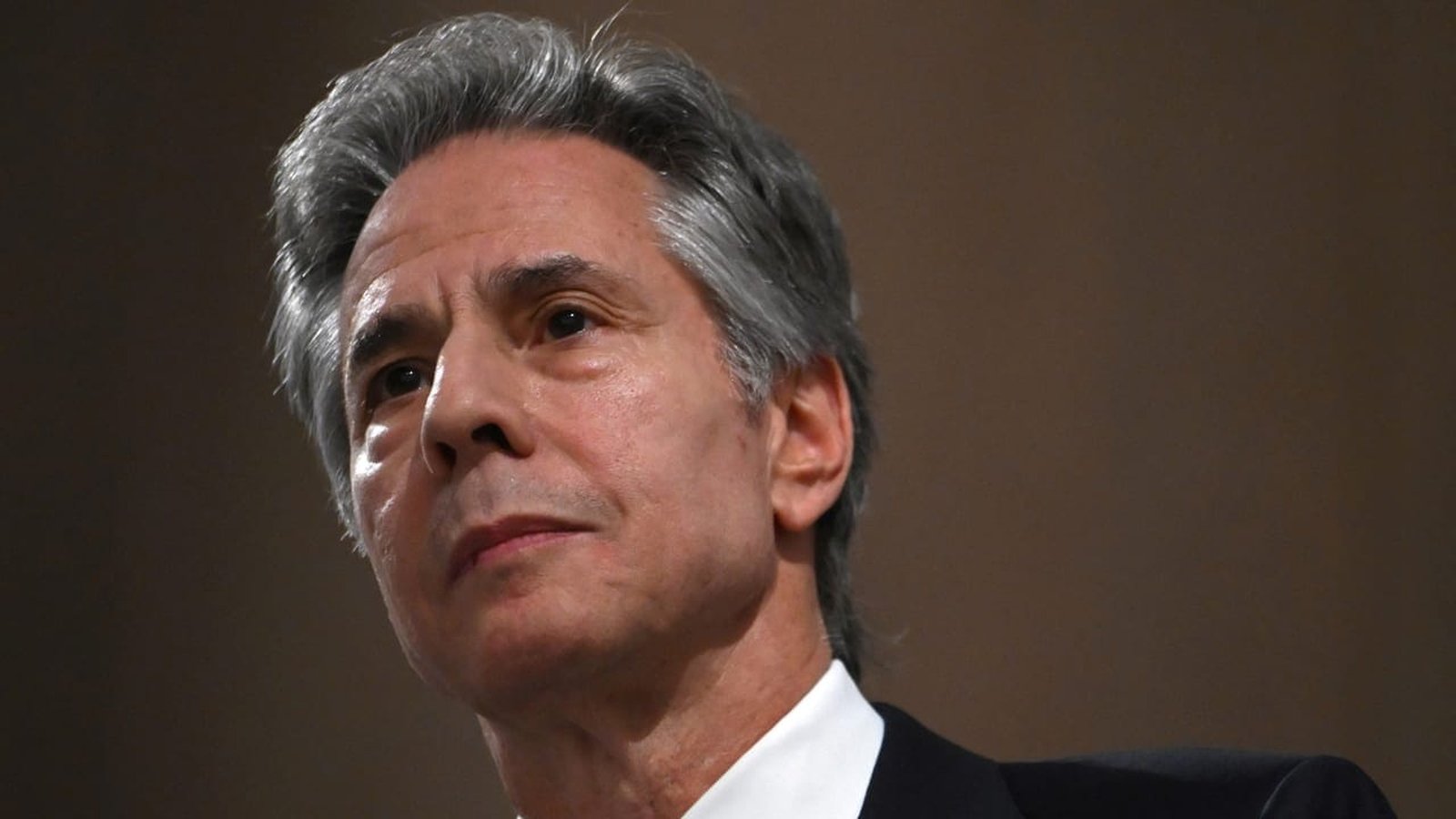
Former U.S. Secretary of State Antony Blinken has issued a firm denial regarding claims that he advised Qatari officials to delay diplomatic mediation for hostages captured during the October 7, 2023, attack on Israel. Writing on social media platform X, Blinken characterized the assertions as “complete fiction” and stated for the record that the narrative detailing his alleged refusal of an immediate mediation effort was entirely false.
The controversy stems from an article published by the Israeli newspaper JNS reported, which cited material from a forthcoming book titled “Hostages: 843 Days of Abandonment.” The report alleged that hours after Hamas launched its assault, Qatari leadership offered to negotiate the immediate release of civilian hostages held in Gaza. According to the publication’s account, Blinken purportedly asked Qatari Emir Sheikh Tamim bin Hamad Al Thani or Prime Minister Sheikh Mohammed bin Abdulrahman Al Thani to wait until the chief U.S. diplomat could hold face-to-face discussions in Israel.
Allegations Surrounding Early Diplomacy and Book Claims
The report in Haaretz claimed that Qatari leaders had approached U.S. and Israeli officials on the evening of October 7, offering to open swift diplomatic channels to release non-combatant captives. The newspaper alleged that Qatari officials conveyed that Israel showed initial disinterest in the overture, prompting Blinken to advocate for a three-day pause while he prepared a diplomatic visit to Jerusalem to speak directly with Israeli Prime Minister Benjamin Netanyahu.
As detailed by The Jerusalem Post, the book on which the report was based purports to reveal detailed behind-the-scenes exchanges from the earliest hours of the crisis. Beyond the claims regarding Blinken’s response to Qatar, the publication alleged that United Arab Emirates President Mohammed bin Zayed Al Nahyan had personally alerted Netanyahu to an impending major Hamas operation days before the assault. The text further suggested that critical early opportunities to secure captive releases were overlooked by leadership in both Jerusalem and Washington.
Journalistic reviews of the excerpts have noted significant reliance on anonymous sources, with direct dialogue attributed to high-ranking international officials without specifying the observers present during the communications. Critics of the report point out that such unverified quotations leave considerable doubt regarding the precise timeline of diplomatic exchanges on the night of the attack.
Political Resistance and Israeli Pushback
Blinken’s public rejection follows an equally adamant rebuttal from the Israeli government. The Israeli Prime Minister’s Office dismissed claims of prior intelligence warnings from the UAE as entirely fabricated, insisting that any routine intelligence sharing between the nations contained no prior warning of the October 7 operation. Netanyahu’s legal representatives subsequently threatened court action against the publication over the report.
Political pushback in Israel intensified when Netanyahu’s Likud party released a statement claiming the primary source behind the allegations was Mohammed Dahlan, a former Fatah security chief living in exile in the UAE. Likud accused political rivals of disseminating misleading narratives aimed at undermining the coalition government, arguing that the reported accounts were designed to influence domestic political dynamics. The party announced plans to seek a formal law enforcement review regarding potential foreign interference in national electoral matters.
The diplomatic record shows that Qatar eventually played a pivotal role as a primary mediator alongside Egypt and the United States, facilitating a temporary weeklong truce in late November 2023 that resulted in the release of over 100 hostages. However, the exact chronology of initial diplomatic contacts on October 7 remains a subject of intense narrative contention between official record-keepers and critical investigative accounts.