


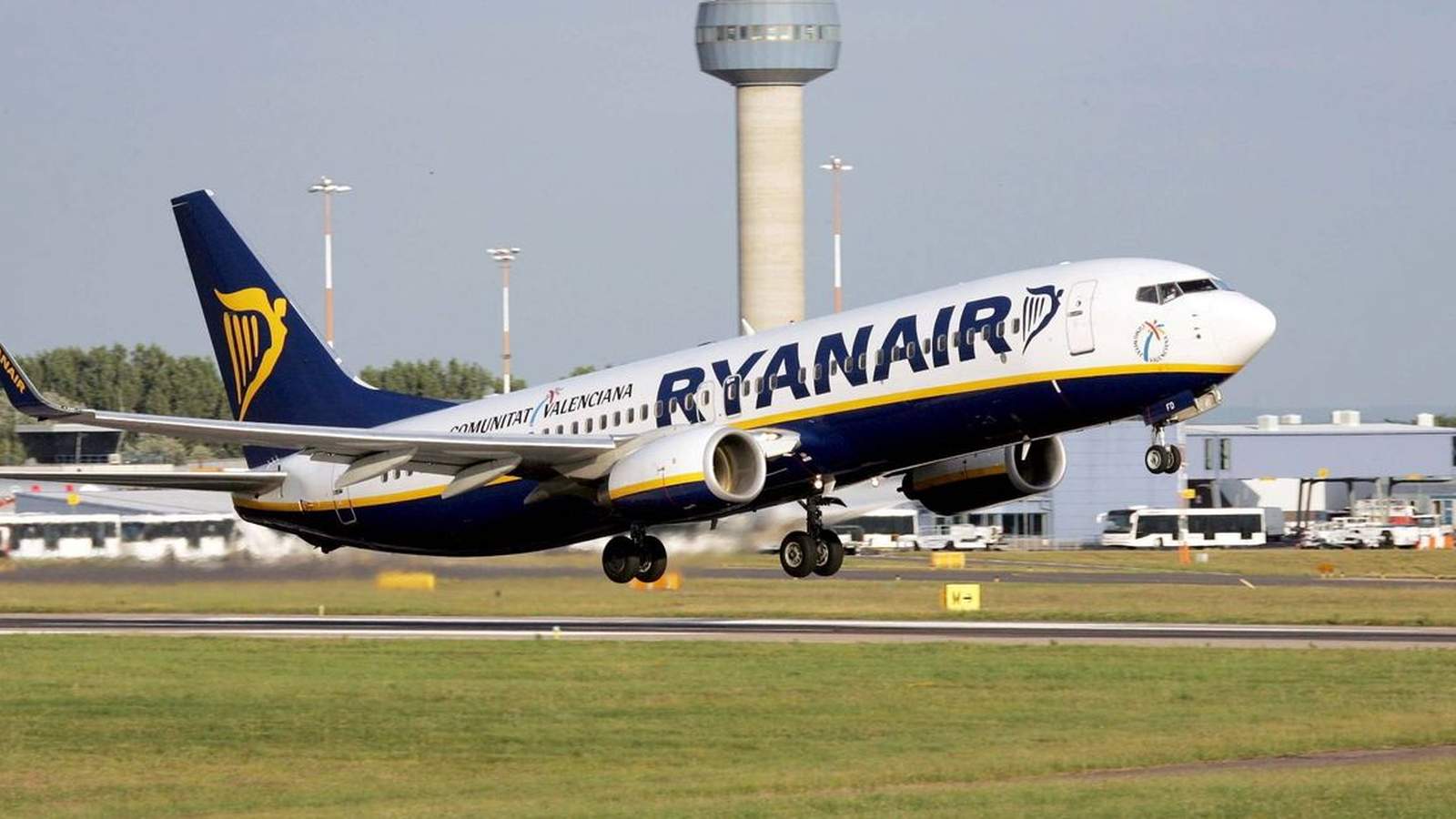
AAIB Report Details Critical Incident
A Ryanair flight carrying 171 passengers and six crew members declared a ‘Mayday’ distress call due to critically low fuel levels following three aborted landing attempts during Storm Amy last October, according to a detailed report released by the Air Accidents Investigation Branch (AAIB) on September 24, 2026. The Boeing 737-800 ultimately landed safely at Manchester Airport with only 363kg of fuel remaining, significantly below the 1,100kg final reserve fuel required for safe operations, as reported by Dublin Live.
The incident, classified as ‘serious’ by the AAIB, highlighted a series of challenges faced by the flight crew, including severe weather conditions and a critical communication breakdown at Manchester Airport that initially prevented the aircraft from diverting there. The crew’s increasing concern over dwindling fuel reserves led to the urgent ‘MAYDAY, MAYDAY, MAYDAY, MAYDAY FUEL’ broadcast, requesting an immediate diversion to Manchester after an earlier request had been declined.
A Challenging Journey Through Storm Amy
The flight, FR3418, originated from Pisa International Airport in Italy and was scheduled to land at Glasgow Prestwick Airport on October 3 last year. Forecasters had warned of ‘significant winds’ due to Storm Amy, prompting the crew to load additional fuel as a precaution. However, the severity of the wind conditions quickly became apparent upon approach to Prestwick.
Pilots attempted two landings at Prestwick, but both were abandoned due to ‘windshear escape manoeuvres’. A windshear escape manoeuvre is a critical procedure where pilots abort a landing or takeoff due to sudden, drastic changes in wind speed or direction that could dangerously affect the aircraft’s lift and control. These manoeuvres are routine safety procedures, allowing pilots to perform a ‘go-around’ and attempt another landing.
Following the two unsuccessful attempts at Prestwick, the crew sought permission to divert to Manchester Airport. This initial request, however, ‘was not accepted’, according to the AAIB report. The aircraft then proceeded towards Edinburgh Airport, where the crew again encountered challenging conditions, reporting a ‘further windshear escape manoeuvre’ and another aborted landing.
Communication Breakdown and Critical Fuel Levels
With fuel levels dropping rapidly, the pilots became ‘increasingly concerned about the decreasing fuel situation’ and anticipated further windshear warnings if they remained at Edinburgh. They calculated that diverting to Manchester would result in landing with between 500kg and 700kg of fuel, while the flight management system projected an even lower 300kg. Both figures were well below the 1,100kg final reserve fuel, which is the minimum amount of fuel an aircraft must have remaining at touchdown to allow for unforeseen delays or diversion to an alternate airport.
Despite the low fuel projection, the commander deemed Manchester the safest option. The AAIB investigation revealed that the initial refusal of the diversion request to Manchester was due to a ‘breakdown of communication’ within the airport. The report explicitly stated: “Although the airport and handling agent policies at Manchester meant that the diversion should have been accepted, a breakdown of communication within the airport led to it being refused.”
After the ‘Mayday’ declaration and an urgent request, the flight was finally directed to Manchester, where it touched down safely at 7:52 pm, approximately four and a half hours after departing Pisa. The aircraft landed with 363kg of fuel, a quantity that left very little margin for error.
Airport Response and Industry Implications
In the aftermath of the incident, Manchester Airport acknowledged the AAIB’s findings and stated it was evaluating the report’s contents. The airport also reiterated its policy to stakeholders, clarifying that it would accept diversion requests if it had the capacity to receive the aircraft and that the decision to accept a diversion does not rest solely with the handling agent, as detailed in the AAIB’s findings. Ryanair was approached for comment by the Manchester Evening News but did not provide a statement.
The incident underscores the critical importance of robust communication protocols between flight crews and air traffic control, particularly during adverse weather conditions and emergency situations. It also highlights the complex decision-making processes pilots face when balancing safety, fuel management, and external factors like airport capacity and ground handling services. The AAIB’s thorough investigation aims to ensure that lessons learned from such serious incidents contribute to enhancing aviation safety standards across the industry.