


Quick Read
- SpaceX launched its CRS-32 mission on April 21, 2025, delivering supplies to the ISS.
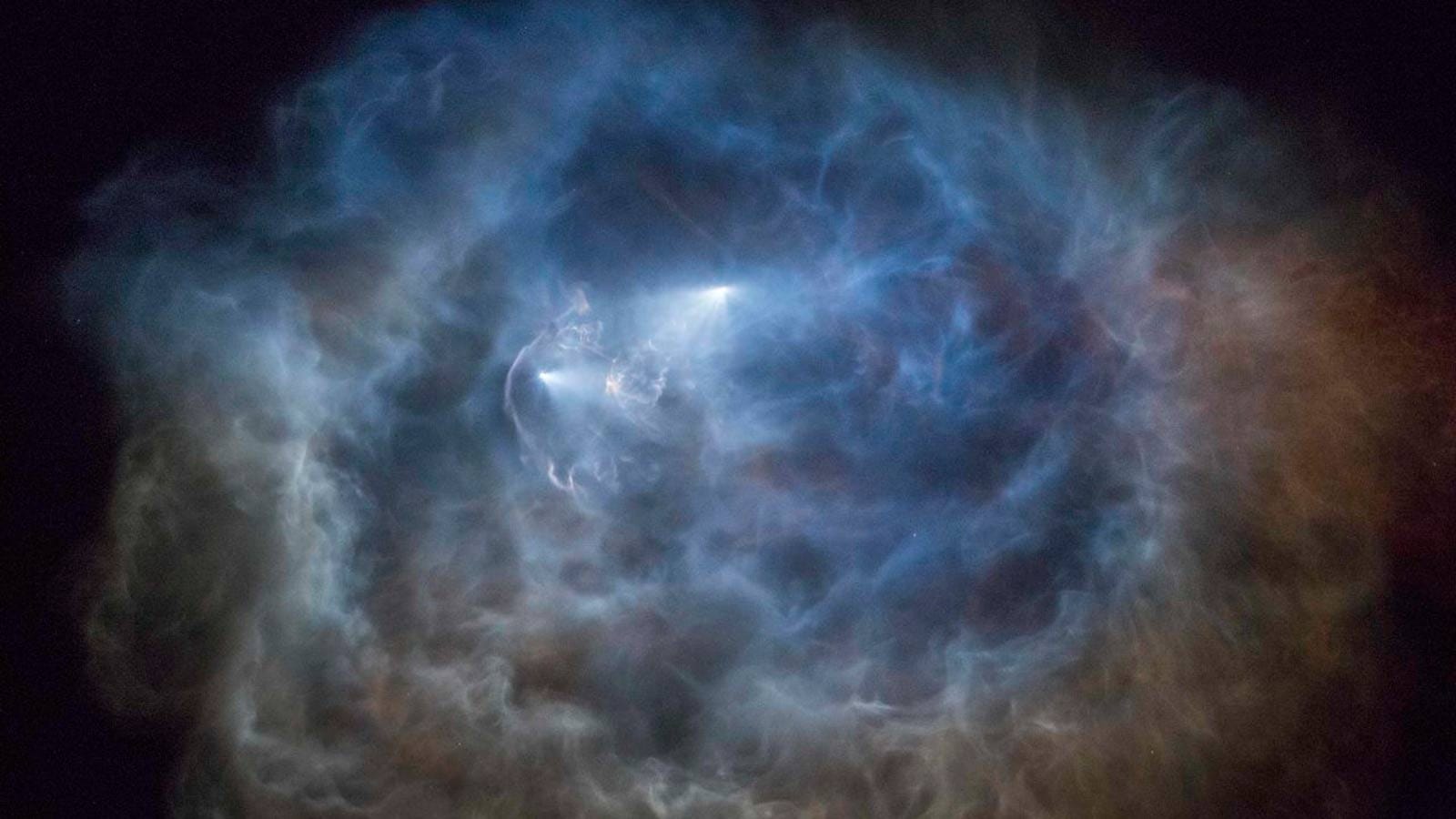
- The Falcon 9 rocket created a nebula-like glow during its boostback burn.
- The launch occurred from NASA’s Kennedy Space Center in Florida.
- The rocket’s first stage landed successfully at Cape Canaveral.
- This phenomenon, though common, remains a mesmerizing sight.
SpaceX’s CRS-32 Mission: A Visual Spectacle
In the early hours of April 21, 2025, SpaceX successfully launched its 32nd Commercial Resupply Services (CRS-32) mission to the International Space Station (ISS). The uncrewed Dragon spacecraft carried approximately 6,700 pounds of supplies, scientific experiments, and equipment to support the Expedition 73 crew aboard the orbital laboratory. However, it wasn’t just the mission’s success that captured attention—it was the stunning visual phenomenon created during the rocket’s return journey.
What Happened During the Launch?
The Falcon 9 rocket lifted off from Launch Complex-39A at NASA’s Kennedy Space Center in Florida at 4:15 a.m. EDT. After completing its primary role in propelling the Dragon spacecraft toward orbit, the rocket’s first stage separated from the second stage and began its return to Earth. This process involved a “boostback” burn, where some of the rocket’s engines were reignited to change its trajectory and guide it back to its landing site at Cape Canaveral Space Force Station.
During the boostback burn, the rocket’s exhaust interacted with the high-altitude atmosphere, creating a glowing, colorful display reminiscent of a nebula. This ethereal light show was visible to observers in the region, adding a layer of wonder to an already impressive technological feat.
Why Does This Phenomenon Occur?
The nebula-like glow is a result of the rocket’s exhaust gases interacting with the thin atmosphere at high altitudes. The gases scatter and refract light, producing vibrant colors that resemble the glowing gases found in space nebulae. While this phenomenon is not unique to this particular launch, each occurrence is slightly different in appearance due to variations in atmospheric conditions, lighting, and the rocket’s trajectory.
Significance of the CRS-32 Mission
The CRS-32 mission is part of SpaceX’s ongoing partnership with NASA to deliver critical supplies and scientific materials to the ISS. The cargo included food, equipment, and experiments designed to advance our understanding of space science and improve life on Earth. Notable payloads included materials for biological and physical science research, as well as technology demonstrations that could pave the way for future space exploration missions.
Upon reaching the ISS, the Dragon spacecraft is scheduled to dock autonomously at the station’s Harmony module. Astronauts aboard the ISS will then unload the cargo and begin working on the experiments and tasks associated with the delivery.
Rocket Recovery: A Key Element of Reusability
One of the standout features of SpaceX’s Falcon 9 rocket is its reusability. The first stage of the rocket successfully landed at Cape Canaveral’s Landing Zone 1 shortly after launch. This marks another milestone in SpaceX’s efforts to reduce the cost of space exploration by reusing key components of its rockets.
Reusability has been a cornerstone of SpaceX’s strategy, allowing the company to conduct frequent launches while maintaining cost efficiency. The successful recovery of the Falcon 9’s first stage during the CRS-32 mission further underscores the reliability of this approach.
A Broader Context: SpaceX’s Impact on Space Exploration
SpaceX has revolutionized the aerospace industry with its focus on innovation, cost reduction, and reusability. The company’s frequent launches, including missions like CRS-32, have made space more accessible for scientific research, commercial ventures, and international collaboration.
In addition to resupply missions, SpaceX has been instrumental in deploying satellites, conducting crewed missions, and advancing plans for interplanetary exploration. The visual spectacle created during the CRS-32 launch serves as a reminder of the awe-inspiring nature of space exploration and the technological advancements that make it possible.
As SpaceX continues to push the boundaries of space exploration, missions like CRS-32 highlight the company’s commitment to supporting scientific research and innovation. The next steps for the CRS-32 mission include the Dragon spacecraft’s docking with the ISS and the subsequent unloading and utilization of its cargo. Meanwhile, the Falcon 9 rocket’s successful recovery ensures that it can be refurbished and reused for future missions, further contributing to the sustainability of space exploration. For those who witnessed the nebula-like glow in the sky, the CRS-32 mission was not just a scientific achievement but also a visual reminder of humanity’s ongoing journey to explore the cosmos.