


A Tactical Battle of Attrition
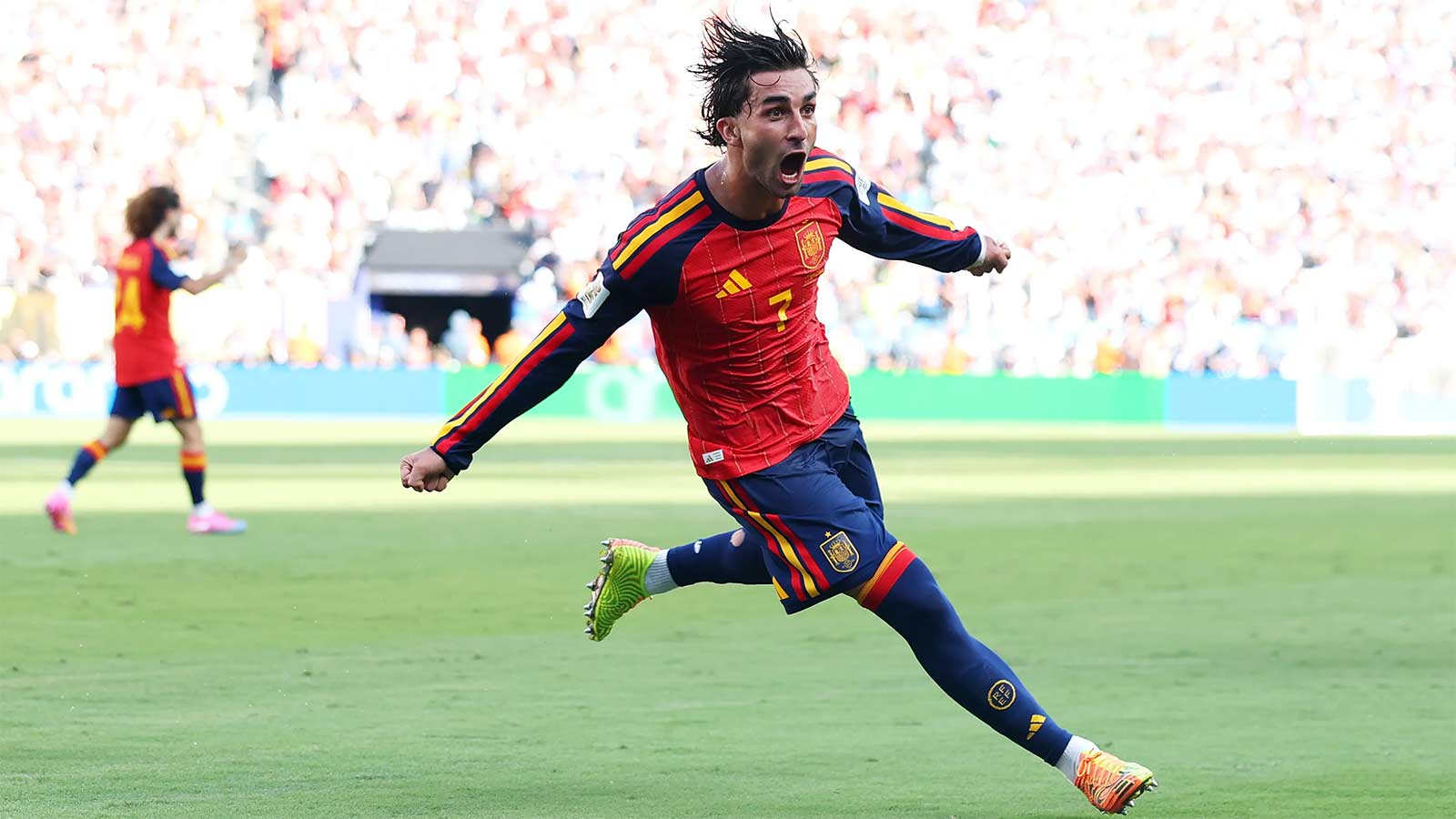
EAST RUTHERFORD, NJ (Azat TV) – Spain has ascended once again to the pinnacle of global football. In a grueling, high-stakes final at MetLife Stadium on Sunday, July 19, 2026, La Roja defeated Argentina 1-0 in extra time to capture their second FIFA World Cup title. The decisive moment arrived in the 106th minute when forward Ferran Torres broke a scoreless deadlock, securing Spain’s first world title since their historic 2010 triumph in South Africa. The victory, reported widely by ABC News and Yahoo Sports, capped an expanded 48-team tournament hosted across the United States, Mexico, and Canada.
For 90 minutes of regulation play, the match remained a tense, scoreless tactical stalemate. Both teams prioritized defensive structure, limiting clear-cut opportunities. Argentina, aiming to become the first nation since Brazil in 1958 and 1962 to win consecutive World Cups, fought with intense physical commitment. However, their defensive posture became increasingly compromised after they were reduced to 10 men due to a red card. Despite the numerical disadvantage, the South American champions pushed the match into extra time, setting the stage for Spain’s dramatic breakthrough.
The Torres Breakthrough and Argentina’s Ten-Man Struggle
The decisive breakthrough occurred in the first minute of the second half of extra time. In the 106th minute, Ferran Torres found space in the Argentine penalty area and clinically slotted the ball past goalkeeper Emiliano Martínez. The goal sent the Spanish contingent at MetLife Stadium into raptures and forced a shorthanded Argentina to alter their defensive strategy. Just minutes after the opener, Torres appeared to double Spain’s lead with a second goal, but the assistant referee’s flag quickly disallowed the strike for offside, keeping the margin at a razor-thin 1-0.
Faced with a one-goal deficit and playing with 10 men, Argentina launched a desperate offensive in the final minutes. Superstar forward Lionel Messi, playing in what is widely anticipated to be his final World Cup match, dropped exceptionally deep into his own half to act as a playmaker. In the dying moments of extra time, Messi managed to free Gianluca Simeone in the box. Simeone’s low cross was deflected out for a corner kick. On the ensuing set-piece, the ball was headed down to Simeone, who fired his shot over the crossbar. Spain’s goalkeeper, Unai Simón, secured the victory in the final minute by confidently catching a long desperate pass, ending Argentina’s hopes of a late equalizer.
The Defensive Blueprint of La Roja
Spain’s march to the 2026 World Cup title was built on an historically resilient defensive foundation. Throughout their seven matches in the tournament, La Roja conceded only a single goal—a statistic that highlights their tactical discipline and defensive organization. That lone goal came during their 2-1 quarterfinal victory over Belgium. Underpinning this defensive unit was the superb form of Unai Simón and a highly coordinated pressing system that starved opponents of possession and space.
Complementing this defensive solidity was the offensive spark provided by 19-year-old phenomenon Lamine Yamal. Having already led Spain to victory in the 2024 European Championship, Yamal’s performances throughout the 2026 tournament cemented his status as the leader of Spain’s new generation. His ability to stretch opposing defenses on the wing provided the necessary balance to Spain’s possession-based style, allowing players like Ferran Torres to find critical spaces in the final third of the pitch.
The Sunset of the Messi Era
For Argentina, the defeat represents a poignant end to a legendary era. Lionel Messi, whose international career has spanned more than two decades, was unable to secure a second consecutive World Cup trophy to match his 2022 triumph in Qatar. At 39, Messi showed flashes of his playmaking brilliance, including a powerful strike that hit the face of Spain’s Mikel Merino, forcing a brief stoppage for medical treatment. However, the physical toll of playing against Spain’s relentless midfield while down a player ultimately limited his impact in the final third.
The physical battle in midfield was illustrated by several key confrontations, including a shot by Messi that struck Mikel Merino directly in the face, requiring immediate medical attention on the pitch. While Argentina’s defensive block held firm for over 100 minutes, the numerical deficit eventually took its toll, leaving their transitions isolated and their attacking options limited in the final stages of extra time.
A New Paradigm for Global Sports Entertainment
The 2026 FIFA World Cup final was not merely a sporting event but a massive cultural and commercial spectacle. Hosted at MetLife Stadium—referred to during the tournament as the New York New Jersey Stadium—the final was attended by numerous dignitaries, including U.S. President Donald Trump, who was scheduled to present the 18-karat gold World Cup trophy to the victorious Spanish team. The tournament began on June 11, featuring 48 teams for the first time in FIFA history, marking a massive logistical expansion for the sport’s governing body.
The final also featured unprecedented entertainment integrations, designed to appeal to a broad North American and global audience. For the first time in World Cup history, a Super Bowl-style halftime show was introduced, headlining global superstars such as Madonna, BTS, Shakira, Justin Bieber, and Coldplay, alongside a performance by the Muppets. The pre-match closing ceremony featured performances by Post Malone, Robbie Williams, Laura Pausini, and Nicole Scherzinger, with actor Tom Cruise and popular streamer IShowSpeed also making appearances. Jennifer Hudson performed the U.S. national anthem prior to kickoff, illustrating the heavy commercial and entertainment focus of the North American-hosted tournament.
With this victory, Spain secures its second star on the national team jersey, joining an elite group of multiple-time World Cup winners. For FIFA, the tournament’s massive broadcast reach across networks like FOX, Telemundo, and streaming platforms like Peacock and FOX One demonstrated the immense commercial viability of the expanded 48-team format, setting a new benchmark for future international sporting events.